

The United States warns of potential sanctions on Chinese AI, while Huang responds defiantly.
On Tuesday, Treasury Secretary Scott Bessent appeared on television to issue a warning to China. Meanwhile, the CEO of the company driving the AI boom took a contrary stance on the same day.
The threat
Bessent indicated that the US would examine Chinese open-source models for potential intellectual property theft, as reported by Bloomberg. This could lead to sanctions against their creators. “This administration supports open-source models, but what we do not tolerate is IP theft,” he stated.
He cited evidence from watermarks. “We are discovering watermarks from our US large language models on numerous Chinese models,” he remarked. The technical term for this is distillation, which involves training one model using outputs from another. Bessent labeled it as theft and assured that action would be taken within weeks.
What set it off
The catalyst for this reaction was Kimi K3, an open-weight model from China’s Moonshot AI. It competes with or surpasses the best models from OpenAI and Anthropic on several benchmarks, all while being significantly cheaper. Its introduction triggered a selloff in chip stocks and renewed anxiety in Washington. For months, US labs have accused Chinese competitors of extracting their models.
Huang’s rebuttal
Nvidia’s Jensen Huang, speaking to Axios at a new chip facility in Texas, deemed this panic unfounded. “These Chinese models are impressive,” he stated. “Excellent open-source models should be utilized.” He insisted that American companies should “absolutely” have the freedom to operate them.
His reasoning is rooted in business. Cheaper, free models increase accessibility to AI. Greater AI usage leads to heightened demand for the chips, data centers, and energy that Nvidia sells. “Free AI should benefit chip sales,” he asserted. He also dismissed concerns that a downloaded Chinese model poses a “backdoor” for Beijing, explaining that companies can secure them in isolated environments.
The awkward part
Not everyone agrees with the theft accusation. Distillation is a widespread practice, and US labs engage in it as well. “We acknowledge that distillation is a minimal factor,” remarked Hugging Face CEO Clem Delangue in a TechCrunch interview. He added that it is “a practice shared by all, including American firms.”
There’s also a degree of irony. Anthropic, one of the fiercest critics, recently had a $1.5 billion settlement approved for using pirated books to train its model, Claude. Huang went even further, encouraging the government to lift restrictions on Anthropic’s own Mythos model. “Let Anthropic operate freely,” he urged.
What happens next
Bessent is set to lead the US delegation in AI discussions with China in September. The issue of distillation will be addressed during these talks. As of now, the divide is clear: the government aims to exclude Chinese models, whereas the leading chip manufacturer advocates for their inclusion.
Other articles
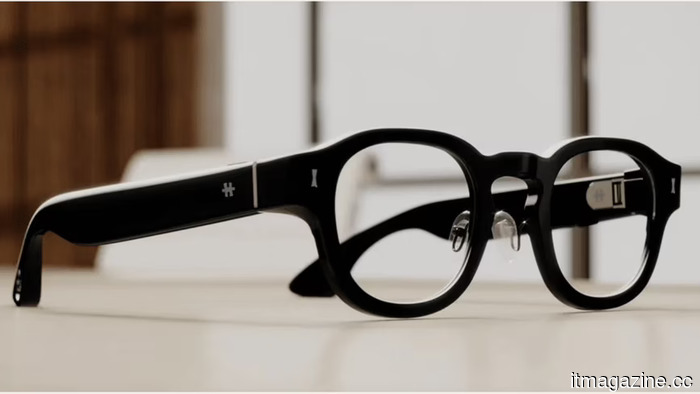 Halliday's G2 smart glasses, which do not have a camera, focus on enhancing meetings.
Following the release of the most-criticized smart glasses of 2025, Halliday is back with the camera-free G2, designed specifically for live work meetings and set to launch in September.
Halliday's G2 smart glasses, which do not have a camera, focus on enhancing meetings.
Following the release of the most-criticized smart glasses of 2025, Halliday is back with the camera-free G2, designed specifically for live work meetings and set to launch in September.
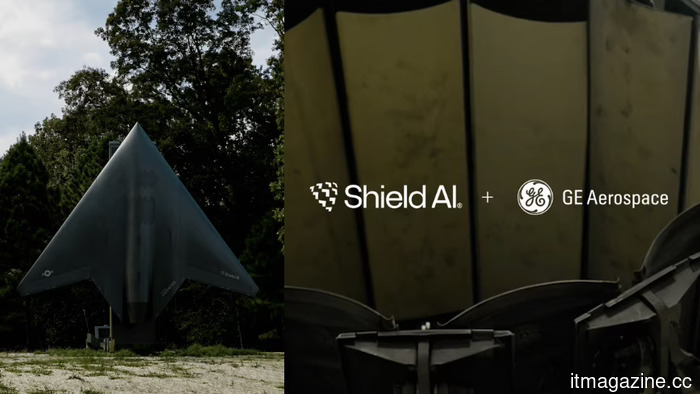 Shield AI's X-BAT: the AI fighter jet that doesn't require a runway.
Shield AI and GE Aerospace activated the engine of the X-BAT, an AI-controlled jet capable of vertical takeoff without the need for a runway. Flight tests are scheduled for later this year.
Shield AI's X-BAT: the AI fighter jet that doesn't require a runway.
Shield AI and GE Aerospace activated the engine of the X-BAT, an AI-controlled jet capable of vertical takeoff without the need for a runway. Flight tests are scheduled for later this year.
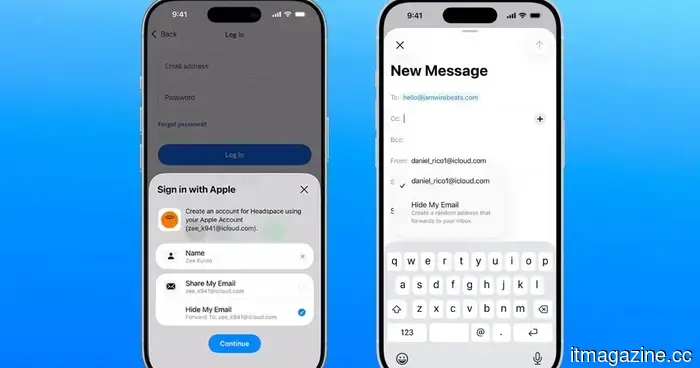 Apple has addressed a bug in the Hide My Email feature that revealed the actual email addresses of users.
A bug in Hide My Email revealed actual addresses through bounced spam messages for more than a year before Apple fixed it, mere days after it became publicly known.
Apple has addressed a bug in the Hide My Email feature that revealed the actual email addresses of users.
A bug in Hide My Email revealed actual addresses through bounced spam messages for more than a year before Apple fixed it, mere days after it became publicly known.
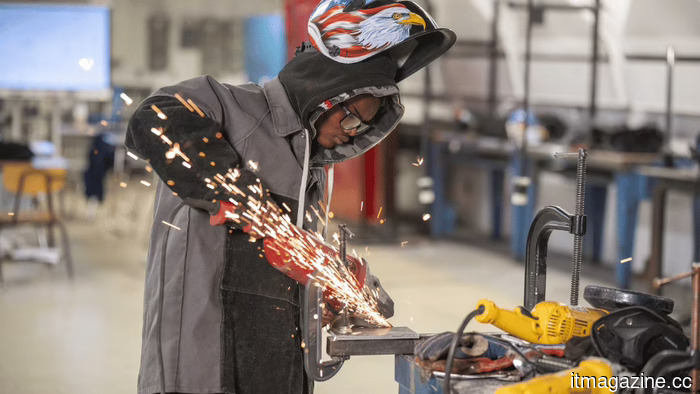 Google and Ford are investing in trading as artificial intelligence takes over office roles.
Google, Ford, Carhartt, and BlackRock have formed a partnership aimed at filling 2.1 million skilled-trade positions by 2030, focusing on jobs that cannot be automated by AI.
Estée Lauder affected by Oracle E-Business data breach.
Estée Lauder reported that hackers took employees' Social Security numbers, banking, and health information through a vulnerability in Oracle E-Business in 2025, revealing the breach almost a year later.
Google and Ford are investing in trading as artificial intelligence takes over office roles.
Google, Ford, Carhartt, and BlackRock have formed a partnership aimed at filling 2.1 million skilled-trade positions by 2030, focusing on jobs that cannot be automated by AI.
Estée Lauder affected by Oracle E-Business data breach.
Estée Lauder reported that hackers took employees' Social Security numbers, banking, and health information through a vulnerability in Oracle E-Business in 2025, revealing the breach almost a year later.
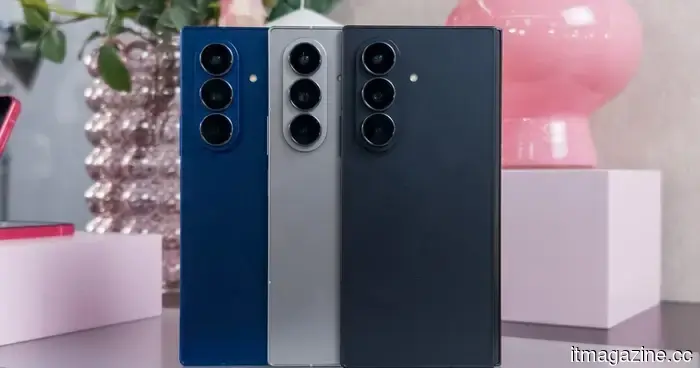 Samsung's offer of doubling free storage for preorders has ended in Austria, and the new promotion isn't as appealing.
Samsung's traditional pre-order benefit of offering double storage at no extra cost has been removed for Austria, now substituted with discounted upgrades for the Galaxy Z Fold 8 and Z Flip 8.
Samsung's offer of doubling free storage for preorders has ended in Austria, and the new promotion isn't as appealing.
Samsung's traditional pre-order benefit of offering double storage at no extra cost has been removed for Austria, now substituted with discounted upgrades for the Galaxy Z Fold 8 and Z Flip 8.
The United States warns of potential sanctions on Chinese AI, while Huang responds defiantly.
Scott Bessent from Treasury has stated that the United States might impose sanctions on Chinese AI models due to "IP theft." In response, Nvidia's Jensen Huang describes the alarm as misguided, asserting there is "zero possibility."