
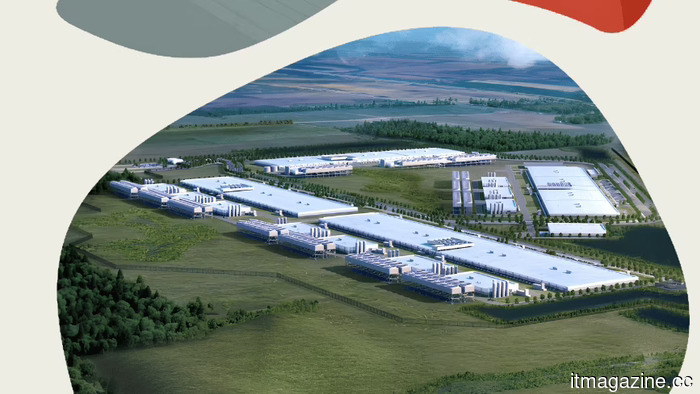
Oracle is facing a $7 billion cost for powering its AI hub in Wisconsin.
Oracle is constructing a large AI data center in Port Washington, Wisconsin, in collaboration with Vantage and OpenAI. The Lighthouse Campus, which will nearly reach one gigawatt, represents an investment of approximately $15 billion. However, Oracle must first satisfy local regulatory requirements to obtain the necessary electricity, which is turning out to be costly.
In a sworn affidavit, Oracle claims that adhering to the regulations would necessitate posting a letter of credit “surpassing $7 billion,” resulting in an annual expense that “might exceed $100 million.”
Reasons for the regulator's firmness
In May, the Public Service Commission of Wisconsin tightened the conditions, removing the utility's authority to waive guarantees on a case-by-case basis. It also established an exemption threshold that is difficult to achieve: a credit rating of A-/A3.
Since then, the commission has “declined to take any action” on Oracle’s request to revisit the ruling, stating to the Financial Times that the regulation is meant to protect current customers. The reasoning is straightforward; a massive data center would utilize the generation capacity of an entire power plant. If it fails to fulfill its commitments, someone has to bear the cost, and the regulator seeks to ensure that it is not the ordinary ratepayers.
Inopportune timing
Oracle argues that it is financially robust, although concerns in the market have arisen. On July 9, S&P downgraded Oracle from BBB to BBB-, attributing the change to its AI infrastructure investments and declining cash flow.
This new rating falls below the A-/A3 exemption threshold and arises as Oracle experiences significant cash outflows. The company has projected capital expenditures of $90 billion to $95 billion for this fiscal year, alongside an anticipated free cash flow deficit of around $42 billion.
Furthermore, there is an overarching concern regarding OpenAI. S&P estimates that the startup constitutes about half of Oracle’s $638 billion in expected future revenue. If OpenAI is unable to pay, S&P cautions that Oracle may be left with data center leases that remain unoccupied, a default risk that Wisconsin is attempting to mitigate.
Oracle's proposal
Oracle is not remaining silent on this issue. Its affidavit contends that firms rated BBB fulfill their obligations 99.87% of the time. It highlights that Oracle stands among the 20 largest companies globally, with approximately $600 billion in equity, and points out that it raised $30 billion in a single day earlier this year.
In response to the regulatory demands, Oracle has proposed a compromise: posting 10%, roughly $700 million, as a letter of credit and securing the remainder with a parent guarantee. Additionally, the company positions this as a national security concern, arguing that China is advancing more rapidly in grid and AI development while U.S. projects are hindered by bureaucratic hurdles.
An impending broader conflict
This issue extends beyond a single data center. As AI data centers proliferate, regulators are questioning who assumes the risk if financial obligations persist beyond the growth phase. Wisconsin's approach is to require the tech giant to provide the collateral rather than the local community. The critical question is whether this strategy protects ratepayers or merely incentivizes builders to relocate to other states.
Other articles
 Tesla's Summer Update introduces a more intelligent Grok, customized navigation, and scoring for Caraoke.
Tesla's summer update for 2026 includes a phone call feature called Grok, scored karaoke sessions, enhanced navigation, self-driving statistics available in the app, and personalized wraps that can be sent directly from your phone.
Tesla's Summer Update introduces a more intelligent Grok, customized navigation, and scoring for Caraoke.
Tesla's summer update for 2026 includes a phone call feature called Grok, scored karaoke sessions, enhanced navigation, self-driving statistics available in the app, and personalized wraps that can be sent directly from your phone.
 China's shortage of AI talent has led tech giants to recruit teenagers.
Chinese AI firms are facing a shortage of engineers, prompting them to seek talent starting from the age of 13 through camps, mentorship programs, and even guaranteed employment immediately after high school.
China's shortage of AI talent has led tech giants to recruit teenagers.
Chinese AI firms are facing a shortage of engineers, prompting them to seek talent starting from the age of 13 through camps, mentorship programs, and even guaranteed employment immediately after high school.
 Galaxy Z Fold 8 vs. Galaxy Z Fold 8 Ultra: Is the additional $200 justifiable and is the Ultra a worthwhile investment?
Samsung's latest Fold 8 and Fold 8 Ultra come with identical chip and storage options, but they differ significantly in terms of camera specifications, display size, and battery capacity.
Galaxy Z Fold 8 vs. Galaxy Z Fold 8 Ultra: Is the additional $200 justifiable and is the Ultra a worthwhile investment?
Samsung's latest Fold 8 and Fold 8 Ultra come with identical chip and storage options, but they differ significantly in terms of camera specifications, display size, and battery capacity.
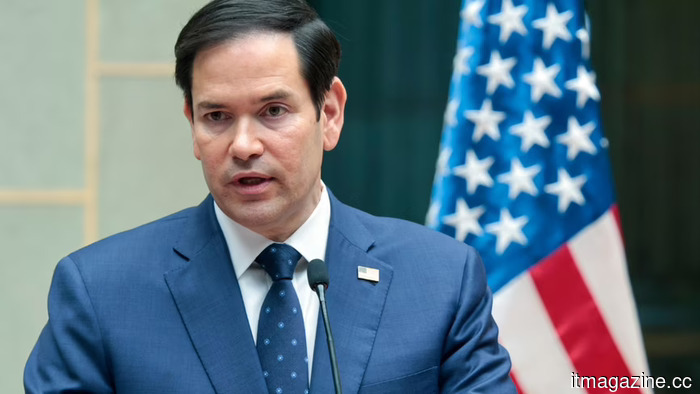 Marco Rubio advises US diplomats to minimize concerns about a technological 'kill switch.'
A cable from the State Department instructs US diplomats to refute the notion that Washington has the ability to remotely deactivate American technology in other countries.
Marco Rubio advises US diplomats to minimize concerns about a technological 'kill switch.'
A cable from the State Department instructs US diplomats to refute the notion that Washington has the ability to remotely deactivate American technology in other countries.
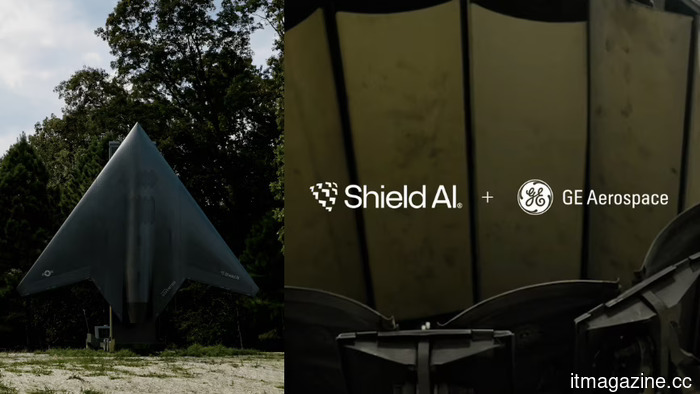 Shield AI's X-BAT: the AI fighter jet that doesn't require a runway.
Shield AI and GE Aerospace have activated the engine of the X-BAT, an AI-operated jet that can take off vertically without the need for a runway. Flight tests are scheduled to occur later this year.
Shield AI's X-BAT: the AI fighter jet that doesn't require a runway.
Shield AI and GE Aerospace have activated the engine of the X-BAT, an AI-operated jet that can take off vertically without the need for a runway. Flight tests are scheduled to occur later this year.
 Struggling with bedtime stories? Meta has an AI designed to help kids settle down for the night.
Meta's trial StoryKit application creates tailored stories, visuals, narration, and music based on a child, toy, environment, or lesson chosen by a parent.
Struggling with bedtime stories? Meta has an AI designed to help kids settle down for the night.
Meta's trial StoryKit application creates tailored stories, visuals, narration, and music based on a child, toy, environment, or lesson chosen by a parent.
Oracle is facing a $7 billion cost for powering its AI hub in Wisconsin.
Oracle indicates it could provide $7 billion in collateral to secure power for its AI data center in Wisconsin, as a regulator remains steadfast and S&P lowers its rating.