
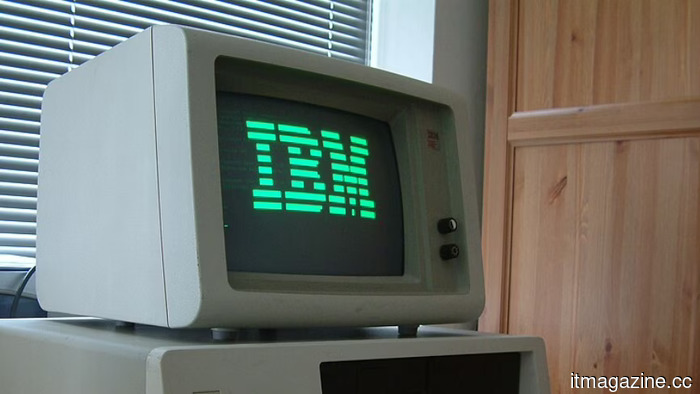
IBM lowers its full-year revenue forecast following a 42 percent decline in mainframe demand in the second quarter.
TL;DR: IBM revised its revenue growth forecast down to four to five percent after a 42 percent drop in mainframe Z system sales during the second quarter.
IBM adjusted its full-year sales projection on Wednesday following a significant decline in demand for its mainframe business, reducing its revenue growth estimate from a previous prediction of over five percent to four to five percent. The company also lowered expectations for its software unit, with CFO Jim Kavanaugh informing Bloomberg that annual software sales are now expected to grow by six to eight percent. Kavanaugh indicated that this decrease is solely due to weaknesses in IBM's infrastructure unit and its related software, while the rest of the company continues to perform exceptionally well.
Mainframe sales plunged by 42 percent in the second quarter ending June 30, ending a streak of robust growth since IBM introduced its latest Z systems last year. The company had previously warned of this weakness on July 14 when it shared preliminary results, causing its stock to drop 25 percent in a single day—the largest decline in IBM's history. Shares did rise about three percent in after-hours trading on Wednesday following the full earnings report, implying that investors had largely anticipated the negative impact.
IBM invested tens of billions of dollars in reshaping itself into a high-growth software enterprise through acquisitions like Red Hat, HashiCorp, and Confluent, and has been progressing into AI-driven enterprise security in conjunction with OpenAI. However, this software-centric shift has attracted concerns from investors anxieties that AI technologies might disrupt the business models IBM has recently adopted. Kavanaugh countered this apprehension, asserting that most of IBM's software is closely tied to enterprise infrastructure and data, making it significantly more challenging to replace than applications that are more susceptible to AI disruption.
The company announced it will accelerate cost-saving measures and still anticipates an additional $1 billion in free cash flow this year by reducing spending on third-party technology, tightening supply chain management, and cutting administrative expenses. Kavanaugh mentioned that the workforce is expected to remain nearly unchanged for the year. Total revenue for the quarter grew approximately one percent to around $17 billion, with adjusted earnings nearing three dollars per share.
The question of AI disruption became more tangible earlier this month when Bloomberg reported that Starbucks was considering replacing software from IBM and other providers with in-house developed tools. Kavanaugh acknowledged that Starbucks allocates about $2 million annually to IBM for an application he agrees is "prime to be disrupted by AI." However, he maintained that most of IBM's enterprise software resides much closer to the infrastructure level, where replacement is much more challenging, and that the company is investing in keeping its mainframe platform relevant in the AI age through a collaboration with Arm to support modern workloads on its Z systems.
Other articles
 Samsung's Galaxy Z Fold 8 receives Google’s Gemini Intelligence prior to the Pixel 11.
In conjunction with Samsung's Unpacked announcements, Google introduced Gemini updates for the latest Galaxy foldables, featuring activation of the Watch 9 without a wake word and an integrated tool for transferring data from iPhones.
Samsung's Galaxy Z Fold 8 receives Google’s Gemini Intelligence prior to the Pixel 11.
In conjunction with Samsung's Unpacked announcements, Google introduced Gemini updates for the latest Galaxy foldables, featuring activation of the Watch 9 without a wake word and an integrated tool for transferring data from iPhones.
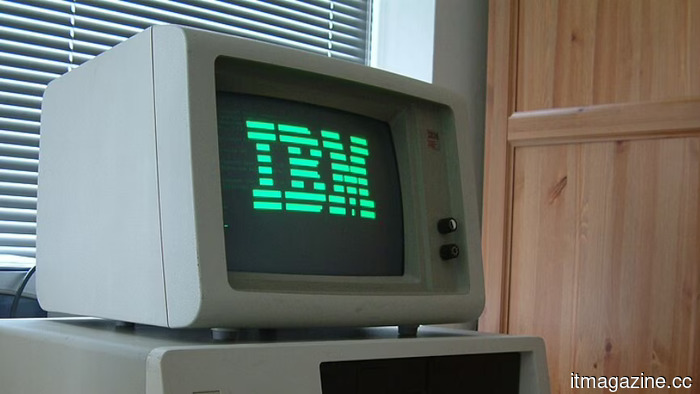 IBM lowers its full-year sales projections following a 42 percent decline in mainframe demand in the second quarter.
IBM reduced its revenue growth projection to four to five percent, down from over five percent, following a 42 percent decline in mainframe sales during the second quarter.
IBM lowers its full-year sales projections following a 42 percent decline in mainframe demand in the second quarter.
IBM reduced its revenue growth projection to four to five percent, down from over five percent, following a 42 percent decline in mainframe sales during the second quarter.
 The Galaxy Z Fold 8 Ultra arrives featuring a more enhanced display, a larger battery, and a $100 increase in price.
The new Galaxy Z Fold 8 Ultra from Samsung begins at a price of $2,099.99 and features a clearer display, larger battery, and enhanced ultrawide camera, all within a slightly thinner design.
The Galaxy Z Fold 8 Ultra arrives featuring a more enhanced display, a larger battery, and a $100 increase in price.
The new Galaxy Z Fold 8 Ultra from Samsung begins at a price of $2,099.99 and features a clearer display, larger battery, and enhanced ultrawide camera, all within a slightly thinner design.
 In June, electric vehicle sales in Europe jumped by nearly 40 percent, with their market share exceeding 25 percent.
In June, battery-electric vehicle registrations reached 275,060 in 17 European markets, leading to first-half sales exceeding 1,240,000 and a market share surpassing 25 percent.
Monday.com is reducing its workforce by 20 percent as it shifts towards an AI-focused work platform.
Monday.com plans to cut approximately 620 jobs and simplify its management hierarchy as the project management firm pursues what it refers to as the AI Work Platform.
In June, electric vehicle sales in Europe jumped by nearly 40 percent, with their market share exceeding 25 percent.
In June, battery-electric vehicle registrations reached 275,060 in 17 European markets, leading to first-half sales exceeding 1,240,000 and a market share surpassing 25 percent.
Monday.com is reducing its workforce by 20 percent as it shifts towards an AI-focused work platform.
Monday.com plans to cut approximately 620 jobs and simplify its management hierarchy as the project management firm pursues what it refers to as the AI Work Platform.
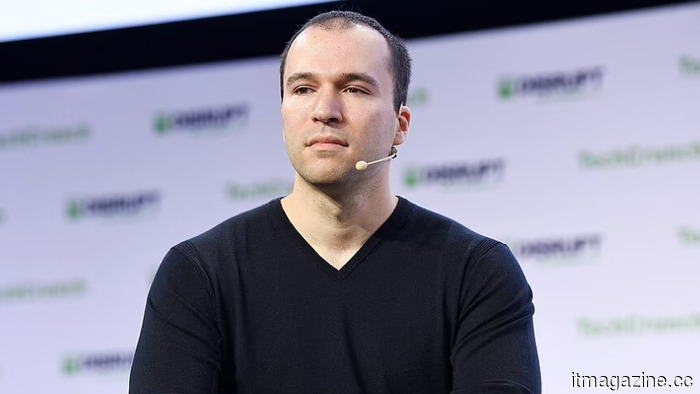 OpenAI's Brockman describes Kimi K3 as 'quite good' but does not verify the distillation process.
Brockman recognized the quality of Kimi K3 during a Bloomberg interview but mentioned that it is premature to determine if Moonshot is derived from OpenAI's models.
OpenAI's Brockman describes Kimi K3 as 'quite good' but does not verify the distillation process.
Brockman recognized the quality of Kimi K3 during a Bloomberg interview but mentioned that it is premature to determine if Moonshot is derived from OpenAI's models.
IBM lowers its full-year revenue forecast following a 42 percent decline in mainframe demand in the second quarter.
IBM has revised its revenue growth outlook to a range of four to five percent, down from over five percent, following a 42 percent decline in mainframe sales during the second quarter.