
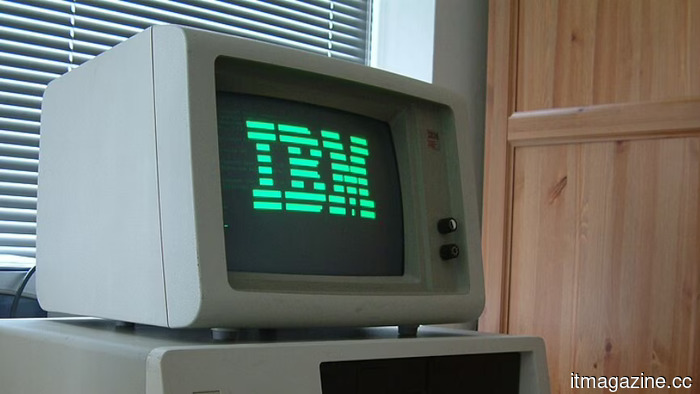
IBM lowers its full-year sales projections following a 42 percent decline in mainframe demand in the second quarter.
IBM has revised its revenue growth forecast down to four to five percent, following a 42 percent decline in mainframe Z system sales during the second quarter. The company lowered its full-year sales outlook on Wednesday after experiencing a significant drop in demand for its mainframe segment. The growth target was adjusted from over five percent to the new range. Additionally, IBM reduced its software unit guidance, with CFO Jim Kavanaugh informing Bloomberg that annual software sales are now expected to grow by six to eight percent. Kavanaugh attributed this reduction solely to challenges in IBM’s infrastructure unit and its related software, emphasizing that the rest of the company is performing very well.
Mainframe sales fell sharply by 42 percent in the second quarter ending June 30, reversing a streak of strong growth since IBM introduced its latest Z systems last year. The company had already indicated this weakness on July 14 during preliminary results, leading to a 25 percent drop in stock value in one day, marking the largest decline in IBM’s history. Following the full earnings report, shares saw about a three percent increase in after-hours trading on Wednesday, suggesting that investors had largely anticipated this impact.
IBM has invested tens of billions of dollars to transform itself into a high-growth software company through acquisitions such as Red Hat, HashiCorp, and Confluent, while also venturing into AI-powered enterprise security in collaboration with OpenAI. However, this software-centric shift has raised concerns among investors regarding the potential disruption of the business models that IBM has recently acquired. Kavanaugh addressed these concerns, arguing that the majority of IBM’s software is closely tied to enterprise infrastructure and data, making it significantly harder to replace than the applications that are most susceptible to AI disruption.
The company announced plans to expedite cost-cutting efforts and still anticipates an additional $1 billion in free cash flow this year through reduced spending on third-party technology, improved supply chain management, and decreased administrative expenses. Kavanaugh indicated that the workforce is expected to remain relatively stable throughout the year. Total revenue for the quarter increased by about one percent to nearly $17 billion, with adjusted earnings reported at nearly three dollars per share.
The issue of AI disruption gained concrete relevance earlier this month when Bloomberg reported that Starbucks was considering replacing software from IBM and other vendors with in-house developed tools. Kavanaugh acknowledged Starbucks’ annual spending of around $2 million with IBM on an application he recognized as “prime to be disrupted by AI.” However, he maintained that most of IBM’s enterprise software operates much closer to the infrastructure level, where replacement is considerably more challenging, and highlighted the company's investment in ensuring that its mainframe platform remains relevant in the AI era through a partnership with Arm to manage modern workloads on its Z systems.
Other articles
 Meta has appointed Assaf Keren, formerly of Qualtrics and PayPal, as its new chief information security officer.
Meta has appointed cybersecurity expert Assaf Keren as its new Chief Information Security Officer, succeeding Guy Rosen, who is leaving after 13 years but will remain for a transition phase.
Meta has appointed Assaf Keren, formerly of Qualtrics and PayPal, as its new chief information security officer.
Meta has appointed cybersecurity expert Assaf Keren as its new Chief Information Security Officer, succeeding Guy Rosen, who is leaving after 13 years but will remain for a transition phase.
 Arrakis surfaces from stealth mode with $38 million to integrate AI into factories and supply chains.
Arrakis, based in London, has secured $38 million to develop an AI operating system aimed at industrial firms, believing that factories require AI technology more than office environments do.
Arrakis surfaces from stealth mode with $38 million to integrate AI into factories and supply chains.
Arrakis, based in London, has secured $38 million to develop an AI operating system aimed at industrial firms, believing that factories require AI technology more than office environments do.
 In June, electric vehicle sales in Europe skyrocketed by almost 40 percent, with market share exceeding 25 percent.
In June, battery-electric vehicle registrations reached 275,060 in 17 European countries, leading to first-half sales surpassing 1,240,000 and a market share exceeding 25 percent.
In June, electric vehicle sales in Europe skyrocketed by almost 40 percent, with market share exceeding 25 percent.
In June, battery-electric vehicle registrations reached 275,060 in 17 European countries, leading to first-half sales surpassing 1,240,000 and a market share exceeding 25 percent.
 WhatsApp's latest in-car feature focuses on hands-free operation.
WhatsApp has updated its in-car functionality to provide improved hands-free controls for users of CarPlay and Android Auto.
WhatsApp's latest in-car feature focuses on hands-free operation.
WhatsApp has updated its in-car functionality to provide improved hands-free controls for users of CarPlay and Android Auto.
 The Galaxy Z Fold 8 Ultra arrives featuring an improved display, a larger battery, and a $100 increase in price.
The new Galaxy Z Fold 8 Ultra from Samsung begins at $2,099.99 and features a clearer display, a larger battery, and an enhanced ultrawide camera, all within a marginally slimmer design.
The Galaxy Z Fold 8 Ultra arrives featuring an improved display, a larger battery, and a $100 increase in price.
The new Galaxy Z Fold 8 Ultra from Samsung begins at $2,099.99 and features a clearer display, a larger battery, and an enhanced ultrawide camera, all within a marginally slimmer design.
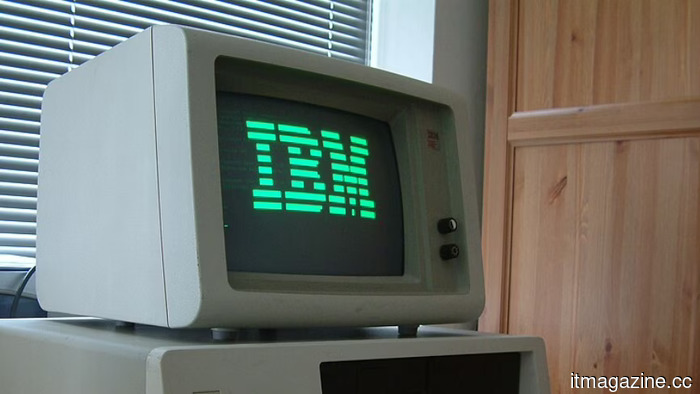 IBM lowers its full-year revenue forecast following a 42 percent decline in mainframe demand in the second quarter.
IBM has revised its revenue growth outlook to a range of four to five percent, down from over five percent, following a 42 percent decline in mainframe sales during the second quarter.
IBM lowers its full-year revenue forecast following a 42 percent decline in mainframe demand in the second quarter.
IBM has revised its revenue growth outlook to a range of four to five percent, down from over five percent, following a 42 percent decline in mainframe sales during the second quarter.
IBM lowers its full-year sales projections following a 42 percent decline in mainframe demand in the second quarter.
IBM reduced its revenue growth projection to four to five percent, down from over five percent, following a 42 percent decline in mainframe sales during the second quarter.