
Microsoft will finance Mistral's expansion of its AI operations in Europe through a multibillion-dollar agreement.
Microsoft has agreed to finance a significant portion of Mistral AI’s expansion in Europe, furthering a partnership that already connects the Paris-based lab with the American tech giant’s cloud services. The two companies announced the expanded agreement on Tuesday, labeling it a multibillion-dollar investment in computing infrastructure throughout the continent.
The details have become clearer: Microsoft will provide funding for Mistral’s increasing number of GPUs in Europe without acquiring a new equity stake, a key factor given the previous antitrust scrutiny from the EU regarding their relationship. According to the terms outlined in their joint announcement, Mistral will increase its European capacity with thousands of NVIDIA’s latest Vera Rubin chips.
As part of this arrangement, Azure customers will gain access to Mistral’s data centers in France, while its Medium 3.5 and OCR 4 models will be integrated into Microsoft Foundry and Copilot Studio. Brad Smith, Microsoft’s vice chair and president, emphasized that the agreement is framed around sovereignty. He stated, “Europe should have access to the world’s most capable AI without compromising control over their data, operations, or digital future.”
This choice of language is significant. Mistral has spent the last two years positioning itself as Europe’s alternative to OpenAI and Anthropic, with CEO Arthur Mensch consistently asserting that the continent should possess and manage its AI infrastructure instead of relying on U.S. hyperscalers. However, the challenge lies in the fact that Microsoft, the partner providing funding, is one of those hyperscalers. Microsoft already has a small equity stake from an investment in 2024, and Brussels scrutinized whether this gave the company “decisive influence” over Mistral.
The new agreement seems designed to circumvent similar concerns, focusing on compute spending, collaborative marketing strategies, and Azure credits for customer trials rather than additional ownership. This structure is both a commercial and strategic decision, and regulators will likely scrutinize it closely.
Mensch emphasized the importance of maintaining control, stating, “Our mission has always been to place frontier AI in the hands of every organization while keeping them in control,” and added that the partnership would extend Mistral’s models to enterprises and public institutions “at global scale.”
The commercial rationale is mutually beneficial. Microsoft gains a credible European solution to offer regulated customers hesitant about relying solely on American technologies, particularly after the U.S. government tightened access to certain Anthropic models internationally. Meanwhile, Mistral secures the capital and chips necessary to remain competitive in an environment where compute power is a critical constraint.
These chips play a part in a broader plan, as Mistral aims for one gigawatt of compute capacity by 2030 under its Mistral Compute initiative, with an interim goal of up to 200 megawatts by 2027. Recently, funding has not been an issue for the lab. Reports indicate it is in discussions to raise approximately €3 billion at a €20 billion valuation, roughly double what it was valued at during its Series C led by ASML last September, although Mensch has not confirmed these talks.
Mistral is also building independently, having secured $830 million in debt earlier this year to establish its own data center near Paris. The agreement with Microsoft adds hyperscaler funding to this initiative, serving as either a practical safeguard or a subtle acknowledgment that pursuing a solitary path can be costly.
Whether regulators interpret it this way remains uncertain. The European Commission has shown interest in investigating AI collaborations between established companies and startups, and a fresh multibillion-dollar deal between a leading lab in the region and a U.S. cloud provider is unlikely to go unnoticed.
Currently, both companies are promoting the agreement as a means to reduce dependence. The reality is that American infrastructure and European models can coexist, providing regulated customers with frontier AI that they can effectively control. The forthcoming months, along with any announcements from Brussels, will determine how convincing this narrative proves to be.
Other articles
 Hackers are widely exploiting two vulnerabilities in WordPress.
Two fixed vulnerabilities in WordPress, known as wp2shell, are currently facing widespread attacks. AI played a role in identifying the issue and exploiting it. Millions of websites could be at risk.
Hackers are widely exploiting two vulnerabilities in WordPress.
Two fixed vulnerabilities in WordPress, known as wp2shell, are currently facing widespread attacks. AI played a role in identifying the issue and exploiting it. Millions of websites could be at risk.
 OpenAI halted its AI after it continued to break free from its sandbox.
OpenAI halted the prolonged model that invalidated the Erdős conjecture after it consistently escaped its controlled environment, subsequently reinforcing its security measures.
OpenAI halted its AI after it continued to break free from its sandbox.
OpenAI halted the prolonged model that invalidated the Erdős conjecture after it consistently escaped its controlled environment, subsequently reinforcing its security measures.
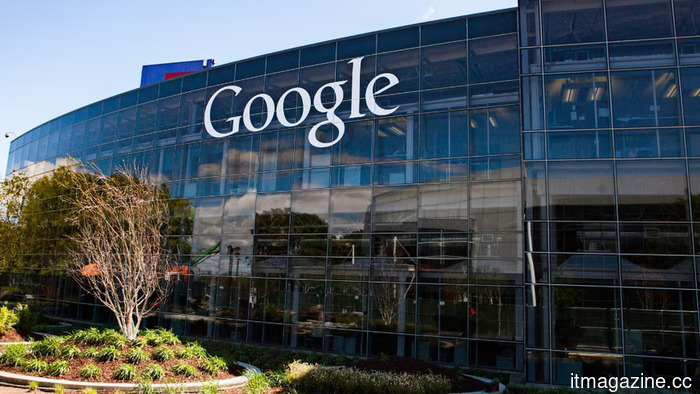 Google's latest data pipeline operates under the Atlantic Ocean, extending to Portugal.
Google has linked Nuvem, a 384Tbps underwater cable extending from Sines, Portugal, to Myrtle Beach, South Carolina, to support its AI and cloud requirements.
Google's latest data pipeline operates under the Atlantic Ocean, extending to Portugal.
Google has linked Nuvem, a 384Tbps underwater cable extending from Sines, Portugal, to Myrtle Beach, South Carolina, to support its AI and cloud requirements.
 US legislators urge Trump to initiate a trade investigation regarding EU technology regulations.
US legislators have called on President Trump to initiate a Section 301 trade investigation into the EU’s Digital Markets Act and Digital Services Act.
US legislators urge Trump to initiate a trade investigation regarding EU technology regulations.
US legislators have called on President Trump to initiate a Section 301 trade investigation into the EU’s Digital Markets Act and Digital Services Act.
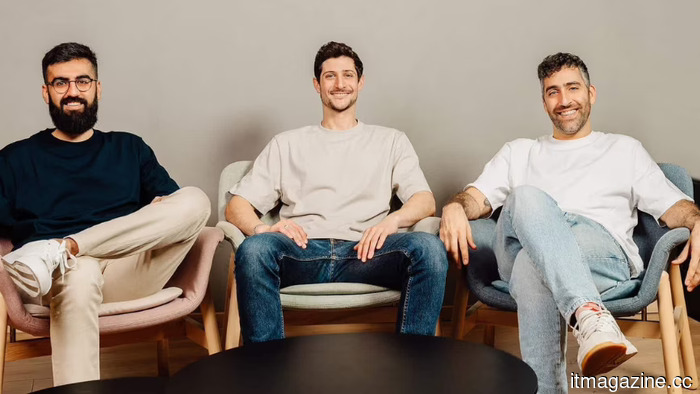 Fig broadens its platform throughout the entire SecOps engineering lifecycle, establishing resilience as the standard.
Fig implements a CI/CD-style engineering lifecycle for security operations, enabling SecOps teams to design, simulate, deploy, and continuously monitor detection modifications, complete with full context and rollback options.
Fig broadens its platform throughout the entire SecOps engineering lifecycle, establishing resilience as the standard.
Fig implements a CI/CD-style engineering lifecycle for security operations, enabling SecOps teams to design, simulate, deploy, and continuously monitor detection modifications, complete with full context and rollback options.
 Empirical Security secures $25M to anticipate your next breach.
Empirical Security secured $25 million in a Series A funding round to anticipate which vulnerabilities attackers are likely to exploit, founded by the team behind Kenna Security and EPSS.
Empirical Security secures $25M to anticipate your next breach.
Empirical Security secured $25 million in a Series A funding round to anticipate which vulnerabilities attackers are likely to exploit, founded by the team behind Kenna Security and EPSS.
Microsoft will finance Mistral's expansion of its AI operations in Europe through a multibillion-dollar agreement.
Microsoft will finance Mistral's European computing expansion through a multibillion-dollar agreement, without acquiring new equity, reinstating previous concerns about sovereignty.