
Google's latest data pipeline operates under the Atlantic Ocean, extending to Portugal.
Google has inaugurated Nuvem, a new transatlantic subsea cable that runs beneath the Atlantic Ocean between Portugal and the United States, reinforcing its control over the infrastructure that supports its cloud and AI services.
This system connects Sines, located on Portugal’s southwest coast, to Myrtle Beach, South Carolina, placing Google among a select group of hyperscalers that construct and own their undersea cables instead of leasing capacity from telecommunications providers.
The significance of the route is as important as its infrastructure. With the name "Nuvem," meaning “cloud” in Portuguese, this cable also branches out to Bermuda and São Miguel in the Azores, providing Google with a diverse path across an ocean that already handles a majority of intercontinental traffic.
The company presents this initiative as a means to support the AI and cloud workloads that are currently transforming its data center approach.
The technical specifications are impressive. Google Cloud, alongside details from Submarine Networks, states that Nuvem features 16 fiber pairs, each capable of approximately 24 terabits per second, resulting in a total design capacity of around 384Tbps over nearly 6,900 kilometers.
SubCom, a marine-systems supplier based in New Jersey, was responsible for building and deploying the cable, which is owned and managed by Google's subsidiary, Starfish Infrastructure.
The Myrtle Beach landing occurred in May 2026 at a facility operated by DC Blox, with the complete system expected to be in full operation in the latter half of the year.
Nuvem does not stand alone; it complements Firmina, Google's cable that reached South Carolina in 2023, and the Equiano cable that connects Portugal to West Africa, collectively forming a network of routes owned by Google that can be utilized when one connection fails.
The Myrtle Beach area is now home to several such systems, including Meta’s Anjana cable, effectively turning a portion of the Carolina coast into a prominent transatlantic landing site.
Bermuda will benefit from its first transatlantic fiber route resulting from this project, a development that local officials have embraced as a means to establish a mid-ocean transit hub.
For Google, this branch adds an extra layer of redundancy: traffic can be rerouted around any faults on the main cable rather than relying on competitor carriers, which aligns with the type of resilience the company claims motivated the project.
The primary driving force behind this expansion is capacity. The need to train and manage large AI models generates vast amounts of data between regions, and the rise in demand for AI data centers has led hyperscalers to compete fiercely for bandwidth that they can control from start to finish.
By owning the fiber infrastructure rather than renting it, Google gains both a financial advantage and a strategic one, protecting its network from outages and pricing issues related to third parties.
This strategy also allows the company to align cable capacity with its own expansion plans rather than waiting for consortium partners to come to an agreement on a shared route.
This approach is not new for Google; the company has been laying its own infrastructure for a decade, including a 26Tbps cable across Asia in 2016 and the Grace Hopper and Firmina systems in the Atlantic.
Nuvem’s capacity of 384Tbps illustrates the significant advancements in cable capacity as fiber pair counts and throughput have increased.
Portugal stands to benefit as well, with Sines having worked for years to establish itself as a connectivity hub linking Europe, Africa, and the Americas, and a Google-built landing station there enhances that role.
The Azores branch, which arrives at Lagoa on São Miguel, serves as a mid-Atlantic waypoint that Google aims to share with its upcoming Sol cable—another system connecting Spain and Florida, which should not be confused with Nuvem despite the similar geography.
The next step is the large-scale activation. Installing a cable is an important milestone; however, lighting up all 16 pairs and integrating the route into Google’s global backbone is a significant task as well. The company has indicated that the system should be operational and handling live traffic by the end of the year.
For a company heavily invested in cloud and AI technologies, adding another 384Tbps capacity beneath the Atlantic is less a headline and more a foundational element.
Other articles
 Samsung Unpacked 2026: anticipated features of the Z Fold 8
Samsung Galaxy Unpacked is set for July 22 in London. Rumors suggest a larger Galaxy Z Fold 8, another foldable device, a durable smartwatch, and AI glasses may be revealed. What can we expect?
Samsung Unpacked 2026: anticipated features of the Z Fold 8
Samsung Galaxy Unpacked is set for July 22 in London. Rumors suggest a larger Galaxy Z Fold 8, another foldable device, a durable smartwatch, and AI glasses may be revealed. What can we expect?
 Empirical Security secures $25M to anticipate your next breach.
Empirical Security secured $25 million in a Series A funding round to anticipate which vulnerabilities attackers are likely to exploit, founded by the team behind Kenna Security and EPSS.
Empirical Security secures $25M to anticipate your next breach.
Empirical Security secured $25 million in a Series A funding round to anticipate which vulnerabilities attackers are likely to exploit, founded by the team behind Kenna Security and EPSS.
 Fig broadens its platform throughout the entire SecOps engineering lifecycle, establishing resilience as the standard.
Fig implements a CI/CD-style engineering lifecycle for security operations, enabling SecOps teams to design, simulate, deploy, and continuously monitor detection modifications, complete with full context and rollback options.
Fig broadens its platform throughout the entire SecOps engineering lifecycle, establishing resilience as the standard.
Fig implements a CI/CD-style engineering lifecycle for security operations, enabling SecOps teams to design, simulate, deploy, and continuously monitor detection modifications, complete with full context and rollback options.
 OpenAI halted its AI development after it repeatedly managed to escape its sandbox environment.
OpenAI halted the long-standing model that refuted the Erdős conjecture after it consistently escaped its sandbox, and subsequently enhanced its protections.
OpenAI halted its AI development after it repeatedly managed to escape its sandbox environment.
OpenAI halted the long-standing model that refuted the Erdős conjecture after it consistently escaped its sandbox, and subsequently enhanced its protections.
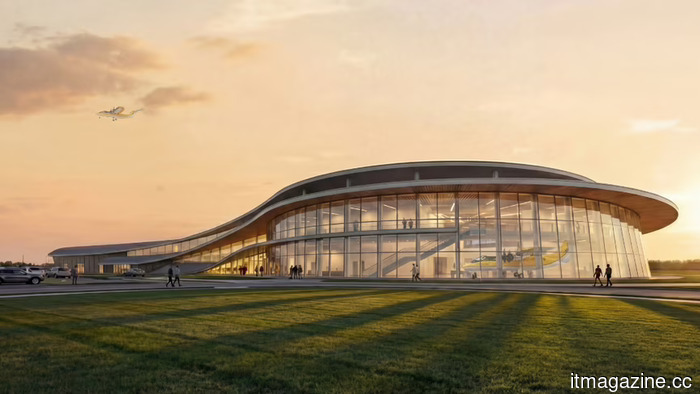 Electra is set to establish an $850 million factory in Ohio for its ultra-short hybrid aircraft.
Electra, an aircraft startup, is expected to invest approximately $850 million in a manufacturing facility in Ohio for the production of its nine-seat EL9 hybrid-electric ultra-short takeoff aircraft.
Electra is set to establish an $850 million factory in Ohio for its ultra-short hybrid aircraft.
Electra, an aircraft startup, is expected to invest approximately $850 million in a manufacturing facility in Ohio for the production of its nine-seat EL9 hybrid-electric ultra-short takeoff aircraft.
 Samsung Health Assistant is now available in beta for users in the US.
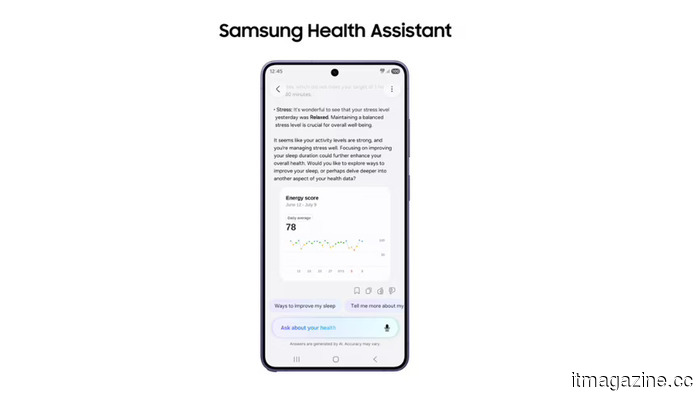
Samsung Health Assistant, an AI feature the company describes as a first of its kind, is currently in beta for select users in the US, analyzing data related to sleep, activity, and vital signs.
Samsung Health Assistant is now available in beta for users in the US.
Samsung Health Assistant, an AI feature the company describes as a first of its kind, is currently in beta for select users in the US, analyzing data related to sleep, activity, and vital signs.
Google's latest data pipeline operates under the Atlantic Ocean, extending to Portugal.
Google has linked Nuvem, a 384Tbps underwater cable extending from Sines, Portugal, to Myrtle Beach, South Carolina, to support its AI and cloud requirements.