
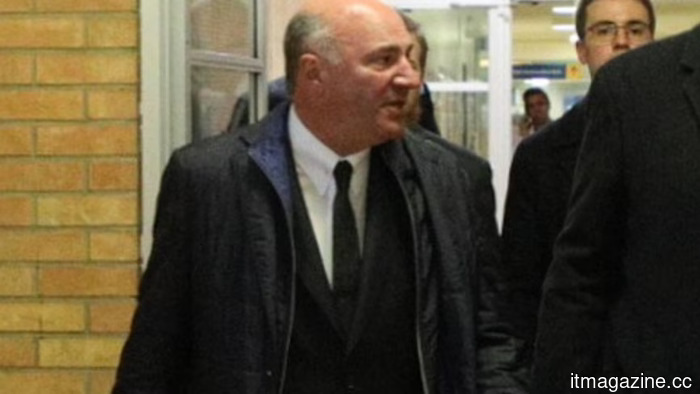
Kevin O'Leary claims that data centers consume less water than golf courses. However, the figures are more complex.
Kevin O’Leary has once again raised the comparison between water usage in data centres and golf courses. According to the "Shark Tank" investor, whose 40,000-acre Stratos data centre project in Utah faced protests and prompted an executive order from the governor, AI data centres currently use significantly less water than golf courses in the U.S. This comparison holds true today, as the Golf Course Superintendents Association of America estimates that U.S. golf courses consume 2.08 billion gallons of water daily for irrigation, while data centres utilize around 449 million gallons per day for cooling, as reported by the Florida Water & Pollution Control Operators Association.
This creates a 4.6-fold difference, and O'Leary is correct to highlight this disparity. However, the trends for the two sectors are diverging. Water usage in golf courses is either stable or decreasing, as the industry moves towards drought-resistant grasses and the use of recycled water. In contrast, water demand from data centres is rapidly increasing, driven by the needs of AI training and inference workloads. Current projections indicate that total water consumption by data centres could surpass that of golf courses around 2026 or 2027, reaching approximately 590 billion gallons by 2028, compared to the stagnant 425 billion gallons for golf courses. The governor of Utah issued an executive order in May to establish new development standards specifically due to the Stratos Project, which was originally intended for 40,000 acres next to the already diminishing Great Salt Lake.
After receiving a letter from the Republican state senate leader, O’Leary reduced the size of the project by 75% to 10,000 acres. He stated that the facility would employ a closed-loop cooling system that would not involve continuous water extraction. However, experts from Virginia Tech have mentioned that there is insufficient publicly available data to verify those statements. A second water rights application for the project was retracted in May. O’Leary has also claimed, without proof, that Chinese-funded “professional protesters” were behind the opposition. He and Fox News are currently facing a defamation lawsuit regarding these allegations.
The golf course comparison serves as a distraction disguised as a statistic. The Nashville Zoo is opposing a data centre planned just 50 yards from its animal habitats, while communities across the U.S. are mobilizing against projects that consume water, energy, and land at an industrial scale. No one is suggesting the construction of 9 gigawatts of new golf courses near the Great Salt Lake. The essential question isn't whether data centres use less water than golf courses today, but whether a single facility in a water-stressed area should be permitted to claim resources that could benefit an ecosystem already in crisis. O'Leary holds a degree in environmental studies and understands the distinction between a national average and a local aquifer.
Other articles
 Samsung Galaxy Z Flip 8: All the information available about the forthcoming clamshell folding smartphone.
The Samsung Galaxy Z Flip 8 is anticipated to feature the Exynos 2600 processor, quicker 45W charging, and a well-known foldable design.
Samsung Galaxy Z Flip 8: All the information available about the forthcoming clamshell folding smartphone.
The Samsung Galaxy Z Flip 8 is anticipated to feature the Exynos 2600 processor, quicker 45W charging, and a well-known foldable design.
 Meta has secured a patent for an AI system that continuously monitors your voice and gauges your mood throughout the day.
A Meta patent outlines a device that captures speech, sighs, and laughter to create an ongoing emotional profile. Amazon attempted a similar approach but was unsuccessful.
Meta has secured a patent for an AI system that continuously monitors your voice and gauges your mood throughout the day.
A Meta patent outlines a device that captures speech, sighs, and laughter to create an ongoing emotional profile. Amazon attempted a similar approach but was unsuccessful.
 Google Contacts adopts a useful iPhone feature to simplify the process of sharing your phone number.
Google is introducing a minor yet helpful update to the Contacts app on Android, simplifying the process of locating and sharing your own contact information. Instead of sifting through settings or adding a separate entry for yourself, you'll now find a specific ‘Your Info’ card prominently displayed at the top of your contacts […]
France and Germany have committed to developing a European competitor to Palantir's military artificial intelligence software.
Macron and Merz have signed a joint declaration to create a "European sovereign digital backbone" for defense, with France's Arcadia identified as the initial point of reference.
Google Contacts adopts a useful iPhone feature to simplify the process of sharing your phone number.
Google is introducing a minor yet helpful update to the Contacts app on Android, simplifying the process of locating and sharing your own contact information. Instead of sifting through settings or adding a separate entry for yourself, you'll now find a specific ‘Your Info’ card prominently displayed at the top of your contacts […]
France and Germany have committed to developing a European competitor to Palantir's military artificial intelligence software.
Macron and Merz have signed a joint declaration to create a "European sovereign digital backbone" for defense, with France's Arcadia identified as the initial point of reference.
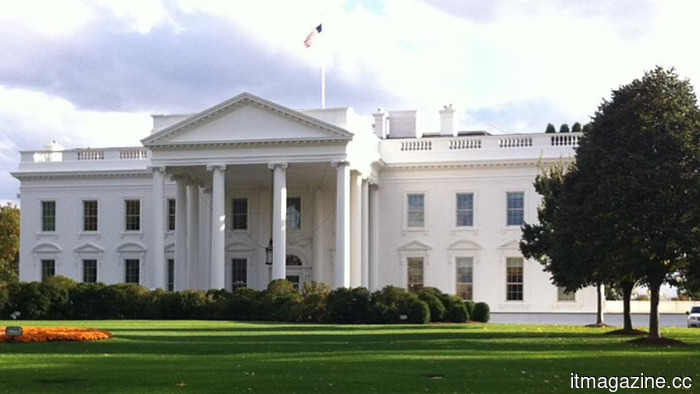 The White House is now determining who has access to advanced AI models, rather than the laboratories.
The Trump administration is controlling which companies have access to new AI models from Anthropic and OpenAI, transferring authority from technology corporations to the government.
The White House is now determining who has access to advanced AI models, rather than the laboratories.
The Trump administration is controlling which companies have access to new AI models from Anthropic and OpenAI, transferring authority from technology corporations to the government.
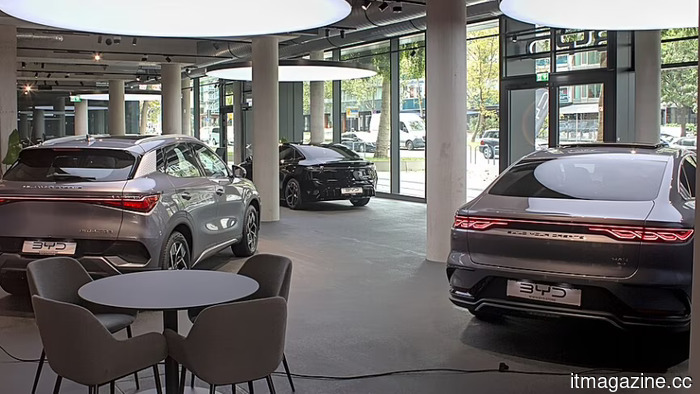 Chinese car sales in the UK soared from 384 in 2015 to 285,000 last year. The reason for this is the difference in tariffs.
In 2025, sales of vehicles manufactured in China in the UK rose to 285,000. Unlike the EU, the UK imposes no extra tariff on plug-in hybrids. Brands like BYD and Geely are rapidly increasing their market presence.
Chinese car sales in the UK soared from 384 in 2015 to 285,000 last year. The reason for this is the difference in tariffs.
In 2025, sales of vehicles manufactured in China in the UK rose to 285,000. Unlike the EU, the UK imposes no extra tariff on plug-in hybrids. Brands like BYD and Geely are rapidly increasing their market presence.
Kevin O'Leary claims that data centers consume less water than golf courses. However, the figures are more complex.
Golf courses consume 2.08 billion gallons of water daily, while data centres use 449 million gallons. However, the demand for water in data centres is rapidly increasing and may surpass that of golf courses by 2028.