
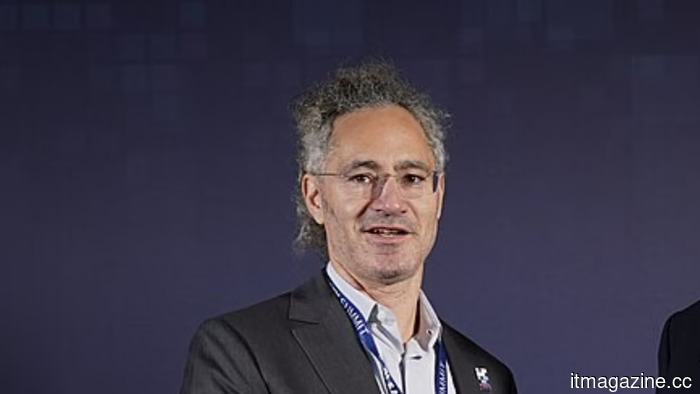
Palantir's CEO anticipates that AI will significantly increase his wealth by 20 times, while middle-class employees will see only slight salary increases.
TL;DR: Karp suggests AI could increase his wealth by 20 times ($300B), while middle-class salaries may only double. He labeled the resulting wealth inequality as “a problem for society.”
Palantir CEO Alex Karp projects that AI could boost his wealth to nearly $300 billion from about $15 billion today, stating that middle-class earnings might just double over the next ten years. He described the wealth disparity as “a complete decoupling of unimaginable wealth and normal wealth,” which he termed “a problem for society.”
During a discussion with Axel Springer CEO Mathias Döpfner on the MDMeets podcast, Karp expressed concern that while AI will elevate the living standards of average individuals, those involved in the AI sector may become 10 to 100 times wealthier. He criticized the accumulation of wealth by “people you don’t really relate to, like very oddly shaped IQ specimens that you probably wouldn’t want to have over for dinner” and described the hype around AI as “disconcerting” and “depressing.”
This acknowledgment is significant, considering Karp is pointing out an issue being driven by his own firm. Palantir's market capitalization has risen to about $322 billion, fueled by the demand for AI. Karp has also previously forecasted a potential nationalization of AI companies due to the growing political backlash against concentrated wealth. Oxfam reported that global billionaire wealth surged 16% in 2025 to $18.3 trillion, outpacing the five-year average by three times, while Elon Musk briefly achieved the status of the world's first trillionaire this year.
Karp is not the only one sounding alarms. BlackRock CEO Larry Fink remarked at Davos that the initial gains from AI are benefiting the owners of models, data, and infrastructure, raising the question: “What will happen to everyone else if AI does to white-collar workers what globalization did to blue-collar workers?” Geoffrey Hinton, a Nobel-winning AI researcher, was more straightforward: “Wealthy individuals will utilize AI to replace workers. This isn't the fault of AI; it's the capitalist system.” In May, South Korea's deputy PM echoed this sentiment amid tensions with Samsung's chip workers regarding how to fairly distribute AI profits. The real question is not whether AI leads to wealth concentration, but whether any government will take action before this gap becomes entrenched.
Other articles
 Microsoft will cease OneDrive synchronization on older versions of Windows 10 next month.
OneDrive synchronization updates will conclude on August 15 for Windows 10 versions prior to 22H2. There will be no further fixes or security updates. Users can still utilize the web interface or choose to upgrade to Windows 11.
Microsoft will cease OneDrive synchronization on older versions of Windows 10 next month.
OneDrive synchronization updates will conclude on August 15 for Windows 10 versions prior to 22H2. There will be no further fixes or security updates. Users can still utilize the web interface or choose to upgrade to Windows 11.
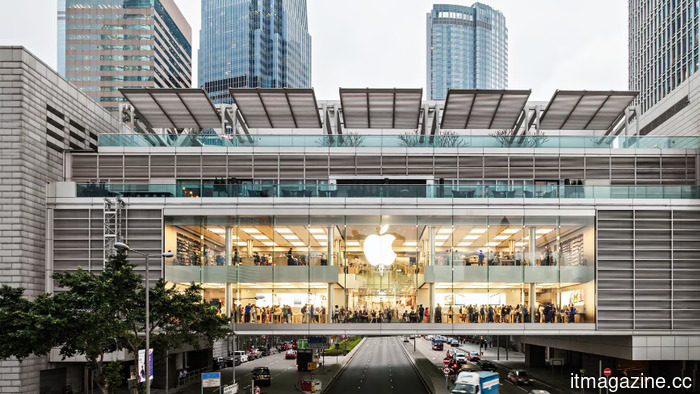 Apple is engaged in preliminary settlement discussions with the DOJ regarding its iPhone antitrust lawsuit.
Apple has proposed several settlement offers for the DOJ antitrust lawsuit of 2024. The antitrust chief from the Trump administration is advocating for a swift resolution of the cases passed down to them.
Apple is engaged in preliminary settlement discussions with the DOJ regarding its iPhone antitrust lawsuit.
Apple has proposed several settlement offers for the DOJ antitrust lawsuit of 2024. The antitrust chief from the Trump administration is advocating for a swift resolution of the cases passed down to them.
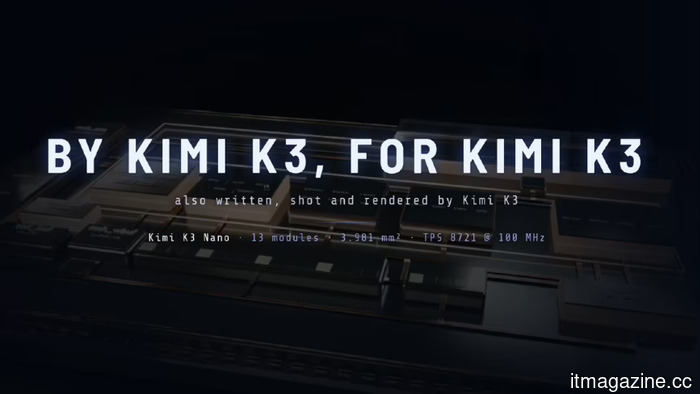 Trump's AI advisor states that Kimi K3 demonstrates
Kimi K3 reached the top of coding leaderboards in just one day. Sacks cautioned regarding US regulations. Khosla attributed issues to immigration. Marcus raised questions about the $1 trillion in US AI capital expenditures compared to China's expenditure.
Trump's AI advisor states that Kimi K3 demonstrates
Kimi K3 reached the top of coding leaderboards in just one day. Sacks cautioned regarding US regulations. Khosla attributed issues to immigration. Marcus raised questions about the $1 trillion in US AI capital expenditures compared to China's expenditure.
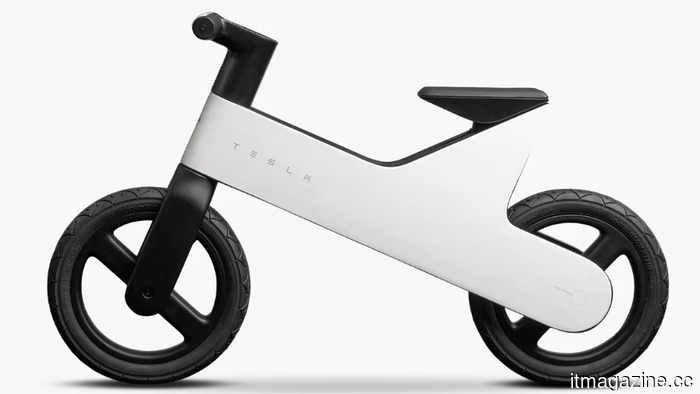 Tesla produced a balance bike for toddlers priced at $225. It features no motor and no pedals, and is already out of stock.
Tesla's Balance Bike for Kids is a toy designed for children aged 2 to 5, featuring a magnesium frame and no pedals or motors. It sold out immediately. Musk continues to refrain from producing an electric bike for adults.
Tesla produced a balance bike for toddlers priced at $225. It features no motor and no pedals, and is already out of stock.
Tesla's Balance Bike for Kids is a toy designed for children aged 2 to 5, featuring a magnesium frame and no pedals or motors. It sold out immediately. Musk continues to refrain from producing an electric bike for adults.
 Microsoft will cease syncing OneDrive on older versions of Windows 10 starting next month.
As of August 15, OneDrive synchronization updates will cease for Windows 10 versions earlier than 22H2, which means there will be no additional fixes or security updates. Users can either utilize the web interface or consider upgrading to Windows 11.
Microsoft will cease syncing OneDrive on older versions of Windows 10 starting next month.
As of August 15, OneDrive synchronization updates will cease for Windows 10 versions earlier than 22H2, which means there will be no additional fixes or security updates. Users can either utilize the web interface or consider upgrading to Windows 11.
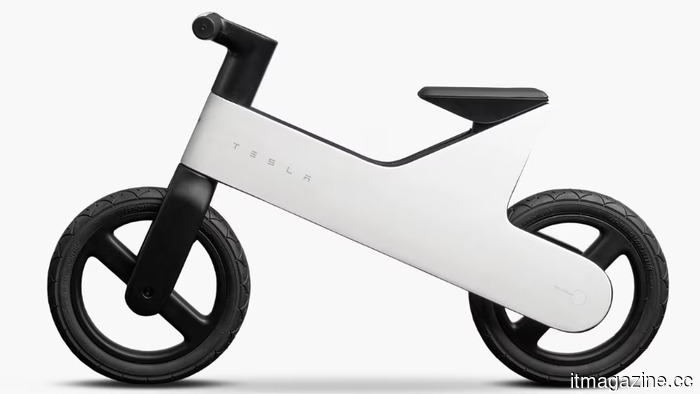 Tesla produced a balance bike for toddlers priced at $225. It features no motor and no pedals, and it is already out of stock.
Tesla's Balance Bike for Kids is a toy designed for ages 2-5, featuring a magnesium frame that is both pedal-free and motor-free. It sold out immediately. Musk continues to refrain from producing an e-bike for adults.
Tesla produced a balance bike for toddlers priced at $225. It features no motor and no pedals, and it is already out of stock.
Tesla's Balance Bike for Kids is a toy designed for ages 2-5, featuring a magnesium frame that is both pedal-free and motor-free. It sold out immediately. Musk continues to refrain from producing an e-bike for adults.
Palantir's CEO anticipates that AI will significantly increase his wealth by 20 times, while middle-class employees will see only slight salary increases.
Alex Karp states that AI has the potential to increase his $15 billion fortune to $300 billion, while the average salaries only double. He described this disparity as a "complete decoupling" and identified it as "a problem for society."