

Eoptolink files for a $5 billion listing for AI infrastructure in Hong Kong.
Eoptolink, a Chinese manufacturer of high-speed optical transceivers, has initiated a secondary listing in Hong Kong that could potentially generate up to $5 billion, surpassing the $3 billion anticipated in April. The rationale is that it is an understated "picks and shovels" beneficiary of the AI surge, providing 800G/1.6T optical modules that connect hyperscaler data centers, with clients including Google, Microsoft, and Amazon. The projected revenue for 2025 is approximately $3.7 billion, with net profit soaring 236% to about $1.4 billion. The article highlights the US-China interdependence (American AI relies on Chinese optics) and shares a common capex risk.
While the focus is on Nvidia and AI models, the companies quietly facilitating data center connectivity are thriving. Bloomberg reports that Eoptolink has filed for a secondary listing in Hong Kong with the potential to raise between $4 billion and $5 billion, indicating stronger-than-anticipated investor interest.
What Eoptolink produces is essentially the basic infrastructure for AI. Optical transceivers convert electrical signals into light and back, enabling rapid data transmission between servers and chips.
As AI clusters expand, this infrastructure becomes essential. With training and inference operations transferring terabytes per second, hyperscalers are in a race to implement 800G and 1.6T modules, which are Eoptolink’s expertise.
The customer base justifies the company's valuation, as major players like Google, Microsoft, and Amazon depend on Eoptolink’s transceivers to integrate their data centers.
Financially, the AI expansion has significantly boosted Eoptolink’s performance. The company reported 2025 revenue of around 24.8 billion yuan, roughly $3.7 billion, with net profit increasing by 236% to about $1.4 billion. The company’s stocks have surged nearly 80% this year, although the listing still awaits approval from shareholders, China’s securities regulator, and Hong Kong's authorities.
Eoptolink is not an isolated case; Hong Kong has emerged as a preferred location for Chinese tech firms as US and EU pressures increase. AI-infrastructure companies are leading this trend, with Baidu’s chip division aiming for a $50 billion IPO in Hong Kong and Apple suppliers raising substantial funds for AI hardware adaptations.
Hong Kong has quietly transformed into a pivotal hub for chips, processing over half of China’s chip imports. Both money and hardware are now converging in this location.
However, there exists a complex interdependence. America’s AI growth, driven by its hyperscalers, partially relies on Chinese optical components, even as attempts at economic decoupling are underway. So far, optics have avoided the export control battles impacting advanced chips. Eoptolink's dealings with companies like Google and Amazon represent connections that neither government has attempted to disrupt—at least for now.
The downside to riding the wave of AI capital expenditure is the risk of a downturn. Eoptolink’s success is linked to hyperscalers’ annual spending of about $700 billion on infrastructure. This financial commitment hinges on the assumption that AI development will yield returns, an assumption that is becoming increasingly scrutinized in the markets. If growth slows, suppliers of the necessary infrastructure could also face challenges.
At this moment, demand remains robust, and profits are substantial. Eoptolink exemplifies that in a gold rush, the company providing the essential wiring can indeed prosper significantly.
Other articles
 SAP's EUR 1 billion investment in AI focuses on data management and analytics rather than chatbots.
SAP has finalized its acquisition of Prior Labs, the creator of TabPFN, a foundational model for structured data. This move represents an investment of over EUR 1 billion in tabular AI and marks a unique success for Europe.
SAP's EUR 1 billion investment in AI focuses on data management and analytics rather than chatbots.
SAP has finalized its acquisition of Prior Labs, the creator of TabPFN, a foundational model for structured data. This move represents an investment of over EUR 1 billion in tabular AI and marks a unique success for Europe.
 SAP's EUR 1 billion investment in AI focuses on tables rather than chatbots.
SAP has finalized its acquisition of Prior Labs, the creator of TabPFN, a foundational model designed for structured data. This investment, exceeding EUR 1 billion, represents a significant commitment to tabular AI and marks an uncommon success for Europe.
Bunkerhill secures $55 million for clinically developed AI agents for hospitals.
Bunkerhill Health, supported by Khosla, enables hospitals to create their own clinical AI agents. In one healthcare system, over 20 are currently operational, managing patient triage and routing.
Kimi K3 unsettled the markets. The selloff in AI was already set in motion.
Moonshot's Kimi K3 contributed to a worldwide tech decline, but disappointing earnings and the conflict in Iran were significant factors as well. The main concern is US AI capital expenditures.
SAP's EUR 1 billion investment in AI focuses on tables rather than chatbots.
SAP has finalized its acquisition of Prior Labs, the creator of TabPFN, a foundational model designed for structured data. This investment, exceeding EUR 1 billion, represents a significant commitment to tabular AI and marks an uncommon success for Europe.
Bunkerhill secures $55 million for clinically developed AI agents for hospitals.
Bunkerhill Health, supported by Khosla, enables hospitals to create their own clinical AI agents. In one healthcare system, over 20 are currently operational, managing patient triage and routing.
Kimi K3 unsettled the markets. The selloff in AI was already set in motion.
Moonshot's Kimi K3 contributed to a worldwide tech decline, but disappointing earnings and the conflict in Iran were significant factors as well. The main concern is US AI capital expenditures.
 A new open-weight AI from China is surpassing the leading models from OpenAI and Claude Fable.
Moonshot's Kimi K3, with its 2.8 trillion parameters, nearly matches Fable 5 and GPT 5.6 Sol across multiple benchmarks, all while maintaining open weight.
A new open-weight AI from China is surpassing the leading models from OpenAI and Claude Fable.
Moonshot's Kimi K3, with its 2.8 trillion parameters, nearly matches Fable 5 and GPT 5.6 Sol across multiple benchmarks, all while maintaining open weight.
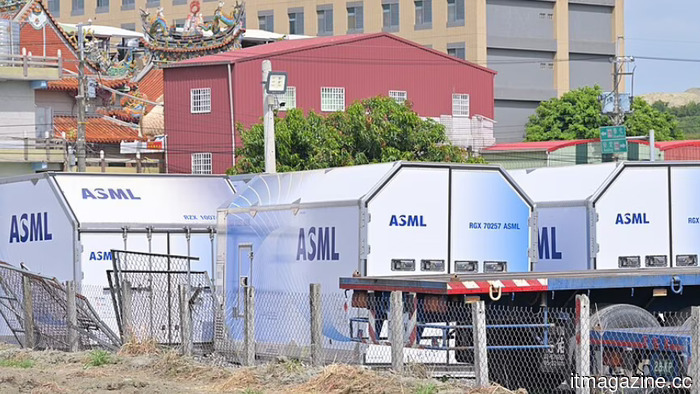 ASML will award a €20,000 bonus to each employee as record sales are driven by the demand for AI.
ASML's 45,000 staff will be granted a one-time share award of €20,000, which will vest in 2030. This year, Samsung, SK Hynix, and TSMC have also implemented similar distributions.
ASML will award a €20,000 bonus to each employee as record sales are driven by the demand for AI.
ASML's 45,000 staff will be granted a one-time share award of €20,000, which will vest in 2030. This year, Samsung, SK Hynix, and TSMC have also implemented similar distributions.
Eoptolink files for a $5 billion listing for AI infrastructure in Hong Kong.
Eoptolink, the manufacturer of optical transceivers used in AI data centres for Google and Amazon, has applied for a Hong Kong listing valued at up to $5 billion following a profit increase of 236%.