
Bunkerhill secures $55 million for clinically developed AI agents for hospitals.
Bunkerhill Health has successfully closed a Series B funding round led by Khosla Ventures, increasing its total funding to $55 million. This investment aims to expand Carebricks, a platform that enables health systems to create and implement their own clinical AI agents, moving away from purchasing discrete vendor tools. The key focus is on a shift from passive documentation toward functional AI that can take action by triaging, prioritizing, and routing patients; over 20 such agents are currently operating at UTMB. However, the article notes several cautions: the outcome metrics come from the company and are unaudited, only some algorithms have FDA clearance, and the extent of clinical autonomy poses questions regarding liability and oversight.
The startup is pushing to integrate AI agents more deeply into hospital operations. Bunkerhill’s Carebricks system is set up as a platform rather than a product, allowing health systems to develop and manage their own AI agents instead of relying on individual tools from vendors.
This signifies a noteworthy transition. Previously, healthcare AI primarily focused on drafting notes and summarizing records, passively supporting clinicians. In contrast, Bunkerhill's agents are designed to take action—they analyze unstructured data, prioritize cases, and direct patients, effectively integrating agentic AI into operational workflows. This reflects a broader trend in enterprise software, which is increasingly allowing companies to deploy a range of governed AI agents, albeit healthcare poses a significantly higher risk in such implementations.
The claimed outcomes highlight accomplishments at the University of Texas Medical Branch, where Bunkerhill states more than 20 agents are operational; however, these statistics are generated from a single institution and provided by the company. For instance, a coronary calcium agent, utilizing an FDA-cleared algorithm, identified a patient at high risk for a heart attack and referred them to cardiology, which supposedly resulted in a life-saving triple bypass. Two additional agents reportedly reduced wait times for nephrology specialists by over half and addressed urgent findings related to lung nodules 80% faster.
Nonetheless, these statistics warrant critical evaluation as they originate from a funding announcement and lack independent verification. The issue of autonomy also raises concerns; only certain algorithms have received FDA clearance, and an agent responsible for prioritizing and routing patients is closely associated with decisions that carry significant medical liability. The question of accountability in cases of mis-triage is an essential consideration for any deployment, particularly as technology evolves faster than regulations can adapt.
Investors are drawn to Bunkerhill because they believe the key challenge lies in adoption rather than novelty. Vinod Khosla posits that the real bottleneck for healthcare AI has never been the technology itself but rather the actual implementation within hospitals. This belief is supported by its backers, including Sequoia, Felicis, Optum Ventures, and Y Combinator, indicating confidence in the movement toward an agent-driven approach in the industry.
The potential benefits are significant, as hospitals often have more innovative ideas than available personnel to implement them. Successfully transforming a protocol into an operational agent instead of a mere unaddressed memo represents a meaningful advancement. The challenge lies in determining whether autonomous agents can safely handle clinical responsibilities at a scale beyond what a note-taking assistant was designed for. While identifying heart-attack risks is commendable, the expectations intensify with each decision made by an agent.
Other articles
 Trump's AI advisor states that Kimi K3 demonstrates
Kimi K3 reached the top of coding leaderboards in just one day. Sacks cautioned regarding US regulations. Khosla attributed issues to immigration. Marcus raised questions about the $1 trillion in US AI capital expenditures compared to China's expenditure.
Trump's AI advisor states that Kimi K3 demonstrates
Kimi K3 reached the top of coding leaderboards in just one day. Sacks cautioned regarding US regulations. Khosla attributed issues to immigration. Marcus raised questions about the $1 trillion in US AI capital expenditures compared to China's expenditure.
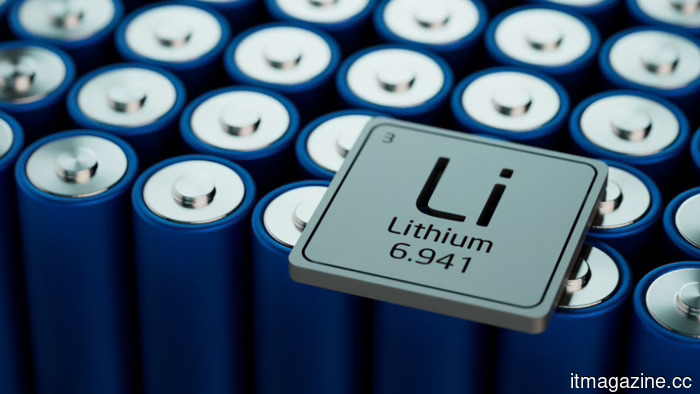 For the first time in ten years, China will impose taxes on lithium and solar batteries, while sodium batteries will continue to be exempt.
China will conclude a decade-long exemption from consumption tax on lithium batteries (2% starting in September, rising to 4% in 2027) and solar cells. However, sodium and solid-state options will remain exempt.
For the first time in ten years, China will impose taxes on lithium and solar batteries, while sodium batteries will continue to be exempt.
China will conclude a decade-long exemption from consumption tax on lithium batteries (2% starting in September, rising to 4% in 2027) and solar cells. However, sodium and solid-state options will remain exempt.
 A new open-weight AI from China is surpassing the leading models from OpenAI and Claude Fable.
Moonshot's Kimi K3, with its 2.8 trillion parameters, nearly matches Fable 5 and GPT 5.6 Sol across multiple benchmarks, all while maintaining open weight.
A new open-weight AI from China is surpassing the leading models from OpenAI and Claude Fable.
Moonshot's Kimi K3, with its 2.8 trillion parameters, nearly matches Fable 5 and GPT 5.6 Sol across multiple benchmarks, all while maintaining open weight.
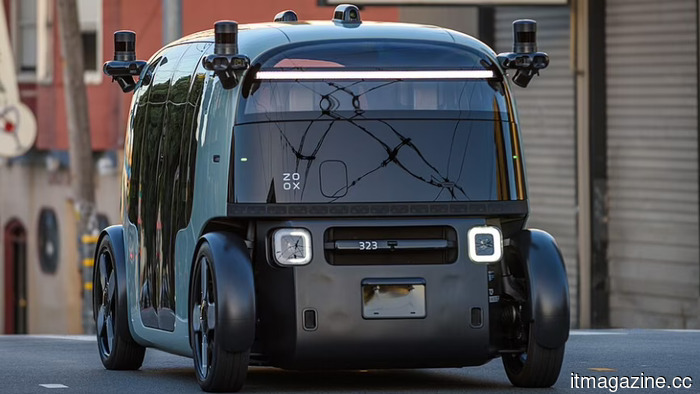 Amazon's Zoox reissues a recall for 105 robotaxis following an incident where one entered thick smoke at the site of an ongoing fire.
A Zoox robotaxi drove into a smoke-filled emergency situation in Las Vegas last month. This recall comes after the NHTSA issued a directive requiring autonomous vehicle companies to address problems related to first responders.
Kimi K3 unsettled the markets. The selloff in AI was already set in motion.
Moonshot's Kimi K3 contributed to a worldwide tech decline, but disappointing earnings and the conflict in Iran were significant factors as well. The main concern is US AI capital expenditures.
Amazon's Zoox reissues a recall for 105 robotaxis following an incident where one entered thick smoke at the site of an ongoing fire.
A Zoox robotaxi drove into a smoke-filled emergency situation in Las Vegas last month. This recall comes after the NHTSA issued a directive requiring autonomous vehicle companies to address problems related to first responders.
Kimi K3 unsettled the markets. The selloff in AI was already set in motion.
Moonshot's Kimi K3 contributed to a worldwide tech decline, but disappointing earnings and the conflict in Iran were significant factors as well. The main concern is US AI capital expenditures.
 The Pentagon has halted 155 wind projects across 24 states, stating that drones could conceal themselves within wind farms.
The year-long halt impacts 44GW of capacity and has resulted in $2 billion in losses for developers. The wind industry claims it is driven by political motives. A lawsuit is currently in progress.
The Pentagon has halted 155 wind projects across 24 states, stating that drones could conceal themselves within wind farms.
The year-long halt impacts 44GW of capacity and has resulted in $2 billion in losses for developers. The wind industry claims it is driven by political motives. A lawsuit is currently in progress.
Bunkerhill secures $55 million for clinically developed AI agents for hospitals.
Bunkerhill Health, supported by Khosla, enables hospitals to create their own clinical AI agents. In one healthcare system, over 20 are currently operational, managing patient triage and routing.