
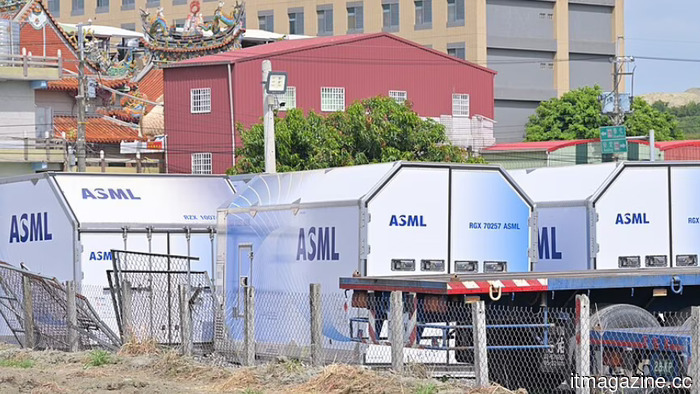
ASML will award a €20,000 bonus to each employee as record sales are driven by the demand for AI.
ASML announced that it will grant all 45,000 global employees a one-time share award of €20,000 ($22,862), with the shares vesting on January 1, 2030, for those who remain with the company until then. This move aligns with a trend of AI-related bonuses in the semiconductor industry, where Samsung has offered average bonuses of $340,000 to its chip workers following record profits, and SK Hynix has made similar distributions. TSMC has pledged to increase profit-sharing by over 30% on average this year. As AI infrastructure investments rise, there is increasing pressure on companies to distribute profits to their workforce. In May, South Korea’s deputy prime minister cautioned that AI-related labor disputes are likely to continue as "super-large companies" emerge.
Additionally, ASML has revised its annual sales forecast upwards for the second time this year, projecting between €43 billion and €45 billion, and plans to increase its production capacity by 30% by 2027. The company is also reducing the build time for EUV machines by one third and is nearly sold out through 2028. As the sole producer of extreme ultraviolet lithography machines, ASML's equipment is vital for all advanced chips from TSMC, Samsung, and Intel.
The share award also serves as a retention strategy, as ASML is undergoing a restructuring that streamlines management levels while simultaneously needing to recruit and retain engineers who manufacture sophisticated machines in the semiconductor supply chain. With a vesting period lasting nearly four years, coinciding with ASML’s significant capacity expansion plans, this total payout of approximately €900 million is poised to be one of the largest single employee compensations in European technology history.
Other articles
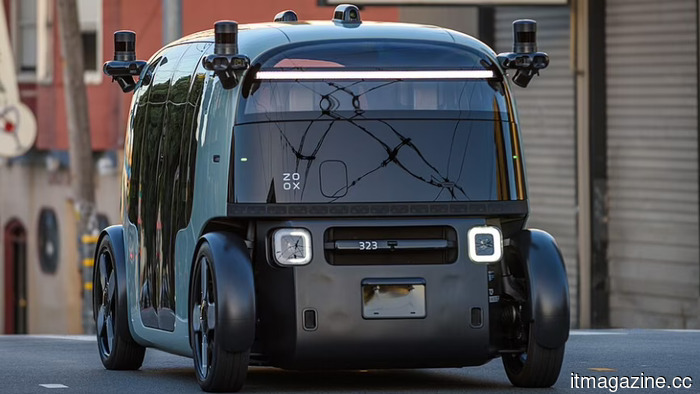 Amazon's Zoox reissues a recall for 105 robotaxis following an incident where one entered thick smoke at the site of an ongoing fire.
A Zoox robotaxi drove into a smoke-filled emergency situation in Las Vegas last month. This recall comes after the NHTSA issued a directive requiring autonomous vehicle companies to address problems related to first responders.
Amazon's Zoox reissues a recall for 105 robotaxis following an incident where one entered thick smoke at the site of an ongoing fire.
A Zoox robotaxi drove into a smoke-filled emergency situation in Las Vegas last month. This recall comes after the NHTSA issued a directive requiring autonomous vehicle companies to address problems related to first responders.
 Trump's AI advisor states that Kimi K3 demonstrates
Kimi K3 reached the top of coding leaderboards in just one day. Sacks cautioned regarding US regulations. Khosla attributed issues to immigration. Marcus raised questions about the $1 trillion in US AI capital expenditures compared to China's expenditure.
Trump's AI advisor states that Kimi K3 demonstrates
Kimi K3 reached the top of coding leaderboards in just one day. Sacks cautioned regarding US regulations. Khosla attributed issues to immigration. Marcus raised questions about the $1 trillion in US AI capital expenditures compared to China's expenditure.
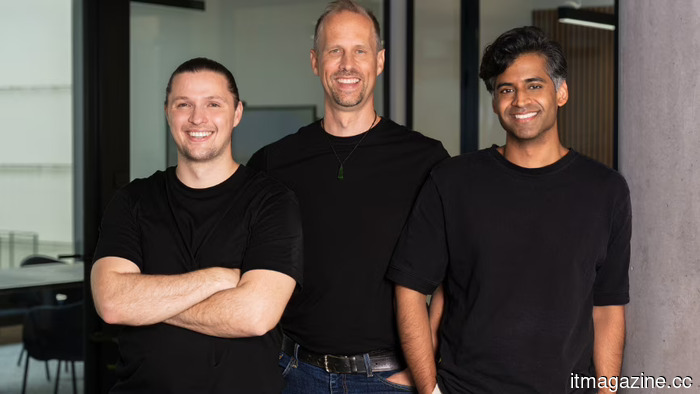 SAP's EUR 1 billion investment in AI focuses on data management and analytics rather than chatbots.
SAP has finalized its acquisition of Prior Labs, the creator of TabPFN, a foundational model for structured data. This move represents an investment of over EUR 1 billion in tabular AI and marks a unique success for Europe.
SAP's EUR 1 billion investment in AI focuses on data management and analytics rather than chatbots.
SAP has finalized its acquisition of Prior Labs, the creator of TabPFN, a foundational model for structured data. This move represents an investment of over EUR 1 billion in tabular AI and marks a unique success for Europe.
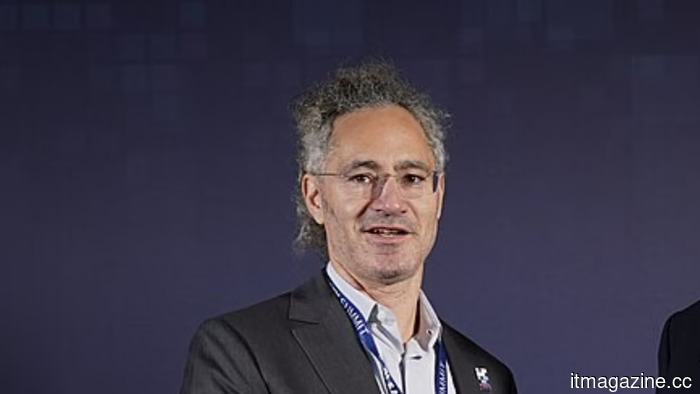 Palantir's CEO anticipates that AI will significantly increase his wealth by 20 times, while middle-class employees will see only slight salary increases.
Alex Karp states that AI has the potential to increase his $15 billion fortune to $300 billion, while the average salaries only double. He described this disparity as a "complete decoupling" and identified it as "a problem for society."
Palantir's CEO anticipates that AI will significantly increase his wealth by 20 times, while middle-class employees will see only slight salary increases.
Alex Karp states that AI has the potential to increase his $15 billion fortune to $300 billion, while the average salaries only double. He described this disparity as a "complete decoupling" and identified it as "a problem for society."
 Eoptolink files for a $5 billion listing for AI infrastructure in Hong Kong.
Eoptolink, the manufacturer of optical transceivers used in AI data centres for Google and Amazon, has applied for a Hong Kong listing valued at up to $5 billion following a profit increase of 236%.
Eoptolink files for a $5 billion listing for AI infrastructure in Hong Kong.
Eoptolink, the manufacturer of optical transceivers used in AI data centres for Google and Amazon, has applied for a Hong Kong listing valued at up to $5 billion following a profit increase of 236%.
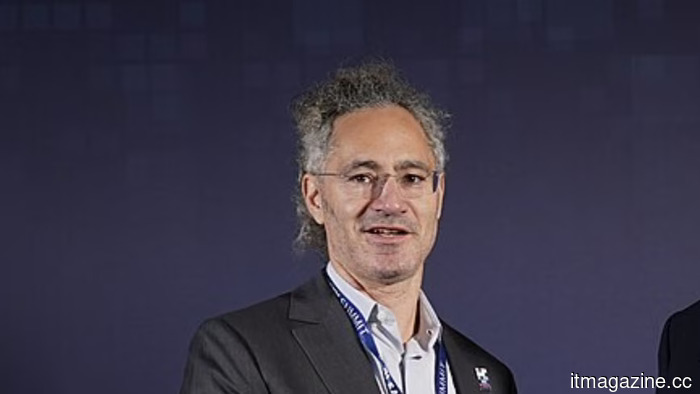 The CEO of Palantir anticipates that AI will increase his wealth by twentyfold while middle-class employees receive only small salary increases.
Alex Karp stated that AI might increase his $15 billion fortune to $300 billion, while average salaries might only double. He described the disparity as a "complete decoupling" and labeled it "a problem for society."
The CEO of Palantir anticipates that AI will increase his wealth by twentyfold while middle-class employees receive only small salary increases.
Alex Karp stated that AI might increase his $15 billion fortune to $300 billion, while average salaries might only double. He described the disparity as a "complete decoupling" and labeled it "a problem for society."
ASML will award a €20,000 bonus to each employee as record sales are driven by the demand for AI.
ASML's 45,000 staff will be granted a one-time share award of €20,000, which will vest in 2030. This year, Samsung, SK Hynix, and TSMC have also implemented similar distributions.