
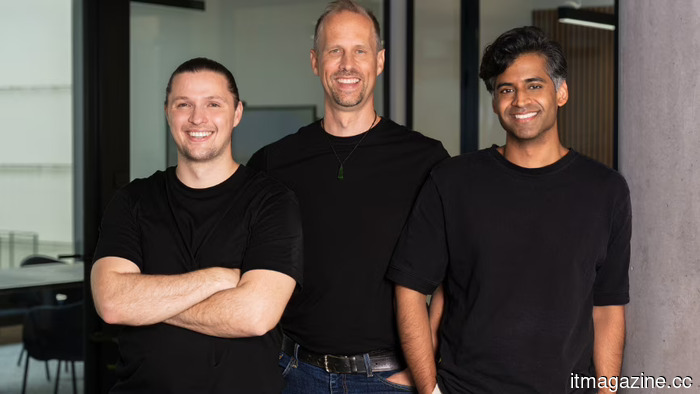
SAP's EUR 1 billion investment in AI focuses on data management and analytics rather than chatbots.
The AI sector is focused on developing models for writing and speaking. However, SAP has made a significant investment in a different type of model, one designed for structured data, following its acquisition of Prior Labs.
The acquisition is finalized, with regulatory clearances obtained, and the lab located in Freiburg is now operating within SAP. The German software company is committing over €1 billion to this initiative over the next four years.
What Prior Labs actually does
Many AI foundation models are catered towards processing text, images, or audio. In contrast, Prior Labs specializes in creating foundation models for tables, which consist of the structured data that businesses rely on.
The TabPFN model from Prior Labs, featured in Nature, has set a new standard for tabular predictions across numerous independent studies. It is designed to forecast and classify data from spreadsheets and databases, rather than from text narratives.
This seemingly mundane capability has significant applications. It has already been deployed in areas like financial risk assessment, loan approvals, predictive maintenance for rail systems, and cancer diagnostics.
Why SAP is interested
The alignment is almost perfect. SAP’s business revolves around the structured enterprise data within company systems, which is precisely the type of data Prior Labs specializes in analyzing.
Moreover, it addresses a significant shortcoming. Many companies struggle with the structured-data aspect of enterprise AI, even as they invest heavily in chatbot technologies.
SAP has been investing substantially to enhance its capabilities, including the development of an autonomous enterprise with over 200 AI agents and the integration of new automation features into its AI studio. In fact, the company has even put a freeze on hiring and travel to facilitate this effort.
A rare win for Europe
The strategic significance of this deal is noteworthy. A European software giant has acquired a prominent European lab while ensuring it remains open and independent.
This outcome aligns perfectly with the goals EU policymakers have been working towards for years. Prior Labs retains its brand, operates out of Freiburg, continues to offer open-source models, and has an advisory board that includes Meta’s Yann LeCun.
This achievement stands out in contrast to the limited success of other notable European AI companies, which have generally merged with or been absorbed by larger entities rather than establishing a leading firm within Europe.
The broader implication
This acquisition signals the emergence of tabular AI as a legitimate category. Microsoft, Google, and AWS are also exploring structured-data models, and SAP has acquired one of the most reputable independent initiatives in this space.
Additionally, this represents a subtle shift away from the chatbot obsession. The most valuable AI for businesses might not be the technology that composes emails, but rather the one that can predict loan defaults or identify impending train failures.
SAP is betting that the next frontier for enterprise AI lies in the existing data within companies. The models will remain open, the lab will continue to operate in Freiburg, and the investment has now exceeded €1 billion.
Other articles
 Anthropic is in preliminary discussions to secure a lease of $10 billion in computing resources from Meta.
The agreement would come after Anthropic's $1.25B monthly arrangement with SpaceX for Colossus. Meanwhile, Meta is developing a cloud business to capitalize on $145B invested in AI infrastructure.
Anthropic is in preliminary discussions to secure a lease of $10 billion in computing resources from Meta.
The agreement would come after Anthropic's $1.25B monthly arrangement with SpaceX for Colossus. Meanwhile, Meta is developing a cloud business to capitalize on $145B invested in AI infrastructure.
 The Pentagon has halted 155 wind projects across 24 states, arguing that drones could conceal themselves within wind farms.
The year-long suspension impacts 44GW of capacity and has resulted in a $2 billion loss for developers. The wind industry claims it is driven by political motives. Legal action is currently in progress.
Kimi K3 unsettled the markets. The selloff in AI was already set in motion.
Moonshot's Kimi K3 contributed to a worldwide tech decline, but disappointing earnings and the conflict in Iran were significant factors as well. The main concern is US AI capital expenditures.
The Pentagon has halted 155 wind projects across 24 states, arguing that drones could conceal themselves within wind farms.
The year-long suspension impacts 44GW of capacity and has resulted in a $2 billion loss for developers. The wind industry claims it is driven by political motives. Legal action is currently in progress.
Kimi K3 unsettled the markets. The selloff in AI was already set in motion.
Moonshot's Kimi K3 contributed to a worldwide tech decline, but disappointing earnings and the conflict in Iran were significant factors as well. The main concern is US AI capital expenditures.
 Amazon's Zoox reissues a recall for 105 robotaxis following an incident where one entered thick smoke at the site of an ongoing fire.
A Zoox robotaxi drove into a smoke-filled emergency situation in Las Vegas last month. This recall comes after the NHTSA issued a directive requiring autonomous vehicle companies to address problems related to first responders.
Amazon's Zoox reissues a recall for 105 robotaxis following an incident where one entered thick smoke at the site of an ongoing fire.
A Zoox robotaxi drove into a smoke-filled emergency situation in Las Vegas last month. This recall comes after the NHTSA issued a directive requiring autonomous vehicle companies to address problems related to first responders.
 The Pentagon has halted 155 wind projects across 24 states, stating that drones could conceal themselves within wind farms.
The year-long halt impacts 44GW of capacity and has resulted in $2 billion in losses for developers. The wind industry claims it is driven by political motives. A lawsuit is currently in progress.
Bunkerhill secures $55 million for clinically developed AI agents for hospitals.
Bunkerhill Health, supported by Khosla, enables hospitals to create their own clinical AI agents. In one healthcare system, over 20 are currently operational, managing patient triage and routing.
The Pentagon has halted 155 wind projects across 24 states, stating that drones could conceal themselves within wind farms.
The year-long halt impacts 44GW of capacity and has resulted in $2 billion in losses for developers. The wind industry claims it is driven by political motives. A lawsuit is currently in progress.
Bunkerhill secures $55 million for clinically developed AI agents for hospitals.
Bunkerhill Health, supported by Khosla, enables hospitals to create their own clinical AI agents. In one healthcare system, over 20 are currently operational, managing patient triage and routing.
SAP's EUR 1 billion investment in AI focuses on data management and analytics rather than chatbots.
SAP has finalized its acquisition of Prior Labs, the creator of TabPFN, a foundational model for structured data. This move represents an investment of over EUR 1 billion in tabular AI and marks a unique success for Europe.