
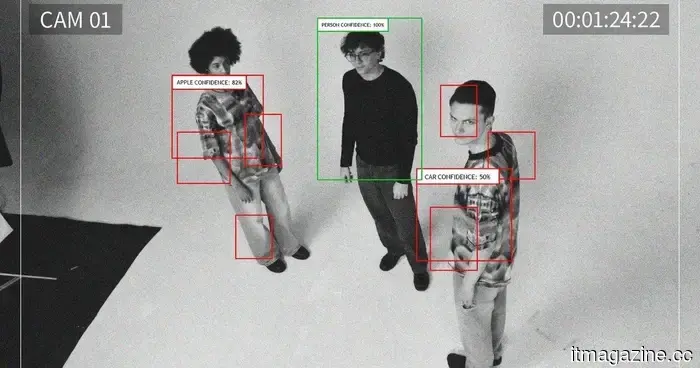
Clothing designed to thwart surveillance is becoming more affordable, but don’t anticipate a cloak of invisibility.
Inexpensive shirts are now said to confuse facial recognition, though their effectiveness largely relies on the type of camera and software observing you.
Anti-surveillance apparel is evolving, appearing less like a concept from an art school project and more like something practical for everyday wear. Shirts engineered to disrupt facial recognition systems are becoming available at prices comparable to typical streetwear, although purchasing one won't render you invisible.
The Guardian notes that designers are utilizing face-like patterns, unconventional designs, and infrared lights to interfere with computer vision. These methods exploit specific vulnerabilities, meaning their effectiveness varies based on the observing technology.
How does clothing confuse a camera?
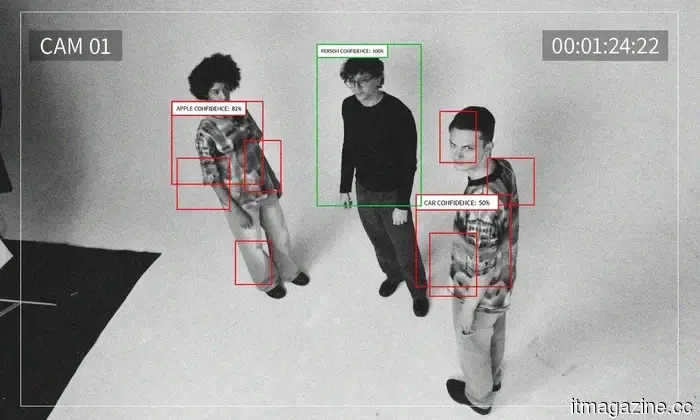
Adversarial clothing exploits the shortcuts that software takes in recognizing individuals and objects. Urban Privacy’s Faception designs use scattered fake faces across the fabric to create added visual noise for algorithms to process.
Cap_able
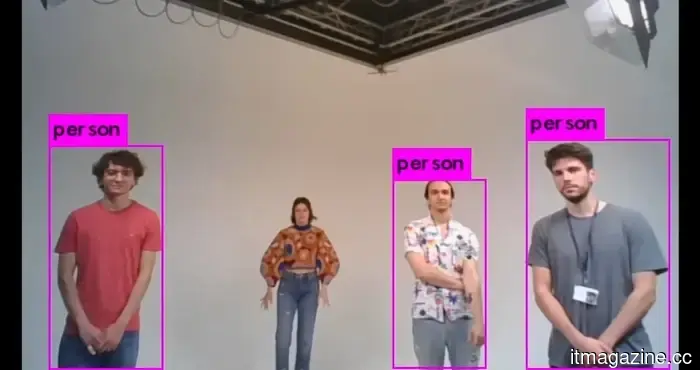
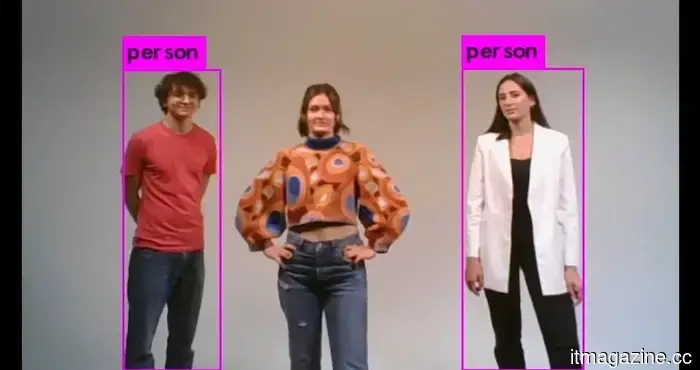
Cap_able employs knitted patterns generated by AI. The company claims that certain versions of the YOLO object-detection system have mistaken its designs for animals or small figures rather than recognizing the wearer as a person. This is an amusing outcome, but tricking one model does not guarantee that the same will work with others.
Urban Privacy’s experimental Urban Ghost coat utilizes a different strategy. The infrared LEDs positioned around its hood aim to overwhelm compatible night-vision cameras, although standard cameras and other surveillance systems may not be affected at all.
How affordable is privacy fashion?
Urban Privacy offers Faception Reloaded T-shirts starting at €35, sweatshirts from €59, and hoodies from €65. At these prices, anti-surveillance clothing is accessible to more than just affluent privacy advocates or display mannequins in galleries.
Cap_able, on the other hand, is significantly pricier. Its knitted crop tops begin at €560, while a hoodie is priced at €620, firmly placing the collection in the realm of wearable art. However, the more budget-friendly Urban Privacy items demonstrate how quickly the concept is becoming accessible. You can now try out an adversarial pattern without draining your finances.
Cap_able
Why should you not fully trust it?
Results from controlled tests against a single object-detection model cannot confirm that a garment will consistently thwart facial recognition in real-world situations. Factors such as lighting and camera angle can affect outcomes, and newer software might adapt to disregard patterns that previously caused challenges. Researcher Jennifer Bell also pointed out to The Guardian that these products have not been subjected to independent real-world testing.
As a result, adversarial clothing may serve more as a form of protest than as reliable protection. Wearing such clothing makes a clear statement against surveillance and might hinder certain systems occasionally. However, it's wise not to rely on a patterned hoodie as a complete means of anonymity. Until broader independent testing is conducted, it's best to assume the camera can still detect you.
Paulo Vargas is an English major who transitioned from journalism to technical writing, with a career that has consistently bridged the two fields.
This drone employs a visual illusion to blend into the surroundings.
This drone doesn’t become invisible; it tricks your mind into believing it does.
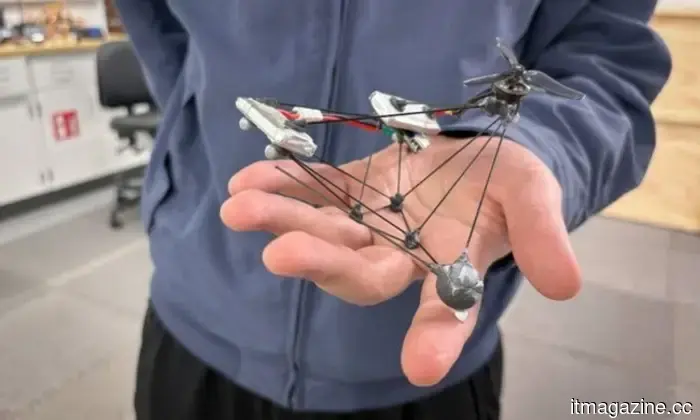
For years, engineers have pursued the concept of an invisible drone. Traditional methods have included transparent materials, camouflage, or intricate optical systems that bend light around an object. Researchers from Northwestern University chose a radically different approach. Instead of attempting to conceal the drone itself, they aimed to deceive the human eye.
The outcome is Phantom Twist, an experimental drone that spins at such high speed that it almost becomes indistinct in the background. While not genuinely invisible, it appears more like a faint blur than a flying object to onlookers.
This advanced knitted fabric can operate switches, track your steps, and even morph in shape.
Grandma's knitting has entered a futuristic phase.
For many, knitting evokes images of sweaters, scarves, and perhaps a grandmother with stylish winter ambitions. However, researchers at Harvard University envision a much more advanced application. They have transformed standard knitted fabric into a programmable material that can change form, function as an electrical switch, detect movement, and potentially lay the groundwork for future wearable technology.
The research, published in Advanced Functional Materials by scientists at the Harvard John A. Paulson School of Engineering and Applied Sciences (SEAS), illustrates how machine-knitted textiles can “snap” between various stable shapes without the need for motors or rigid mechanical components.
Starlink V5 has arrived, featuring a lighter, smarter, and significantly more efficient design.
The next-generation satellite internet equipment promises enhanced efficiency while preserving high-speed connectivity.
Not all hardware upgrades focus solely on speed. With Starlink V5, SpaceX is betting that a lighter design and reduced power consumption are equally important. The company has officially launched its next-generation Starlink V5 kit, showcasing a smaller, lighter design that offers substantial improvements in power efficiency.



Other articles
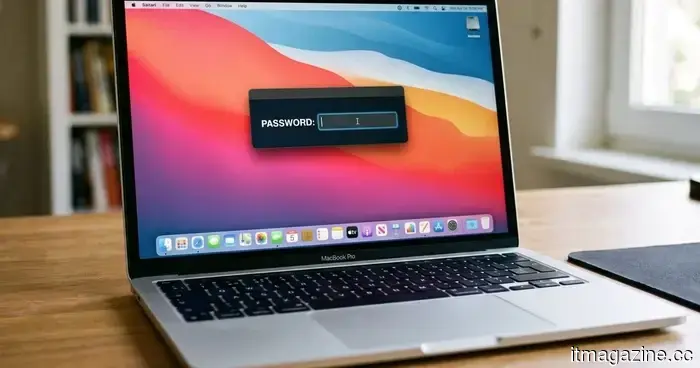 This new malware for Mac will prevent you from using your computer until you give up your password.
ClickLock is a new malware for macOS that persistently terminates system processes and deceives victims into providing their login passwords to steal confidential information.
This new malware for Mac will prevent you from using your computer until you give up your password.
ClickLock is a new malware for macOS that persistently terminates system processes and deceives victims into providing their login passwords to steal confidential information.
 Anthropic is in preliminary discussions to secure a lease of $10 billion in computing resources from Meta.
The agreement would come after Anthropic's $1.25B monthly arrangement with SpaceX for Colossus. Meanwhile, Meta is developing a cloud business to capitalize on $145B invested in AI infrastructure.
Anthropic is in preliminary discussions to secure a lease of $10 billion in computing resources from Meta.
The agreement would come after Anthropic's $1.25B monthly arrangement with SpaceX for Colossus. Meanwhile, Meta is developing a cloud business to capitalize on $145B invested in AI infrastructure.
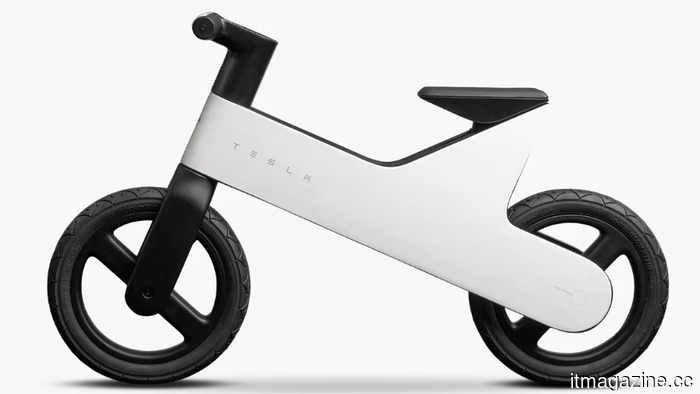 Tesla produced a balance bike for toddlers priced at $225. It features no motor and no pedals, and is already out of stock.
Tesla's Balance Bike for Kids is a toy designed for children aged 2 to 5, featuring a magnesium frame and no pedals or motors. It sold out immediately. Musk continues to refrain from producing an electric bike for adults.
Tesla produced a balance bike for toddlers priced at $225. It features no motor and no pedals, and is already out of stock.
Tesla's Balance Bike for Kids is a toy designed for children aged 2 to 5, featuring a magnesium frame and no pedals or motors. It sold out immediately. Musk continues to refrain from producing an electric bike for adults.
 The Pentagon has halted 155 wind projects across 24 states, citing concerns that drones could use wind farms for concealment.
The year-long halt impacts 44GW of capacity and has resulted in $2 billion in losses for developers. The wind industry claims it is driven by political motives. A legal action is currently in progress.
The Pentagon has halted 155 wind projects across 24 states, citing concerns that drones could use wind farms for concealment.
The year-long halt impacts 44GW of capacity and has resulted in $2 billion in losses for developers. The wind industry claims it is driven by political motives. A legal action is currently in progress.
 Red Magic's OLED gaming tablet, akin to the size of an iPad mini and featuring liquid cooling, is now available worldwide.
International customers will soon have the option to purchase Red Magic’s liquid-cooled OLED gaming tablet in two different memory configurations.
Red Magic's OLED gaming tablet, akin to the size of an iPad mini and featuring liquid cooling, is now available worldwide.
International customers will soon have the option to purchase Red Magic’s liquid-cooled OLED gaming tablet in two different memory configurations.
 Sonos users are finally receiving a more user-friendly app, but the release has a drawback.
The Sonos app is introducing improved navigation, the ability to customize speaker sorting, and revamped volume controls for iOS. However, the rollout will occur gradually and may take up to two weeks to be available to all users.
Sonos users are finally receiving a more user-friendly app, but the release has a drawback.
The Sonos app is introducing improved navigation, the ability to customize speaker sorting, and revamped volume controls for iOS. However, the rollout will occur gradually and may take up to two weeks to be available to all users.
Clothing designed to thwart surveillance is becoming more affordable, but don’t anticipate a cloak of invisibility.
Anti-surveillance clothing is becoming increasingly budget-friendly for everyday wardrobes, but its designs primarily interfere with specific computer vision technologies. At present, it serves more as a declaration of privacy rather than as a dependable form of protection.