
1Password enables Claude to sign you into websites without actually viewing your passwords.
TL;DR: 1Password for Claude allows the AI agent to use your logins with biometric approval, ensuring that credentials never reach the AI model or Anthropic’s systems.
1Password has introduced a browser integration that enables Anthropic’s Claude to utilize stored credentials for web tasks without the passwords being exposed to the AI model, as stated in a blog post released on Thursday. This is described as a zero-exposure architecture: when Claude attempts to sign in, 1Password informs the user about which credential is needed and the reason for it, then awaits biometric approval before automatically entering the login information on the webpage. Claude does not have access to the vault item, password, or one-time code, and the access is terminated once the task is completed.
This integration addresses a key challenge faced by agentic AI. Browser-based agents like Claude can navigate websites, fill forms, and finalize purchases, but logging in has traditionally required users to either reveal their password or take manual control. 1Password claims this is the first browser integration that allows an agent to use credentials without providing direct access to them.
After autofill, 1Password verifies if any sensitive information was exposed on the page. If the submission fails, the extension clears the filled values before returning control to Claude. Throughout the process, the credential remains encrypted and under the control of 1Password.
The launch also brings in Agentic Mode, a feature in the 1Password browser extension that automatically locks the vault when a compatible AI agent takes over. The agent can only access logins and one-time codes specifically approved for the task at hand, while the rest of the vault is kept secure. Agentic Mode is activated even if the 1Password-Claude integration is not set up and supports agents beyond Claude.
This development comes at a time when security researchers recently showcased how AI browsers could be exploited to leak user credentials through prompt injection attacks, including Anthropic’s own Claude extension. 1Password CTO Nancy Wang emphasized in the company's announcement that the solution is not to give agents access to your secrets, but rather to allow users to grant agents permission to utilize credentials without allowing the agent to view them. She highlighted this difference as essential for establishing trust in AI agents.
1Password for Claude is currently available on Mac for business, family, and individual plans, requiring the 1Password desktop app, browser extension, Claude desktop app, and Claude browser extension. The company, which recently acquired Israeli startup Apono to manage AI agent access within enterprise systems, intends to add support for payment cards and identity details after the launch.
CNET’s password manager expert Joe Supan noted that he would typically be cautious about granting an AI agent access to his password manager, but believes that 1Password has implemented several effective safeguards, especially biometric authentication for every login. This integration marks the first instance of a prominent password manager creating a dedicated secure channel for an AI agent to access credentials in real-time, rather than exposing them to the model's context. Whether this method can withstand the types of prompt injection attacks that have already affected AI browsers remains to be seen.
Other articles
 Ryan Cohen from GameStop describes physical game sales as 'completely insignificant' and redirects every inquiry towards eBay.
GameStop CEO Ryan Cohen deemed physical game sales as unimportant during an appearance on Bloomberg TV, as collectibles accounted for 41 percent of revenue and he advances his eBay proposal.
Ryan Cohen from GameStop describes physical game sales as 'completely insignificant' and redirects every inquiry towards eBay.
GameStop CEO Ryan Cohen deemed physical game sales as unimportant during an appearance on Bloomberg TV, as collectibles accounted for 41 percent of revenue and he advances his eBay proposal.
 Personal Intelligence in Search now integrates with Google Calendar.
Google AI Mode now integrates with Calendar, enabling Search to generate events and provide responses customized to your schedule and availability.
Personal Intelligence in Search now integrates with Google Calendar.
Google AI Mode now integrates with Calendar, enabling Search to generate events and provide responses customized to your schedule and availability.
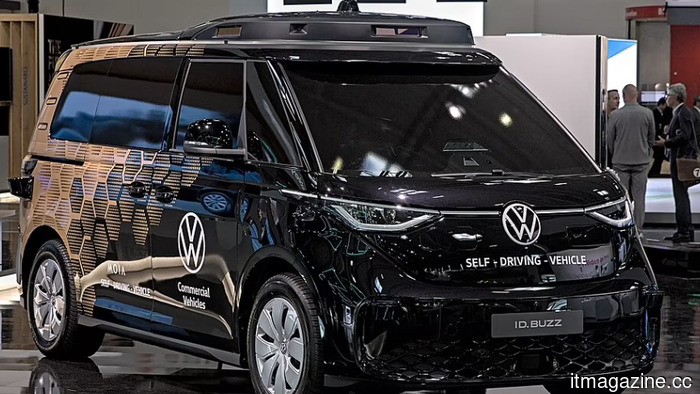 Volkswagen joins the robotaxi competition by launching a shared shuttle service in Hamburg.
Moia is currently providing complimentary autonomous rides in Hamburg utilizing VW ID Buzz vans that have safety operators on board. Plans for launches in the US through Uber and Beep are set for later in 2026.
Volkswagen joins the robotaxi competition by launching a shared shuttle service in Hamburg.
Moia is currently providing complimentary autonomous rides in Hamburg utilizing VW ID Buzz vans that have safety operators on board. Plans for launches in the US through Uber and Beep are set for later in 2026.
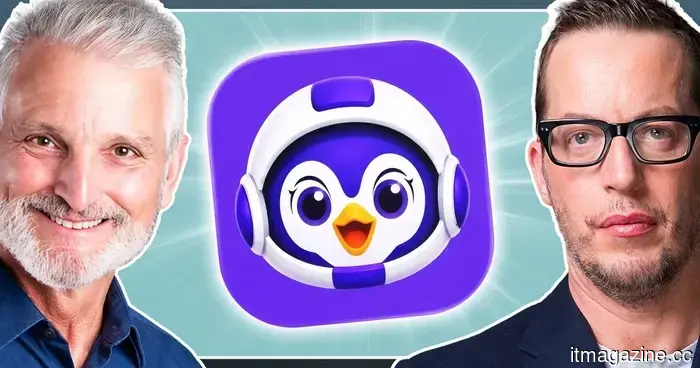 WarpSpeed aims to be the AI assistant that truly helps you get your life in order.
The majority of AI tools are designed to respond to inquiries or create content. However, WarpSpeed is adopting a different strategy by integrating email, calendars, tasks, and messaging into a single AI-driven workspace. In a discussion with founder Martin Warner, we delve into the reasons why the upcoming phase of AI could focus less on chatbots and more on assisting individuals in managing their daily activities.
WarpSpeed aims to be the AI assistant that truly helps you get your life in order.
The majority of AI tools are designed to respond to inquiries or create content. However, WarpSpeed is adopting a different strategy by integrating email, calendars, tasks, and messaging into a single AI-driven workspace. In a discussion with founder Martin Warner, we delve into the reasons why the upcoming phase of AI could focus less on chatbots and more on assisting individuals in managing their daily activities.
 Apple is said to be updating its complete iPad lineup, with the first new model expected to arrive this fall.
Reports indicate that Apple is gearing up for a major overhaul of its iPad range, with the initial new model expected to launch this fall.
Apple is said to be updating its complete iPad lineup, with the first new model expected to arrive this fall.
Reports indicate that Apple is gearing up for a major overhaul of its iPad range, with the initial new model expected to launch this fall.
 The National Transportation Safety Board (NTSB) has determined that the driver who collided with a Texas residence while driving a Tesla at 70 mph had fully depressed the accelerator.
The NTSB reports that the driver of a Tesla, which resulted in the death of a woman in her Texas residence, pushed the accelerator to full throttle, surpassing the FSD system on a 30 mph road.
The National Transportation Safety Board (NTSB) has determined that the driver who collided with a Texas residence while driving a Tesla at 70 mph had fully depressed the accelerator.
The NTSB reports that the driver of a Tesla, which resulted in the death of a woman in her Texas residence, pushed the accelerator to full throttle, surpassing the FSD system on a 30 mph road.
1Password enables Claude to sign you into websites without actually viewing your passwords.
1Password for Claude employs a zero-exposure architecture, enabling Anthropic's AI agent to access your logins without the credentials ever being transmitted to the model.