

Personal Intelligence in Search now integrates with Google Calendar.
Google Search AI can now automatically read your Calendar and add events.
Google is making progress in transforming Search from a typical search engine into a personal assistant. The company announced that AI Mode's Personal Intelligence can now directly connect to Google Calendar, which allows it to reference your schedule and create calendar events for you.
Previously, Personal Intelligence primarily gathered information from applications like Gmail and Google Photos to provide more tailored responses. The integration with Calendar changes this dynamic, as it becomes the first connected Google app that not only offers context but also takes active actions. This feature is currently being rolled out to users in the United States, with a larger international rollout planned for later.
Search is becoming more personal.
According to Robby Stein, Google’s Vice President of Product for Search, AI Mode can now understand your existing calendar entries before responding to inquiries. For example, if you ask Search for dinner suggestions, rather than just recommending nearby restaurants, AI Mode can acknowledge that you already have a meeting scheduled for the evening and propose options that fit your available time. Additionally, if someone invites you to an event or mentions a meeting, AI Mode can create a corresponding calendar entry without requiring you to manually access Calendar.
This new feature may seem minor but signifies a shift in Search away from a traditional information retrieval tool and toward an intelligent personal planner. Google initially showcased Calendar integration during Google I/O 2026, although a release timeline was not provided at that time. This feature is now part of the expanding Personal Intelligence ecosystem, which has gradually spread to AI Pro subscribers in nearly 200 countries and 98 languages.
The future of Search might change for everyone.
The Calendar integration also brings forth a significant question regarding the future direction of Search. For many years, entering the same search query usually resulted in the same list of outcomes for all users. However, AI Mode is steadily altering this expectation.
Unlike Gmail, which customizes responses based on your emails and interests, Calendar introduces a new factor: time awareness. Users asking the same question may receive completely different results based solely on their schedules.
Industry research is beginning to highlight this evolution. A report by the SEO research firm iPullRank indicated that integrating Gmail with Personal Intelligence changed which brands appeared in AI-generated responses, even with identical prompts across different accounts. Calendar adds another layer of personalization by incorporating availability, commitments, and timing into Google’s decision-making process.
The logical progression seems clear. If Google eventually connects applications like Keep, Tasks, Maps, Docs, or third-party productivity tools, AI Mode could become even more proactive rather than merely reactive. This also complicates the evaluation of AI-generated search results. Instead of validating a single result page, users may receive answers customized to numerous personal signals unique to their Google account. Essentially, the future of Search may not revolve around finding the same answer as everyone else but rather about discovering the answer that best suits you.
Moinak Pal has worked in the tech sector, focusing on both consumer technology and automotive technology.
Galaxy Z Fold 8 Ultra: What we know about Samsung's upcoming flagship foldable.
While it will see improvements across the board, the memory crisis may impact Samsung’s Fold 8 Ultra.
The Samsung Galaxy Z Fold 8 Ultra is not set to redefine the foldable phone landscape. That role belongs to its sibling, the wider-screen Galaxy Z Fold 8. The Ultra is expected to be a direct successor to the Galaxy Z Fold 7, maintaining the same tall, narrow design and book-style proportions aimed at a similar audience.
If you have used a Samsung Galaxy Z Fold previously and find the shape ideal, the Fold 8 Ultra may be the phone for you. It will feature a revamped inner display, a significantly larger battery, faster charging, and the new Flex Titanium technology intended to reduce the crease that has been an issue for Samsung's foldables for years.
Your OnePlus phone is transitioning to ColorOS, whether you like it or not.
OnePlus has announced that OxygenOS is being phased out, and eligible devices will be given the option to upgrade to ColorOS 17 once it is released.
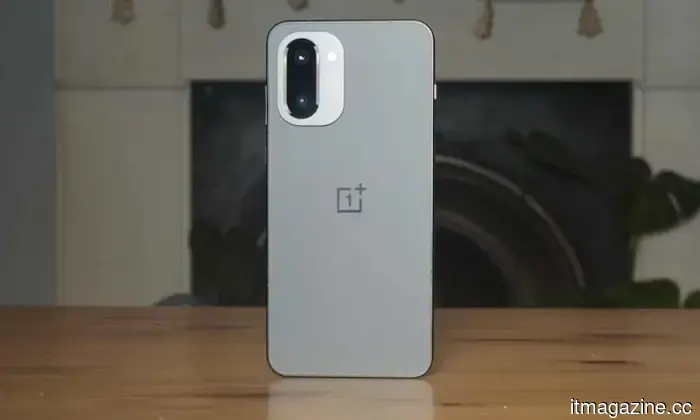
OnePlus has confirmed that OxygenOS, the Android interface that defined the brand for over a decade, is being discontinued in favor of ColorOS. This announcement came in a community forum post revealing its exit from North America and Europe.
ColorOS will be replacing OxygenOS globally.
OnePlus’ operations in North America and Europe have officially concluded.
Current users will continue to receive software updates and warranty support, with the option to transition from OxygenOS to ColorOS in the future.
After months of outright denial, OnePlus has now confirmed its withdrawal from North America and Europe. In a community forum post, the company presented this news as a “proactive global strategy adjustment,” but for consumers in these markets, the outcome is clear: there will be one less brand to choose from when shopping for a new phone. Existing customers will receive support and may opt for the software transition.




Other articles
 This intelligent knitted material is capable of flipping switches, tracking your steps, and even altering its shape.
Researchers at Harvard have developed a programmable knitted material that can alter its shape, function as electronic switches, and has the potential to power the future of wearable technology.
This intelligent knitted material is capable of flipping switches, tracking your steps, and even altering its shape.
Researchers at Harvard have developed a programmable knitted material that can alter its shape, function as electronic switches, and has the potential to power the future of wearable technology.
 The National Transportation Safety Board (NTSB) has determined that the driver who collided with a Texas residence while driving a Tesla at 70 mph had fully depressed the accelerator.
The NTSB reports that the driver of a Tesla, which resulted in the death of a woman in her Texas residence, pushed the accelerator to full throttle, surpassing the FSD system on a 30 mph road.
The National Transportation Safety Board (NTSB) has determined that the driver who collided with a Texas residence while driving a Tesla at 70 mph had fully depressed the accelerator.
The NTSB reports that the driver of a Tesla, which resulted in the death of a woman in her Texas residence, pushed the accelerator to full throttle, surpassing the FSD system on a 30 mph road.
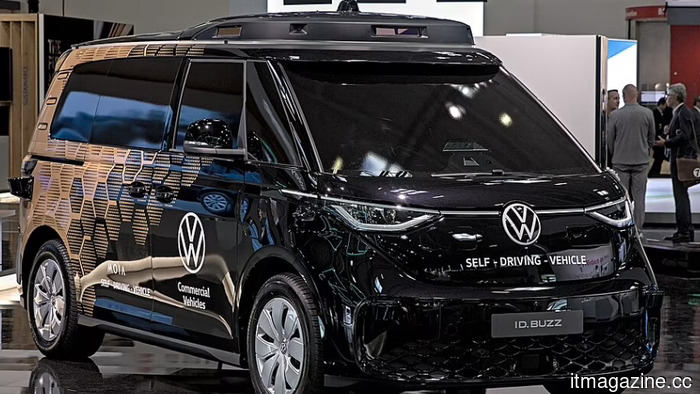 Volkswagen joins the robotaxi competition by launching a shared shuttle service in Hamburg.
Moia is currently providing complimentary autonomous rides in Hamburg using VW ID Buzz vans staffed with safety operators, and plans to launch in the US through Uber and Beep are set for later in 2026.
Volkswagen joins the robotaxi competition by launching a shared shuttle service in Hamburg.
Moia is currently providing complimentary autonomous rides in Hamburg using VW ID Buzz vans staffed with safety operators, and plans to launch in the US through Uber and Beep are set for later in 2026.
 Oracle is now rated just above junk status following a downgrade by S&P, as expenditures on AI data centers consume cash rapidly.
S&P lowered Oracle's rating to BBB-, just one level above junk status, as $250 billion in AI data center expenditures depletes cash reserves and bond investors assess the debt as nearing junk levels.
Oracle is now rated just above junk status following a downgrade by S&P, as expenditures on AI data centers consume cash rapidly.
S&P lowered Oracle's rating to BBB-, just one level above junk status, as $250 billion in AI data center expenditures depletes cash reserves and bond investors assess the debt as nearing junk levels.
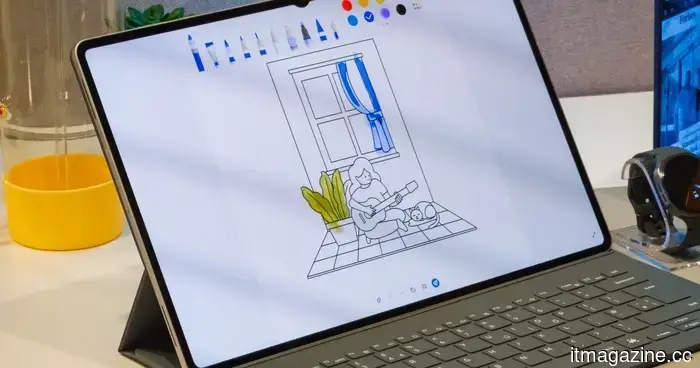 Samsung's upcoming competitor to the iPad Pro has been revealed, featuring a more powerful chip and a persistent notch.
The Galaxy Tab S12 Ultra from Samsung looks nearly identical on the outside, with the improvements coming from a quicker MediaTek processor and updated software.
Samsung's upcoming competitor to the iPad Pro has been revealed, featuring a more powerful chip and a persistent notch.
The Galaxy Tab S12 Ultra from Samsung looks nearly identical on the outside, with the improvements coming from a quicker MediaTek processor and updated software.
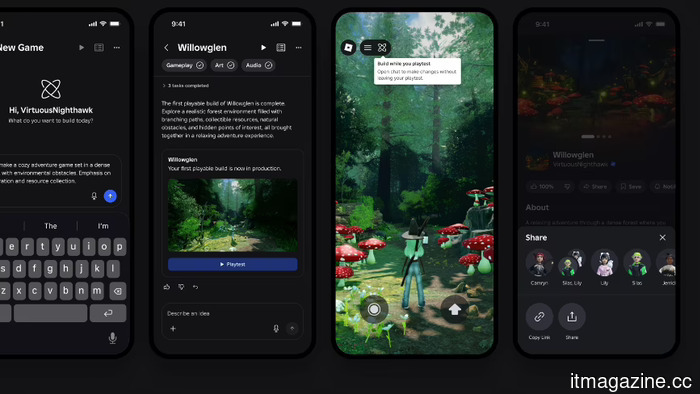 Roblox introduces Build, a mobile feature that converts text prompts into games that can be played.
The new Build tab in Roblox allows users to create a game from a text prompt on mobile devices, with alpha testing commencing on July 28 in New Zealand for users aged nine and above.
Roblox introduces Build, a mobile feature that converts text prompts into games that can be played.
The new Build tab in Roblox allows users to create a game from a text prompt on mobile devices, with alpha testing commencing on July 28 in New Zealand for users aged nine and above.
Personal Intelligence in Search now integrates with Google Calendar.
Google AI Mode now integrates with Calendar, enabling Search to generate events and provide responses customized to your schedule and availability.