

It's really warm outside, but please refrain from placing your heated phones in the refrigerator.
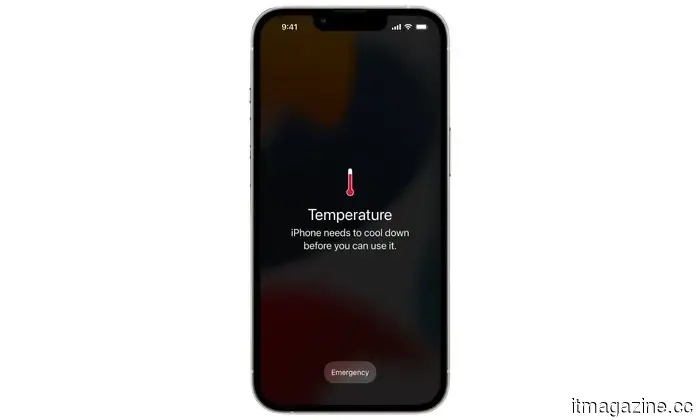
Every summer, social media revisits the same “life hack”: when your phone overheats, place it in the fridge for a few minutes. It seems reasonable—refrigerators are cold, phones are hot; issue resolved. However, that’s not the case. Repair technicians, smartphone manufacturers, and safety experts unanimously agree that this is one of the worst solutions for an overheating phone. While it may provide temporary cooling for the exterior, it can lead to much more serious internal issues that could permanently harm components or diminish battery lifespan.
A new report from the BBC highlights this warning, which has been echoed by experts for many years, originating from a phone repair shop in the UK.
Your phone isn’t overheating because it needs refrigeration.
According to the BBC, Jamie Farnell, owner of Shropshire Phone Repairs in Wem, reports that his shop has been overwhelmed with devices facing heat-related problems amidst the recent heatwave. Many customers confessed to attempting to chill their phones by placing them inside a fridge or freezer after noticing the advice spread on social media.
Farnell insists that this is precisely what people should avoid. The issue isn’t the cold itself, but rather the effects of a warm electronic device entering a cold, humid environment. Rapid temperature shifts can cause condensation to form, which may develop inside the phone. Unlike the moisture visible on the exterior of a cold beverage, condensation inside a smartphone can reach critical areas such as the display, charging port, logic board, or battery connectors. This moisture can cause corrosion, short circuits, or costly repairs.
Farnell also addressed another persistent internet myth: putting wet phones in rice. He claims this method is just as ineffective as the refrigerator hack, yet both continue to circulate widely online. This warning follows a troubling incident at his repair shop, where an iPad with a swollen lithium battery reportedly ignited during the June heatwave. Swollen batteries often indicate excessive heat stress and should be taken seriously.
Apple and Samsung offer the same advice: allow the phone to cool down naturally.
This viewpoint isn't merely the opinion of one repair technician. Apple states that iPhones are engineered to protect themselves from excessive heat by dimming the display, slowing charging, reducing performance, or temporarily disabling certain functions until temperatures normalize. The company's guidance is clear: move the device to a cooler place away from direct sunlight and let it cool down naturally. Apple does not suggest exposing the device to sudden temperature changes.
Samsung provides similar recommendations for Galaxy devices. If a phone shows a “Device cooling down” notification, users should cease usage, unplug it, remove any protective case, close background applications, and simply allow it to cool itself. The phone automatically reduces its performance and pauses charging to safeguard its internal components as it dissipates heat.
Even the Associated Press, referencing advice from Apple, Samsung, Google, and UK electronics retailer Currys during last summer’s heatwave, cautioned against placing phones in refrigerators or freezers due to condensation risks. If your phone genuinely feels too hot to touch, there are safer methods to help it recover. If possible, turn it off, unplug it, close demanding apps, reduce the screen brightness, remove thick protective cases, and keep it in a shaded area with proper airflow. Avoid charging while gaming or recording lengthy videos, particularly in direct sunlight.
Modern smartphones come equipped with advanced thermal management systems that aim to slow down before any permanent damage occurs. While the temporary performance reduction may be frustrating, it is far less costly than replacing a moisture-damaged motherboard. As appealing as the refrigerator trick might be during a heatwave, your phone doesn’t require a blast of cold air—it simply needs a bit of patience.

Other articles
 Australia instructs AI data centres to return more power than they consume.
Albanese revealed plans for an Office of AI, new regulations for data centres regarding net generation, and stringent copyright provisions. However, none of these measures have become law at this time.
Australia instructs AI data centres to return more power than they consume.
Albanese revealed plans for an Office of AI, new regulations for data centres regarding net generation, and stringent copyright provisions. However, none of these measures have become law at this time.
 Doubao's AI companions are no longer available. Users have three months to take screenshots of any remaining content.
On July 15, Doubao and Qwen eliminated custom AI agents. Doubao provides users with read-only access until October 15, while Qwen offers no access at all. Neither platform offers a means to exit with the data.
Doubao's AI companions are no longer available. Users have three months to take screenshots of any remaining content.
On July 15, Doubao and Qwen eliminated custom AI agents. Doubao provides users with read-only access until October 15, while Qwen offers no access at all. Neither platform offers a means to exit with the data.
 India commits $20 billion to enhance chip and smartphone production as Modi advocates for a domestic mobile brand.
Modi's cabinet has authorized $13.3 billion for semiconductors and $6.5 billion for smartphones. The minister noted that Modi aims to "establish an Indian mobile brand."
India commits $20 billion to enhance chip and smartphone production as Modi advocates for a domestic mobile brand.
Modi's cabinet has authorized $13.3 billion for semiconductors and $6.5 billion for smartphones. The minister noted that Modi aims to "establish an Indian mobile brand."
 The Summer Sale on the PlayStation Store kicks off on July 15, offering discounts of up to 75% on hundreds of games.
The Summer Sale on Sony's PlayStation Store starts on July 15, featuring discounts of up to 75% on a wide range of PS5, PS4, and PS VR2 games.
The Summer Sale on the PlayStation Store kicks off on July 15, offering discounts of up to 75% on hundreds of games.
The Summer Sale on Sony's PlayStation Store starts on July 15, featuring discounts of up to 75% on a wide range of PS5, PS4, and PS VR2 games.
 Zipline is starting a healthcare drone delivery service in partnership with Cleveland Clinic. The company has recruited former employees from Tesla and Waymo to help expand its operations.
Zipline has reached 2.5 million deliveries and is set to begin healthcare delivery in partnership with Cleveland Clinic. The company has brought on former executives from Tesla, Waymo, and Uber to help with further expansion.
Zipline is starting a healthcare drone delivery service in partnership with Cleveland Clinic. The company has recruited former employees from Tesla and Waymo to help expand its operations.
Zipline has reached 2.5 million deliveries and is set to begin healthcare delivery in partnership with Cleveland Clinic. The company has brought on former executives from Tesla, Waymo, and Uber to help with further expansion.
 You can apply this wearable on your skin similar to a tattoo to track your heart and brain functions.
Researchers at Penn State have developed a washable tattoo that can be painted on the skin, capable of monitoring heart, brain, and muscle activity, providing a vibrant alternative to cumbersome wearable health sensors.
You can apply this wearable on your skin similar to a tattoo to track your heart and brain functions.
Researchers at Penn State have developed a washable tattoo that can be painted on the skin, capable of monitoring heart, brain, and muscle activity, providing a vibrant alternative to cumbersome wearable health sensors.
It's really warm outside, but please refrain from placing your heated phones in the refrigerator.
Experts and smartphone manufacturers caution that placing an overheating phone in the refrigerator can result in condensation, which may cause internal damage that could be significantly more expensive to repair than the overheating issue itself.