
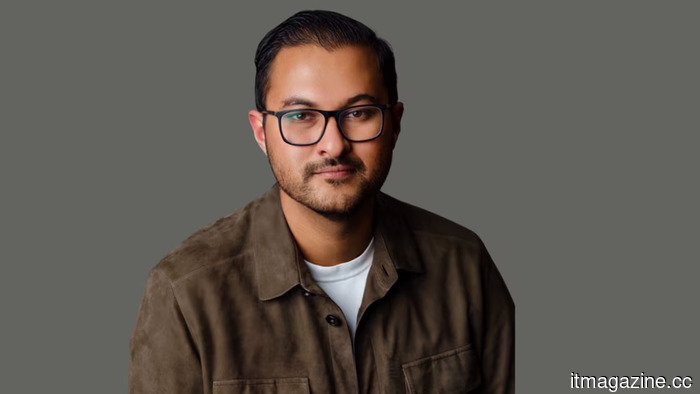
Flex secures $70 million from Ryan Smith’s Halo fund to expand its AI private banking services globally.
Six months ago, Flex secured $60 million, labeling it as a Series B round. On Tuesday, the company announced it had raised an additional $70 million, opting for a Series B1 designation instead of progressing through the alphabet.
This funding round was led by Halo, the investment firm established last year by Qualtrics founder Ryan Smith, who also owns the NBA's Utah Jazz and the NHL's Utah Mammoth. He was joined by his long-time investor, Ryan Sweeney, a general partner at Accel. Other participants included Portage, Wellington, Crosslink Capital, 53 Stations, Titanium Ventures, Spice, and Florida Funders.
According to Flex, this funding increases its total equity raised to $180 million, alongside $300 million in debt. The current employee count is 110, with expectations to exceed 200 by year-end.
The latest insights from the EU tech landscape come from our seasoned founder Boris, featuring an intriguing story and some questionable AI-generated art. Subscribe now for this free weekly update!
Flex’s market approach is quite focused, and according to the company, relatively unaddressed. It offers what it describes as an AI-native private banking service for high-net-worth business owners in the middle market—individuals who simultaneously act as both a company’s finance department and its wealthiest customer.
“Business owners in the middle market are among the most significant yet underserved clients in global finance,” stated Zaid Rahman, Flex’s founder and CEO.
He highlighted that these clients often deal with vendors from the U.S., Poland, and Brazil, requiring multiple service providers and incurring various fees just to transact internationally. Flex estimates that approximately 350,000 such owners exist in the U.S., accounting for around 40% of private-sector payroll, while the global tally is about 3 million.
These figures illustrate that these owners deal with multiple entities, currencies, and jurisdictions, regardless of their intentions.
What does Flex Global actually offer?
The recently launched product extends the platform beyond the U.S. borders. Flex Global provides stablecoin payment systems in over 100 countries, multi-currency accounts in 76 countries covering 32 currencies, institutional dollar accounts for foreign owners, private credit solutions in more than 20 countries, and cards issued across various entities and geographical locations on a single platform.
According to the company, cross-border payments settle within minutes instead of days. The stablecoin feature is designed to remain unnoticed: a business owner making a payment to a supplier in Warsaw does so exactly as they would for one in Dallas, without engaging with a digital wallet.
This strategy relies on recently operationalized infrastructure. In April, Visa's settlement pilot achieved a $7 billion annualized run rate, reflecting a 50% increase over the previous quarter. Research by Artemis and McKinsey indicated that genuine stablecoin payment volume roughly doubled in 2025, reaching about $390 billion, primarily in business-to-business transactions.
Established financial institutions began recognizing this shift around the same time. Mastercard's $1.8 billion acquisition of BVNK was a clear indication that the technology had progressed from pilot phases to foundational operations, while banks continue to publicly debate which AI advancements will shape the future.
Flex claims its annualized payment volume has surpassed $10 billion, growing approximately fourfold year-over-year with a nine-figure revenue run rate, as revenue has increased threefold since December. The primary customer categories by the number of logos include construction, wholesale, and multinational companies.
Smith, who joined as a strategic investor, expressed the gap in familiar terms. “Throughout my career, I’ve focused on empowering entrepreneurs, all of whom share the same challenge: their business and personal finances are completely intertwined, yet each bank treats them as two separate clients,” he said.
Beyond financial investment, Halo brings distribution capabilities, its influence extending across the NBA, NHL, and Formula 1. This may seem an unusual sales channel for a banking service, but it recognizes that Flex’s clientele was never part of Silicon Valley’s typical network.
The platform already integrates a variety of services, including credit, banking, payment processing, bill pay, expense management, treasury services, and finance agents like Beacon AI, into what Flex refers to as an agentic back office.
This positions it alongside emerging agentic banking platforms designed for software to facilitate transactions rather than individuals. Looking ahead, the roadmap includes personal credit and rewards cards, treasury services, travel arrangements, and mortgages. Whether a mid-sized construction firm owner would prefer their bank to manage flight bookings is a question that the next funding round will likely address.
Other articles
 Claude identified the issue with my washing machine in just a few minutes, and it was completely free of charge.
A perplexing error code led me to believe that my washing machine was beyond repair. However, Claude posed the right questions, assisted me in identifying the actual issue, and prevented me from making an unnecessary purchase.
Claude identified the issue with my washing machine in just a few minutes, and it was completely free of charge.
A perplexing error code led me to believe that my washing machine was beyond repair. However, Claude posed the right questions, assisted me in identifying the actual issue, and prevented me from making an unnecessary purchase.
 LimX Dynamics reaches a humanoid valuation of $2.2 billion.
China's LimX Dynamics secured $200 million at a valuation of $2.21 billion. The founder stated, “going public is essential” as over 100 Chinese humanoid companies compete to list.
LimX Dynamics reaches a humanoid valuation of $2.2 billion.
China's LimX Dynamics secured $200 million at a valuation of $2.21 billion. The founder stated, “going public is essential” as over 100 Chinese humanoid companies compete to list.
 Firefox is increasing the frequency of its updates, which is beneficial for your security.
Firefox users will no longer have to wait a month for the next update, as Mozilla shifts to a quicker release timeline.
Firefox is increasing the frequency of its updates, which is beneficial for your security.
Firefox users will no longer have to wait a month for the next update, as Mozilla shifts to a quicker release timeline.
 Your seemingly broken TV might be less faulty than it appears.
A repair technician asserts that a small backlight issue can cause certain televisions to seem entirely nonfunctional, possibly leading owners to consider replacement before realizing that the core problem might still be fixable.
Your seemingly broken TV might be less faulty than it appears.
A repair technician asserts that a small backlight issue can cause certain televisions to seem entirely nonfunctional, possibly leading owners to consider replacement before realizing that the core problem might still be fixable.
 Black Ops multiplayer is problematic on PlayStation, and Activision is hurrying to address the issues.
Activision has implemented the initial phase of a solution following the hacking of Black Ops lobbies, which started to skew XP and prevent some players from accessing multiplayer.
Black Ops multiplayer is problematic on PlayStation, and Activision is hurrying to address the issues.
Activision has implemented the initial phase of a solution following the hacking of Black Ops lobbies, which started to skew XP and prevent some players from accessing multiplayer.
 Tower Semiconductor is investing $3 billion in Japan, with Tokyo covering a third of the amount.
Tower Semiconductor plans to invest approximately $3 billion to enhance its 300mm silicon photonics capacity in Japan, after accounting for $1 billion in government grants from Japan.
Tower Semiconductor is investing $3 billion in Japan, with Tokyo covering a third of the amount.
Tower Semiconductor plans to invest approximately $3 billion to enhance its 300mm silicon photonics capacity in Japan, after accounting for $1 billion in government grants from Japan.
Flex secures $70 million from Ryan Smith’s Halo fund to expand its AI private banking services globally.
Flex has secured $70 million in a Series B1 funding round led by Ryan Smith's Halo fund, and is introducing Flex Global, which will offer stablecoin infrastructure and multi-currency accounts in over 100 countries.