
Twelve states file a lawsuit to prevent the $110 billion deal between Paramount and Warner.
Twelve states have filed a lawsuit to prevent the takeover of Warner Bros. Discovery by Paramount Skydance. The lawsuit, led by California Attorney General Rob Bonta, was submitted to a federal court in California's Northern District, according to CNBC.
The timing of the lawsuit is significant. Last month, the Justice Department approved the $110 billion merger without any conditions or divestitures, following an eight-month review.
The states are effectively taking action where the federal government has chosen not to intervene. This possibility was mentioned last week, and it has now come to fruition.
The specifics of the states' claims
The complaint accuses the merger of violating the Clayton Act, which prohibits mergers that could significantly reduce competition. It highlights three specific markets: wide-release theatrical distribution, top-grossing or blockbuster theatrical distribution, and basic cable licensing. The states estimate that the merged entity would control 27% of wide-release distribution, 30% of expected blockbusters, and 27% of the basic cable bundle.
Bonta articulated the potential harm in terms of consumer impact, stating that the merger would likely lead to higher prices, lower quality, and diminished content, which would adversely affect theaters, cable distributors, and audiences alike. He also made a political statement, asserting that there are no kings in either the government or the economy of the United States.
Paramount's defense is substantial
Paramount responded to the lawsuit by calling it fundamentally flawed and incorrect in both its factual basis and legal arguments. While this is a standard rebuttal, the core argument they present is more serious. Paramount argues that the market dynamics have changed due to companies like Netflix, Amazon, and Apple, rendering traditional theatrical distribution as an inadequate measure of market power. In this view, the states are pursuing a case against a sector that is already declining.
Paramount also cites precedent in its favor; Disney acquired most of Fox's Hollywood assets in 2019 under similar reasoning, and regulators allowed that transaction.
Interestingly, the strongest competition Paramount faced is actually a key aspect of its argument. Netflix had an agreement with Warner’s studios and HBO Max but chose to withdraw rather than be outbid, subsequently opting to authorize a $25 billion stock buyback instead.
The technological implications of this case
Beneath the surface of the studio operations, this case involves the Ellison family. David Ellison chairs Paramount, while the bid received financial backing from his father, Larry Ellison, co-founder of Oracle.
Larry Ellison is a supporter of Trump and has served as an advisor on artificial intelligence initiatives in the White House. Last year, the administration awarded him and Oracle a controlling stake in TikTok’s U.S. operations.
This brings together significant power: Oracle underpins much of American commerce and government infrastructure, and this same family would potentially control TikTok’s U.S. division, CBS News, CNN, two major streaming services, and a substantial number of cable channels. This concentration of distribution, alongside infrastructure, is a pertinent issue for technological oversight. Bonta’s complaint does not charge wrongdoing on this basis, but it underscores the larger implications of this deal beyond the film industry.
Concerns regarding the approval process
The DOJ’s approval of the merger has come under scrutiny. The Wall Street Journal reported that senior officials expedited the approval process before career attorneys could challenge it, a characterization the outgoing antitrust chief has denied.
Makan Delrahim, Paramount’s chief legal officer, previously led the DOJ’s antitrust division during Trump’s first term, where he unsuccessfully attempted to block AT&T’s acquisition of Time Warner, the same assets under consideration now.
Trump has openly supported the Ellisons and discussed CNN's future, diverging from the norm of keeping antitrust regulators at a distance from political commentary.
Additionally, the FCC has not yet approved the deal, as Paramount holds licenses for 28 local stations. Chairman Brendan Carr, a Trump appointee, has already suggested that the deal is favorable and should progress swiftly.
Financial implications of the delay
Delays can be costly, which is part of the motivation behind the lawsuit. Starting October, Paramount will owe Warner shareholders approximately $650 million for every 90 days the merger is postponed. Missing the deadline in June of next year could result in a bill amounting to $7 billion. The financing structure already includes $80 billion in new debt alongside non-voting stakes from Saudi, Qatari, and Emirati sovereign funds, indicating that substantial cuts are likely for the combined entity.
Paramount is also not waiting for court decisions before proceeding with integration. The company has begun consolidating its streaming technology in preparation for HBO Max, while also expanding into markets such as India.
All twelve attorneys general are Democrats, a point that Paramount will likely emphasize. However, these states went through a federal review that imposed no restrictions whatsoever, and it will ultimately be a court, rather than public outcry, that will determine whether controlling 27% of the
Other articles
 Google's major Waze AI update features a button that silences the app.
Google has incorporated Gemini voice search and a motorcycle mode into Waze. The feature that users are likely to find most useful is the 'less chatty' mode.
Google's major Waze AI update features a button that silences the app.
Google has incorporated Gemini voice search and a motorcycle mode into Waze. The feature that users are likely to find most useful is the 'less chatty' mode.
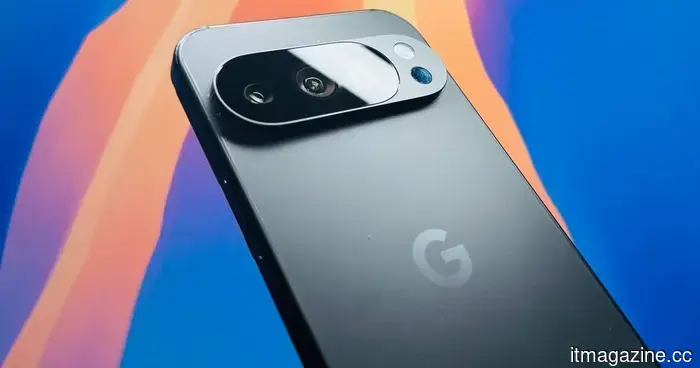 Google has just surpassed its previous Prime Day deal for the Pixel 10 Pro, and the Pixel 11 might shed some light on the reason.
Google has reduced the price of the 128GB Pixel 10 Pro to $699, surpassing its Prime Day price as stock diminishes in anticipation of the anticipated Pixel 11 announcement in August.
Google has just surpassed its previous Prime Day deal for the Pixel 10 Pro, and the Pixel 11 might shed some light on the reason.
Google has reduced the price of the 128GB Pixel 10 Pro to $699, surpassing its Prime Day price as stock diminishes in anticipation of the anticipated Pixel 11 announcement in August.
 Cloudflare Precursor monitors entire sessions to identify bots.
Bots currently account for 57% of internet traffic. Cloudflare Precursor monitors entire sessions rather than a single point in time to distinguish between humans and machines.
Cloudflare Precursor monitors entire sessions to identify bots.
Bots currently account for 57% of internet traffic. Cloudflare Precursor monitors entire sessions rather than a single point in time to distinguish between humans and machines.
 The prominent Privacy Display feature of the Samsung Galaxy S26 Ultra might come with an undesirable red drawback.
Samsung is looking into reports of reddish spots appearing on certain Galaxy S26 Ultra screens, with the atypical Privacy Display panel being a potential reason.
The prominent Privacy Display feature of the Samsung Galaxy S26 Ultra might come with an undesirable red drawback.
Samsung is looking into reports of reddish spots appearing on certain Galaxy S26 Ultra screens, with the atypical Privacy Display panel being a potential reason.
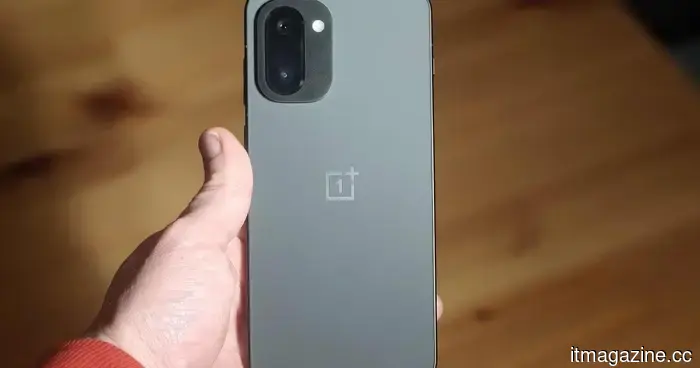 According to a report, OnePlus will soon be ceasing its operations in the US.
A report indicates that OnePlus will formally announce its departure from the US and EU markets within a week, while its parent company, Oppo, plans to take over and expand, particularly in the European market.
According to a report, OnePlus will soon be ceasing its operations in the US.
A report indicates that OnePlus will formally announce its departure from the US and EU markets within a week, while its parent company, Oppo, plans to take over and expand, particularly in the European market.
 A study reveals that AI is shortening the careers of older workers.
Individuals over 55 in jobs affected by AI are leaving the workforce more frequently since the advent of ChatGPT, resulting in unemployment rather than retirement. Programmers and accountants are the most impacted.
A study reveals that AI is shortening the careers of older workers.
Individuals over 55 in jobs affected by AI are leaving the workforce more frequently since the advent of ChatGPT, resulting in unemployment rather than retirement. Programmers and accountants are the most impacted.
Twelve states file a lawsuit to prevent the $110 billion deal between Paramount and Warner.
The Department of Justice approved Paramount's acquisition of Warner Bros. Discovery unconditionally. However, twelve states argue that it infringes upon the Clayton Act.