
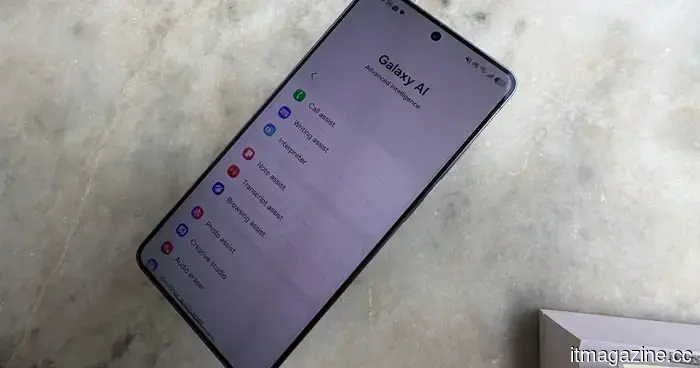
The prominent Privacy Display feature of the Samsung Galaxy S26 Ultra might come with an undesirable red drawback.
The Galaxy S26 Ultra display issue has taken on a new dimension.
The major hardware advancement in the Galaxy S26 Ultra was intended to prevent onlookers from viewing the screen. However, this feature may also be linked to a new concern affecting Samsung’s flagship model. Reports indicate that some users and retail units have manifested a reddish patch in the center of the display, leading Samsung to initiate an internal investigation.
The company has not yet determined whether this is an isolated case or a more widespread defect. A representative from Samsung informed the Korean publication Newsway that, “We are currently investigating the situation internally to establish the cause.”
The Privacy Display feature of Samsung is under examination.
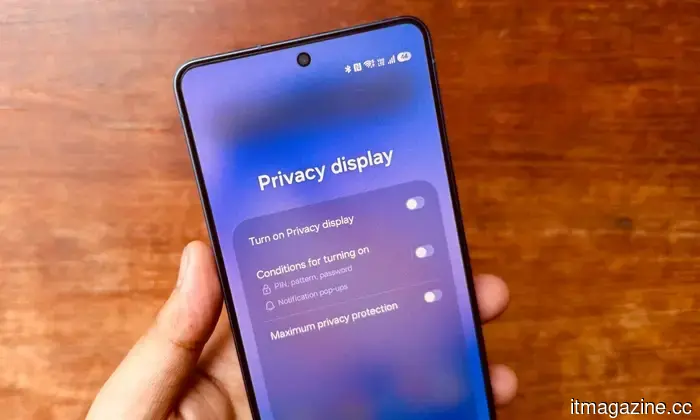
Following the emergence of this issue in certain models, people have shifted their focus towards the Galaxy S26 Ultra's Privacy Display feature. This function modifies the panel to limit visibility from the sides, allowing only the person directly in front of the device to view the screen clearly, making it challenging for those nearby to see the content.
Some industry experts have raised concerns about whether the changes to the panel's light-emitting structure might impact screen consistency under specific conditions. Users have also speculated about OLED burn-in, where uneven pixel wear results in lasting discoloration or ghosting.
However, neither of these potential explanations has been substantiated. The currently available images do not provide enough information to determine if the reddish area is due to burn-in, the Privacy Display hardware, software adjustments, or a limited batch of defective panels. Samsung must replicate the issue and analyze the affected devices before reaching a conclusion.
This seems different from a warm screen setting.
Samsung already has a support page dedicated to the Galaxy S26 screens that appear too red or yellow across the entire display. The company describes minor overall color variations as a normal characteristic of AMOLED screens and suggests adjusting the white balance using the Vivid screen settings.
However, the newly reported issue highlights a localized reddish area near the center, distinguishing it from a mere warm color tone adjustment. While calibration problems might be rectified through settings or a software update, a defect at the panel level would necessitate repairs or even replacements.
Currently, Samsung has not announced any corrective measures, nor is there evidence that every Galaxy S26 Ultra is impacted. The Galaxy S26 Ultra already features known trade-offs with its Privacy Display, including brightness and viewing angle variations. A permanent red patch would be significantly more difficult for consumers to accept in Samsung's most expensive conventional flagship.



Other articles
 A report indicates that Instagram and WhatsApp have the highest number of sextortion reports, while iMessage is being used as a tool against adolescents.
Australia's online safety regulator reports that Instagram and WhatsApp lead in sextortion complaints, while teenagers are being targeted via iMessage and Snapchat.
A report indicates that Instagram and WhatsApp have the highest number of sextortion reports, while iMessage is being used as a tool against adolescents.
Australia's online safety regulator reports that Instagram and WhatsApp lead in sextortion complaints, while teenagers are being targeted via iMessage and Snapchat.
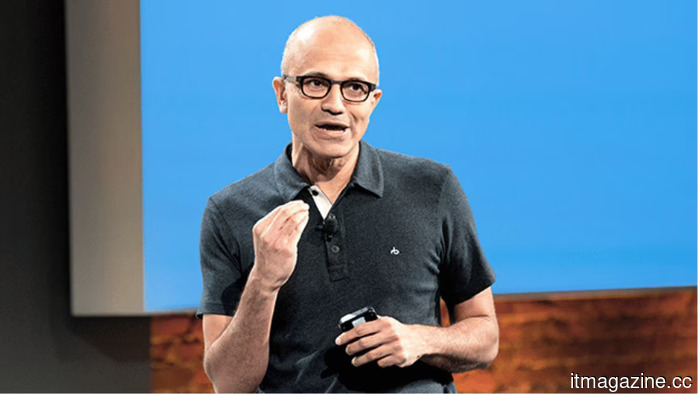 Nadella's Reverse Information Paradox: The unseen cost of AI
Satya Nadella states that companies leveraging AI incur costs in two ways: through direct payments and through proprietary knowledge. He refers to this as the Reverse Information Paradox, which Microsoft played a role in developing.
Nadella's Reverse Information Paradox: The unseen cost of AI
Satya Nadella states that companies leveraging AI incur costs in two ways: through direct payments and through proprietary knowledge. He refers to this as the Reverse Information Paradox, which Microsoft played a role in developing.
 Europe is considering a comprehensive ban on social media for minors.
An expert panel has advised that the European Union should prohibit children under the age of 13 from accessing social media, while suggesting more flexible regulations for teenagers up to 18.
Europe is considering a comprehensive ban on social media for minors.
An expert panel has advised that the European Union should prohibit children under the age of 13 from accessing social media, while suggesting more flexible regulations for teenagers up to 18.
 Apple is reluctant to share this AirPods feature with Meta, but the EU might compel it to do so.
Apple is developing AirPods-style pairing for Meta devices in response to EU pressure, utilizing AccessorySetupKit and Proximity Pairing. The goal is to have it ready by spring 2027.
Apple is reluctant to share this AirPods feature with Meta, but the EU might compel it to do so.
Apple is developing AirPods-style pairing for Meta devices in response to EU pressure, utilizing AccessorySetupKit and Proximity Pairing. The goal is to have it ready by spring 2027.
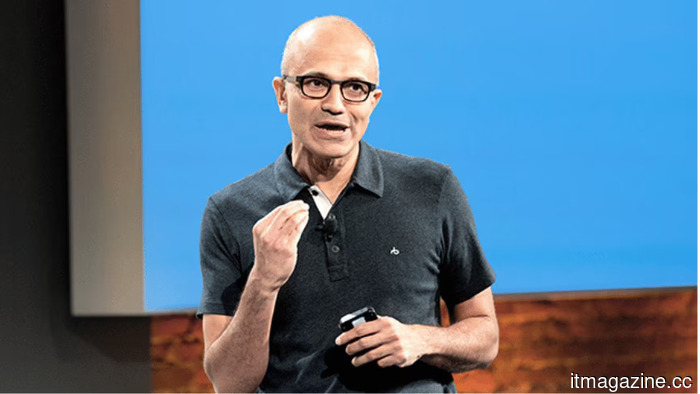 Nadella's Inverse Information Paradox: The concealed expense of AI
Satya Nadella states that companies employing AI incur costs in both monetary terms and in confidential expertise. He refers to this as the Reverse Information Paradox, which Microsoft contributed to developing.
Nadella's Inverse Information Paradox: The concealed expense of AI
Satya Nadella states that companies employing AI incur costs in both monetary terms and in confidential expertise. He refers to this as the Reverse Information Paradox, which Microsoft contributed to developing.
 A study reveals that AI is shortening the careers of older workers.
Individuals over 55 in jobs affected by AI are leaving the workforce more frequently since the advent of ChatGPT, resulting in unemployment rather than retirement. Programmers and accountants are the most impacted.
A study reveals that AI is shortening the careers of older workers.
Individuals over 55 in jobs affected by AI are leaving the workforce more frequently since the advent of ChatGPT, resulting in unemployment rather than retirement. Programmers and accountants are the most impacted.
The prominent Privacy Display feature of the Samsung Galaxy S26 Ultra might come with an undesirable red drawback.
Samsung is looking into reports of reddish spots appearing on certain Galaxy S26 Ultra screens, with the atypical Privacy Display panel being a potential reason.