
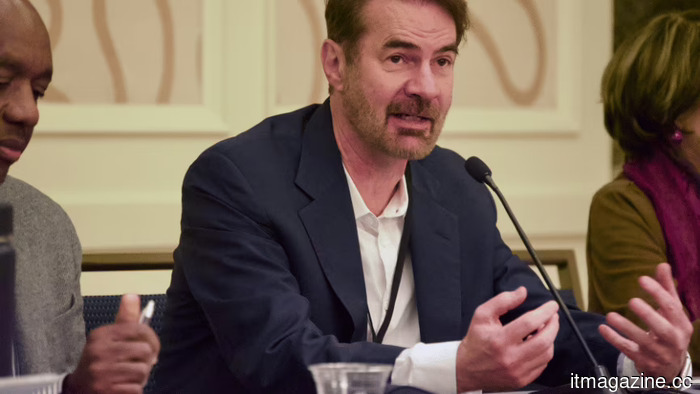
"Immediate Action Required": 16 Nobel Prize winners issue a warning regarding AI.
Two hundred economists, including sixteen Nobel laureates, have endorsed a statement regarding AI and its impact on the economy. The key takeaway: the most knowledgeable individuals acknowledge their inability to predict the future.
Economists typically do not express panic publicly; however, this week, over 200 did so collectively. On Monday, a group of highly esteemed economists and AI researchers released an 88-word statement titled "We Must Act Now." Among the signatories are 16 Nobel laureates, the chief economists of OpenAI and Anthropic, and notable figures such as Eric Schmidt, Reid Hoffman, Yoshua Bengio, and Yann LeCun.
The message is straightforward: AI "may become radically more powerful over the next 10 years,” and could instigate "an unprecedented transformation of our economy, greater than the Industrial Revolution, but occurring over a much shorter time frame.” This could result in significant job losses or substantial improvements in living standards. The authors urge economists, policymakers, and tech leaders to take immediate action to establish regulatory measures.
The skeptics showed signs of concern. The latest developments from the EU tech sector, insights from founder Boris, and some dubious AI-generated art are featured in our weekly newsletter, which is free to subscribe to.
What stands out is not the warning itself but the impressive list of signatories. Economists have long viewed Silicon Valley's fears of a job apocalypse with skepticism, noting that technological advancements generally unfold more gradually than anticipated. Therefore, it is particularly noteworthy that several individuals who previously echoed this sentiment have now signed the statement.
Daron Acemoglu and Simon Johnson, the MIT professors who shared the upcoming 2024 Nobel Prize and had previously downplayed concerns surrounding AI and jobs, have both signed on. “There’s been a notable change in the profession,” remarked Erik Brynjolfsson, the Stanford economist who initiated this effort, in an interview with the New York Times.
Acemoglu remains somewhat skeptical, still unsure if AI will progress as quickly as its proponents suggest. However, recent advancements have unsettled him. He warned that if AI impacts white-collar jobs similarly to how robots transformed manufacturing—only at a quicker pace—it could prove "really disruptive, really costly for people’s livelihoods,” as he stated to the Times.
Here's the intriguing aspect of the statement: it is not a set of forecasts, but rather an admission of uncertainty. The signatories do not assert knowledge of what lies ahead; instead, they acknowledge their lack of clarity. “We are driving in the fog, and it is extraordinarily difficult to anticipate what will happen next,” commented Tom Cunningham of the research group METR, one of the organizers, in the official announcement.
Anton Korinek, an economist from the University of Virginia, currently on leave at Anthropic, quantified the urgency: “Steam, electricity, and computers each provided societies with decades to adapt. AI may give us only a few years.”
Brynjolfsson has expressed this concern even more forcefully, describing the situation as “flying blind” during a critical historical moment. His solution is data. His Canaries dashboard, developed with ADP and highlighted by Fortune, monitors 4.6 million workers to identify issues before they escalate to broader statistics. Currently, it indicates that employment among 22 to 25-year-olds in jobs vulnerable to AI is declining by over 4 percent annually, despite the overall job market appearing stable.
There is no consensus on what metrics to use. Torsten Slok, chief economist at Apollo, chose not to sign. He argues that even “AI exposure,” the concept central to this discussion, is measured in five different, conflicting ways, particularly where the implications are most significant. Depending on how one interprets the data, telemarketers and writers may be facing dire futures, or they might be relatively unaffected.
The timing is almost ironic. Just days before the statement was released, the heads of Anthropic and OpenAI were busy downplaying their own dire predictions, portraying AI as a productivity enhancer rather than a job destroyer, while ongoing debates continue regarding its subtle influence on work dynamics.
A notable detail is the heavy representation from Europe, with institutions like LSE, Cambridge, Oxford, INSEAD, ETH Zurich, Toulouse, and Bocconi, along with Nobel laureate Christopher Pissarides, making the list. However, none of them propose a specific policy. There are no figures, legislations, or named institutions.
That is the crux of the matter. Two hundred of the sharpest economic thinkers agree on one critical point: they require better tools to foresee what is coming, and the necessary safeguards have yet to be established. The more contentious debate over who will benefit from any gains can delay until they can chart the course. Based on this letter's content, it's clear that the navigational map is not yet available.
Otros artículos
 The EU and UK have imposed sanctions on Russia's complete cyber ecosystem.
Brussels and London targeted Russian spies, criminals, hacktivists, and a front organization that recruits hackers from universities in an initial joint effort.
The EU and UK have imposed sanctions on Russia's complete cyber ecosystem.
Brussels and London targeted Russian spies, criminals, hacktivists, and a front organization that recruits hackers from universities in an initial joint effort.
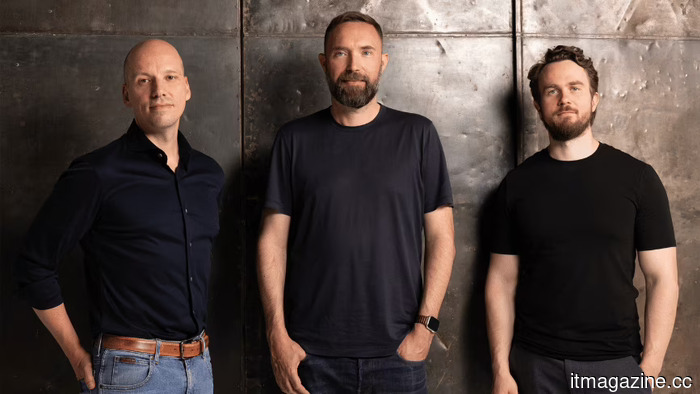 Helsing secures $1.8 billion at a valuation of $18 billion.
Helsing has secured $1.8 billion at a valuation of $18 billion, establishing itself as Europe's largest defense startup, even as U.S. investment supports its sovereign-AI funding round.
Helsing secures $1.8 billion at a valuation of $18 billion.
Helsing has secured $1.8 billion at a valuation of $18 billion, establishing itself as Europe's largest defense startup, even as U.S. investment supports its sovereign-AI funding round.
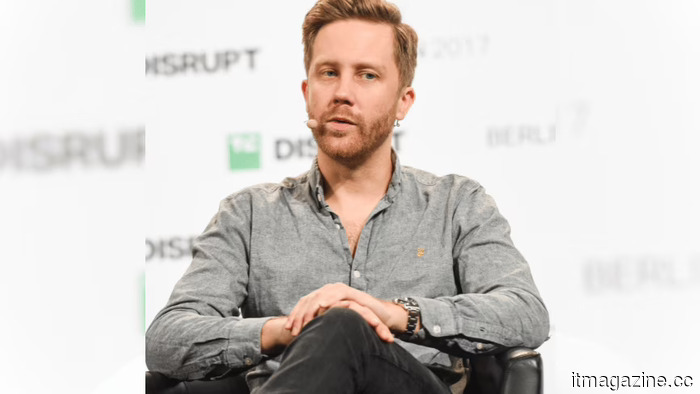 Tom Blomfield, the founder of Monzo, has joined Anthropic.
Tom Blomfield, the founder of Monzo and GoCardless, is departing from Y Combinator to join the compute team at Anthropic, marking one of the most significant hires in the battle for AI talent.
Tom Blomfield, the founder of Monzo, has joined Anthropic.
Tom Blomfield, the founder of Monzo and GoCardless, is departing from Y Combinator to join the compute team at Anthropic, marking one of the most significant hires in the battle for AI talent.
 A study reveals that AI is shortening the careers of older workers.
Individuals over 55 in jobs affected by AI are leaving the workforce more frequently since the introduction of ChatGPT, resulting in unemployment rather than retirement. Programmers and accountants are experiencing the most significant impact.
A study reveals that AI is shortening the careers of older workers.
Individuals over 55 in jobs affected by AI are leaving the workforce more frequently since the introduction of ChatGPT, resulting in unemployment rather than retirement. Programmers and accountants are experiencing the most significant impact.
 A new sodium battery has achieved impressive charging times of just four minutes, but don’t anticipate its use in electric vehicles just yet.
A sodium-metal battery achieved a laboratory rate of four minutes, but its best lifespan results were obtained from slower, smaller tests. The findings from pouch-cell experiments illustrate why electric vehicle adoption is still distant.
A new sodium battery has achieved impressive charging times of just four minutes, but don’t anticipate its use in electric vehicles just yet.
A sodium-metal battery achieved a laboratory rate of four minutes, but its best lifespan results were obtained from slower, smaller tests. The findings from pouch-cell experiments illustrate why electric vehicle adoption is still distant.
 Cloudflare Precursor monitors entire visits to identify bots.
Bots currently account for 57% of web traffic. Cloudflare Precursor monitors entire sessions rather than just individual checkpoints to distinguish between humans and machines.
Cloudflare Precursor monitors entire visits to identify bots.
Bots currently account for 57% of web traffic. Cloudflare Precursor monitors entire sessions rather than just individual checkpoints to distinguish between humans and machines.
"Immediate Action Required": 16 Nobel Prize winners issue a warning regarding AI.
More than 200 economists, including 16 Nobel Prize winners, endorsed a statement titled We Must Act Now, which cautions that AI could disrupt the economy more rapidly than we can assess.