
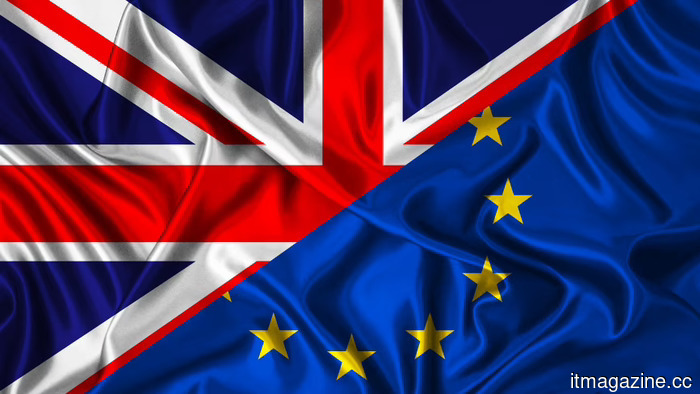
The EU and UK have imposed sanctions on Russia's complete cyber ecosystem.
**Summary**: The EU and UK have implemented their first joint cyber sanctions against Russia, with the EU identifying nine individuals and four entities, while the UK identified 24. The EU has linked the Turla espionage group to FSB Centre 16 and both entities attributed the December attack on Poland’s energy grid, which potentially threatened to cut power for 500,000 people during winter, to this same unit. This represents a shift in approach, as Brussels is now focusing on a broader “ecosystem” of spies, criminals, hacktivists, and front companies rather than targeting specific hacking groups.
The European Union and the United Kingdom have jointly imposed sanctions on Russia’s cyber capabilities for the first time, with the EU naming nine individuals and four entities, and the UK sanctioning 24 individuals, according to Politico.
The significance lies in the language used. The EU’s High Representative Kaja Kallas criticized not just a single group but an entire ecosystem that includes intelligence agencies, criminal organizations, self-identified hacktivists, and private firms.
This indicates a deliberate change, as Europe recognizes that the distinction between state-sponsored hackers and criminals from Russia is an outdated concept.
The Council's statement officially connects the long-established Turla group to Centre 16 of Russia’s Federal Security Service. The Turla group, also referred to as Secret Blizzard and Waterbug, is known for being one of the most active espionage organizations globally.
Turla’s operations in Europe date back to 2010, starting with breaches of French government networks and extending to intrusions in several other countries, including Germany, Poland, and Finland.
Labeling a group as linked to a specific FSB directorate is a significant move, transforming a threat-intelligence label into a formal accusation against a recognized division within the Russian state.
The most serious accusation involves the attack on Poland’s energy network, which the UK and EU members attributed to FSB Centre 16. Although the attack was unsuccessful, its potential implications could have left 500,000 individuals without power during winter.
Poland has been a testing ground for cyber attacks in the past, with hackers previously infiltrating water treatment facilities and accessing control systems.
A notable target of the sanctions is a company, OOO IMPULS, which the UK claims was utilized by the GRU’s Unit 29155 to enlist hackers and cyber experts from various educational institutions in Russia.
This illustrates the ecosystem in tangible terms, showcasing a front company drawing talent from the academic sector to support a military intelligence operation.
Three leaders from the GRU were identified: Vyacheslav Stafeyev, Ivan Senin, and Ivan Kasyanenko, highlighting the intent to sanction managers as well as operators.
The sanctions also extend to general cybercrime, with the UK targeting individuals behind Lumma Stealer, an information theft tool, asserting that Russia exploited the harvested data for espionage.
The scope of this domestic cybercrime is extensive, with the National Crime Agency reporting at least 2,100 victims of Lumma Stealer in the UK over a six-month period.
Furthermore, ten individuals affiliated with Rybar LLC, a state-supported media operation alleged to disseminate misinformation about Ukraine and interfere with elections in Moldova and Armenia, were also sanctioned. This action indicates that disinformation and cyber intrusion are viewed as part of a unified campaign.
Europe is familiar with this proxy model, having previously seized 800 servers tied to Russian-linked hackers in a Dutch operation. The current sanctions reflect a pursuit of the same underlying infrastructure.
**Effectiveness of Sanctions**: There is reasonable skepticism regarding the effectiveness of these measures. Asset freezes and travel bans hold little significance for GRU officers who are unlikely to travel to Brussels, and Russia consistently dismisses such accusations.
However, the true value lies elsewhere. Public attribution increases the risks for the criminal components of the ecosystem, where individuals do possess assets, travel, and seek compensation.
The pressure on these actors is considerable, particularly given that Russian hackers have been implicated in significant financial losses, such as the Jaguar Land Rover breach, which cost the UK economy $2.5 billion.
Moreover, European institutions continue to be vulnerable, with incidents ranging from cyberattacks on the EU Parliament to widespread assaults on European governments. Identifying the attackers does not equate to neutralizing them.
Germany and France are currently summoning Russian ambassadors. In addition to this diplomatic action, Europe will leverage an expanded list of sanctions.
Other articles
 Cloudflare Precursor monitors entire sessions to identify bots.
Bots currently account for 57% of internet traffic. Cloudflare Precursor monitors entire sessions rather than a single point in time to distinguish between humans and machines.
Cloudflare Precursor monitors entire sessions to identify bots.
Bots currently account for 57% of internet traffic. Cloudflare Precursor monitors entire sessions rather than a single point in time to distinguish between humans and machines.
 Nadella's Reverse Information Paradox: The unseen cost of AI
Satya Nadella states that companies leveraging AI incur costs in two ways: through direct payments and through proprietary knowledge. He refers to this as the Reverse Information Paradox, which Microsoft played a role in developing.
Nadella's Reverse Information Paradox: The unseen cost of AI
Satya Nadella states that companies leveraging AI incur costs in two ways: through direct payments and through proprietary knowledge. He refers to this as the Reverse Information Paradox, which Microsoft played a role in developing.
 A study reveals that AI is shortening the careers of older workers.
Individuals over 55 in jobs affected by AI are leaving the workforce more frequently since the introduction of ChatGPT, resulting in unemployment rather than retirement. Programmers and accountants are experiencing the most significant impact.
A study reveals that AI is shortening the careers of older workers.
Individuals over 55 in jobs affected by AI are leaving the workforce more frequently since the introduction of ChatGPT, resulting in unemployment rather than retirement. Programmers and accountants are experiencing the most significant impact.
 Valarian secures $50 million to ease America’s dominance in cloud computing.
Valarian, a startup based in London and co-founded by a former Palantir executive, has secured $50 million in funding to assist governments in utilizing US cloud and AI technology while retaining control over their data.
Valarian secures $50 million to ease America’s dominance in cloud computing.
Valarian, a startup based in London and co-founded by a former Palantir executive, has secured $50 million in funding to assist governments in utilizing US cloud and AI technology while retaining control over their data.
 A report indicates that Instagram and WhatsApp have the highest number of sextortion reports, while iMessage is being used as a tool against adolescents.
Australia's online safety regulator reports that Instagram and WhatsApp lead in sextortion complaints, while teenagers are being targeted via iMessage and Snapchat.
A report indicates that Instagram and WhatsApp have the highest number of sextortion reports, while iMessage is being used as a tool against adolescents.
Australia's online safety regulator reports that Instagram and WhatsApp lead in sextortion complaints, while teenagers are being targeted via iMessage and Snapchat.
 Severing ties with China would result in a $23.6 trillion expense for the West.
A study by EY-Parthenon estimates that the expense of decoupling from China will be $23.6 trillion over the span of 25 years for the US, eurozone, and UK, and it cautions of increased prices.
Severing ties with China would result in a $23.6 trillion expense for the West.
A study by EY-Parthenon estimates that the expense of decoupling from China will be $23.6 trillion over the span of 25 years for the US, eurozone, and UK, and it cautions of increased prices.
The EU and UK have imposed sanctions on Russia's complete cyber ecosystem.
Brussels and London targeted Russian spies, criminals, hacktivists, and a front organization that recruits hackers from universities in an initial joint effort.