
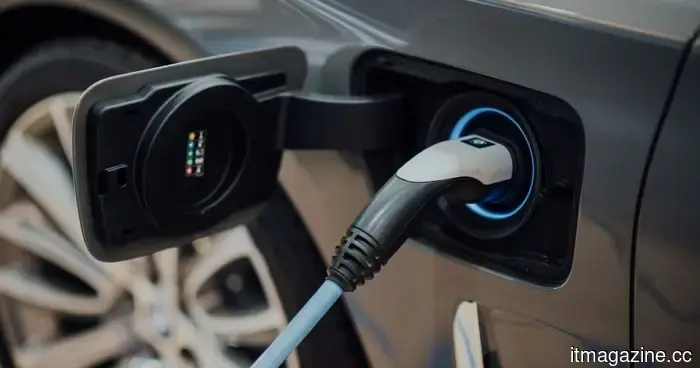
A new sodium battery has achieved impressive charging times of just four minutes, but don’t anticipate its use in electric vehicles just yet.
The advancement could enhance rapid charging and battery longevity, although the findings have not shown these results in a production-sized battery pack.
A new sodium-metal battery has achieved a charging rate that renders current electric vehicles quite sluggish. In lab tests, the cell functioned at a rate of 15C, meaning it could fully charge or discharge in approximately four minutes.
However, this does not imply that researchers connected an electric vehicle and watched it recharge while the driver finished their coffee. This outcome was reached with a small experimental cell utilizing a novel quasi-solid electrolyte, while the larger pouch-cell prototype exhibited significantly less impressive performance.
How it achieved the four-minute charge
The battery employs a gel electrolyte known as Sn-FB QSE, which facilitates more uniform movement of sodium ions and maintains the stability of the metal surface during charging.
Andy Zahn / Digital Trends
This stability addresses one of the main challenges encountered with sodium-metal batteries. Sodium has the potential to create sharp dendritic deposits, which can extend through the cell and lead to short circuits. The more robust gel structure minimizes the weak points where these deposits typically initiate.
At a 15C rate, the full cell still provided 80.1 mAh per gram. While this is an impressive laboratory achievement, a four-minute charging rate does not equate to charging an EV battery from empty under real-world conditions involving heat, power, and safety considerations.
Where the longevity assertion shifts
The battery's best durability outcome was achieved at a reduced 3C rate, corresponding to around 20 minutes. Under these circumstances, the full cell maintained 90% of its capacity after 2,000 cycles.
Additionally, a separate sodium-to-sodium test lasted over 6,000 hours without failing. This simpler configuration checks the evenness of sodium deposits, but it does not represent a complete battery powering a device.
These findings suggest that the electrolyte enhances stability across multiple experiments. However, they do not demonstrate a single cell that integrates four-minute charging, retention over 2,000 cycles, and endurance for 6,000 hours in one test.
BYD
Why an electric vehicle remains distant
The researchers also created a small pouch-cell prototype, which is more in line with the battery format used in actual products. It retained 84% of its capacity after 19 cycles at a slow 0.1C rate. Another variant maintained 60% after 100 cycles at 0.2C under minimal pressure.
Neither pouch cell achieved the headline charging speed or lifespan. The next significant milestone is a larger pouch cell capable of supporting rapid charging without quick degradation over hundreds of cycles without puncture or pressure.
Paulo Vargas is an English major who became a reporter and later a technical writer, with a career that has consistently circled back to...
The Apple Car may be defunct, but it has laid the groundwork for Apple Intelligence
A decade of work on a shelved car project reportedly established the foundation for Apple Intelligence.
The Apple Car may have never hit the road, but it seemingly catalyzed Apple's AI initiatives. According to Bloomberg's Mark Gurman, Apple's abandoned autonomous vehicle project, which consumed over ten years of effort and more than $10 billion before its cancellation in 2024, ultimately set up the technological basis for Apple Intelligence. In a somewhat ironic turn, one of Apple's most costly failures might also evolve into one of its most significant long-term assets.
The Apple Car pushed Apple to adopt an AI-focused mindset.
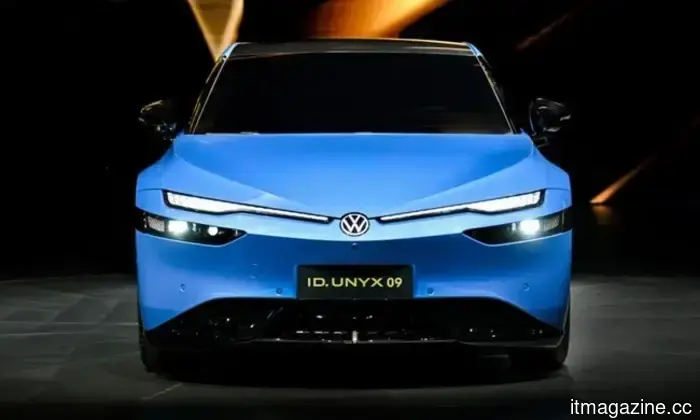
Volkswagen’s ID. Unyx 09 has leaked, and it’s the kind of electric vehicle I want to see in the US
VW's collaboration with Xpeng is delivering exactly what we anticipated.
I have been observing Volkswagen’s lineup in China become progressively more appealing over the past two years, but the ID. Unyx 09 might be the turning point that excites not only Chinese consumers but also the rest of the world. Regulatory disclosures from China's Ministry of Industry and Information Technology, Batch 409, have revealed the complete specifications of the upcoming sedan ahead of its expected launch later this year, and it appears unlike any VW I have encountered before (via CarNewsChina).
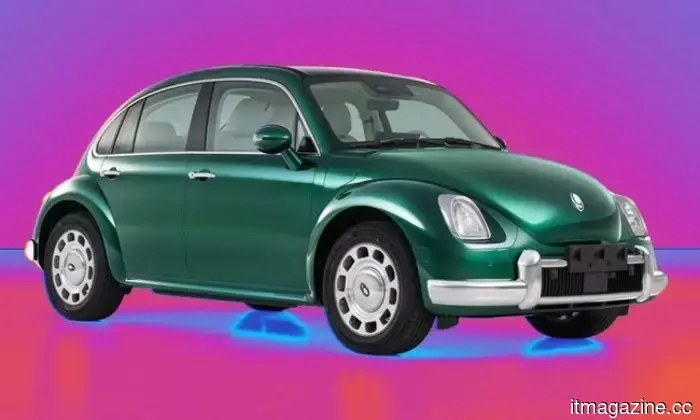
China’s GWM is developing a Beetle lookalike electric vehicle that somehow appears better
GWM enhances the Ora Ballet Cat with a 150kW motor and a top speed of 180 km/h.
The Volkswagen Beetle may now be a thing of the past, but one of its most noticeable spiritual successors is not ready to fade just yet. Great Wall Motor (GWM), a Chinese automaker, is gearing up to relaunch the Ora Ballet Cat, a retro-styled electric hatchback that has often been compared to the legendary Beetle. This time around, however, the company hopes that improved performance and a renewed identity will succeed where clever marketing previously fell short. According to a report by Car News China, recent regulatory documents released in China indicate that the Ora Ballet Cat will be upgraded with a more


Other articles
 The EU and UK have imposed sanctions on the entirety of Russia's cyber ecosystem.
Brussels and London targeted Russian spies, criminals, hacktivists, and a front organization that recruits hackers from universities in their initial joint initiative.
The EU and UK have imposed sanctions on the entirety of Russia's cyber ecosystem.
Brussels and London targeted Russian spies, criminals, hacktivists, and a front organization that recruits hackers from universities in their initial joint initiative.
 You can now instruct Waze to stop disrupting your playlist, and I can't believe it took this long.
Waze's Less Chatty mode finally allows you to concentrate on your music without frequent voice disruptions. That's the major update, in my opinion.
You can now instruct Waze to stop disrupting your playlist, and I can't believe it took this long.
Waze's Less Chatty mode finally allows you to concentrate on your music without frequent voice disruptions. That's the major update, in my opinion.
 Valarian secures $50 million to ease America's hold on the cloud.
Valarian, a startup based in London and co-founded by a former Palantir executive, secured $50 million to assist governments in utilizing US cloud services and AI while maintaining control over their data.
Valarian secures $50 million to ease America's hold on the cloud.
Valarian, a startup based in London and co-founded by a former Palantir executive, secured $50 million to assist governments in utilizing US cloud services and AI while maintaining control over their data.
 The EU and UK have imposed sanctions on Russia's complete cyber ecosystem.
Brussels and London targeted Russian spies, criminals, hacktivists, and a front organization that recruits hackers from universities in an initial joint effort.
The EU and UK have imposed sanctions on Russia's complete cyber ecosystem.
Brussels and London targeted Russian spies, criminals, hacktivists, and a front organization that recruits hackers from universities in an initial joint effort.
 A study reveals that AI is shortening the careers of older workers.
Individuals over 55 in jobs affected by AI are leaving the workforce more frequently since the advent of ChatGPT, resulting in unemployment rather than retirement. Programmers and accountants are the most impacted.
A study reveals that AI is shortening the careers of older workers.
Individuals over 55 in jobs affected by AI are leaving the workforce more frequently since the advent of ChatGPT, resulting in unemployment rather than retirement. Programmers and accountants are the most impacted.
 Tom Blomfield, the founder of Monzo, has joined Anthropic.
Tom Blomfield, the founder of Monzo and GoCardless, is departing from Y Combinator to join the compute team at Anthropic, marking one of the most significant hires in the battle for AI talent.
Tom Blomfield, the founder of Monzo, has joined Anthropic.
Tom Blomfield, the founder of Monzo and GoCardless, is departing from Y Combinator to join the compute team at Anthropic, marking one of the most significant hires in the battle for AI talent.
A new sodium battery has achieved impressive charging times of just four minutes, but don’t anticipate its use in electric vehicles just yet.
A sodium-metal battery achieved a laboratory rate of four minutes, but its best lifespan results were obtained from slower, smaller tests. The findings from pouch-cell experiments illustrate why electric vehicle adoption is still distant.