

Meta's strongest week since 2024 can be summed up in one word: compute.
Meta's stock experienced a rise of approximately 6% on Friday and around 15% for the week, marking its best performance since early 2024, following the company's announcement of a detailed strategy to monetize its AI infrastructure through Meta Compute. Wolfe Research estimates that monetizing each gigawatt at a ~$25 billion rate could increase earnings per share by about 20%, with options trading surpassing three times the 30-day average. However, Meta Compute has yet to generate any sales, has no experience serving external cloud clients, and must contend with three established hyperscalers.
Meta has had a challenging year in the market, remaining flat while the Nasdaq-100 rose by 18%. This changed suddenly, resulting in the stock recording its best week since early 2024, according to CNBC.
The shares increased by about 6% on Friday and roughly 15% over the week. This surge was not fueled by advertising, the core revenue driver for Meta, but rather by interest surrounding compute capacity.
The core of this development is Meta Compute, a strategy aimed at selling AI computing capabilities and models to external clients, positioning Meta against competitors like Amazon, Microsoft, and Google.
Investors had been concerned for months regarding Meta's substantial AI capital expenditures without a clear path to profitability. The company has now proposed renting out its excess AI computing capacity, which the market welcomed as a positive development.
Mark Zuckerberg had previously hinted at this pathway, indicating that an AI cloud business "makes sense." Transitioning a significant cost center into a revenue-generating line is an appealing proposition.
Accompanying news included Meta introducing Muse Image, its new image model, and advancing its MTIA chip into production, reducing reliance on Nvidia.
The optimistic projections being shared are bold. Wolfe Research suggests that monetizing each gigawatt of compute could lead to a roughly 20% increase in earnings per share, equating to a $25 billion rate. The response in options trading was significant, with volumes exceeding three times the 30-day average, and 78% of the $1.8 billion in options premium linked to calls.
Analyst price targets have aligned with this sentiment, with clusters forming in the low-to-mid $800s for the next twelve months. Estimates range from about $720 on the bearish side to roughly $869 on the bullish end.
However, these are predictions rather than certainties, made by analysts who were notably less upbeat a month ago. The sentiment has shifted ahead of any actual revenue.
The rally's underlying risks include that Meta Compute has yet to secure any sales. The company lacks experience in providing cloud services to external clients, and its rivals (AWS, Azure, and Google Cloud) have a significant operational and trust advantage, having been in the market for over a decade.
Additionally, the interpretation of the news can be concerning. Selling excess capacity could indicate smart monetization, or it might suggest that the company has acquired more computing resources than it can effectively utilize.
Moreover, the human aspect remains in question; Meta laid off 8,000 employees while achieving record revenue and investing heavily in AI infrastructure—the same expenditures that the current rally is celebrating.
This week, Wall Street appeared to buy into a narrative—one that, while plausible, raises questions about whether Meta can genuinely compete in the compute space against three entrenched hyperscalers, a question that no stock price can currently address.
Other articles
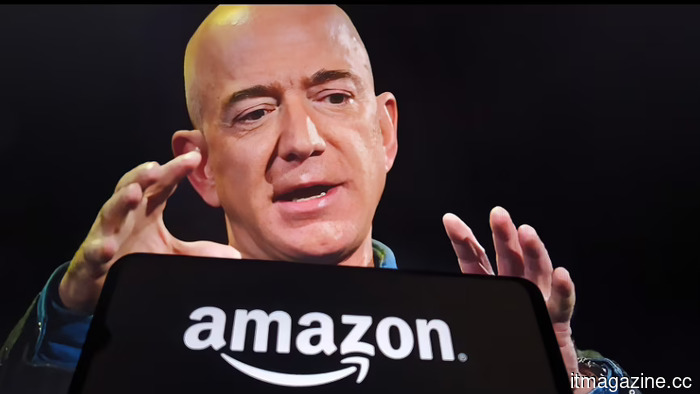 Amazon's reduction of 57,000 jobs and its impact on those remaining.
Los empleados de Amazon que fueron despedidos enfrentan búsquedas de empleo que se prolongan más de un año, mientras que sus compañeros que permanecieron asumen la carga laboral. El costo humano de los recortes en el sector tecnológico.
Amazon's reduction of 57,000 jobs and its impact on those remaining.
Los empleados de Amazon que fueron despedidos enfrentan búsquedas de empleo que se prolongan más de un año, mientras que sus compañeros que permanecieron asumen la carga laboral. El costo humano de los recortes en el sector tecnológico.
 Netflix might introduce channels that are always available. That’s essentially the same as cable.
Netflix is said to have explored the idea of 24/7 genre channels and the option to bill competitor subscriptions via its own app, effectively reviving the cable model it previously dismantled.
Netflix might introduce channels that are always available. That’s essentially the same as cable.
Netflix is said to have explored the idea of 24/7 genre channels and the option to bill competitor subscriptions via its own app, effectively reviving the cable model it previously dismantled.
 The founder of Zhipu advocates for open frontier AI.
Tang Jie argues that AI security is derived from transparency rather than restrictions, while Beijing considers limiting foreign access to China's premier open models.
The founder of Zhipu advocates for open frontier AI.
Tang Jie argues that AI security is derived from transparency rather than restrictions, while Beijing considers limiting foreign access to China's premier open models.
 The demand for AI is 'boundless'. So why are stock prices for chip companies declining?
Executives claim that the demand for AI is insatiable and that order books are filled for the next five years. Despite this, chip stocks continue to fluctuate. The issue lies in the expectations rather than the actual demand.
The demand for AI is 'boundless'. So why are stock prices for chip companies declining?
Executives claim that the demand for AI is insatiable and that order books are filled for the next five years. Despite this, chip stocks continue to fluctuate. The issue lies in the expectations rather than the actual demand.
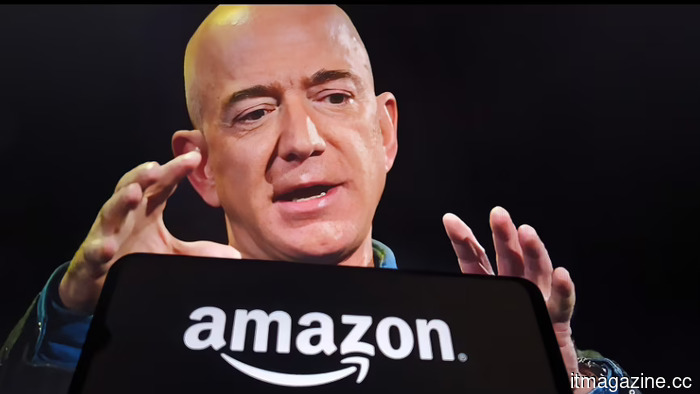 Amazon's reduction of 57,000 positions and the impact on those who remain.
Desperate job searches lasting over a year confront laid-off Amazon employees, while those who remain take on the increased workload. The human toll of the technology sector's reductions.
Amazon's reduction of 57,000 positions and the impact on those who remain.
Desperate job searches lasting over a year confront laid-off Amazon employees, while those who remain take on the increased workload. The human toll of the technology sector's reductions.
 Meta's strongest week since 2024 can be summed up in one word: compute.
Meta rose 6% on Friday and saw a 15% increase over the week following the announcement of Meta Compute, a strategy to offer AI computing resources to external clients.
Meta's strongest week since 2024 can be summed up in one word: compute.
Meta rose 6% on Friday and saw a 15% increase over the week following the announcement of Meta Compute, a strategy to offer AI computing resources to external clients.
Meta's strongest week since 2024 can be summed up in one word: compute.
On Friday, Meta's stock rose by 6%, and for the week, it increased by 15% following the announcement of Meta Compute, a strategy to offer AI computing capacity to external clients.