
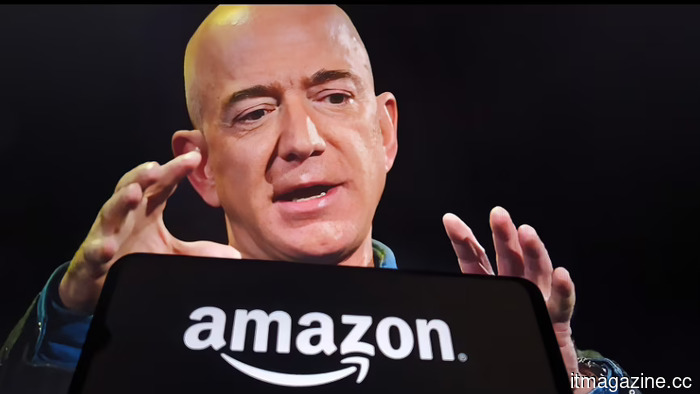
Amazon's reduction of 57,000 jobs and its impact on those remaining.
TL;DR: Since 2022, Amazon has eliminated over 57,000 corporate positions, which is around 16% of its workforce, with notable cuts of approximately 16,000 in late January and 14,000 three months earlier. The laid-off employees are entering a saturated job market, where the duration of job searches has lengthened from four months to as long as twelve or eighteen. Those who remain at the company have reported increased workloads and a decline in work-life balance, representing a deferred cost for immediate savings.
Amazon's layoffs have reached a magnitude that's difficult to comprehend, as reported by CNBC, with more than 57,000 corporate employees let go since 2022, reflecting about 16% of the workforce. The layoffs have intensified, with around 16,000 workers released in late January, following over 14,000 three months prior; this marks the largest reduction in the company’s history.
What’s often overlooked are the repercussions. Both those who were laid off and those who remained are facing challenges, albeit in different forms.
The job market situation: Former Amazon employees stepped into a job market that was already becoming competitive as other tech giants like Cisco, Meta, Microsoft, and Oracle were also implementing layoffs. Consequently, job searches that used to last about four months are now extending to twelve or even eighteen months. This isn’t merely a gap on a résumé; it signifies a significant shift in life circumstances. Financial obligations such as savings, mortgages, and visas cannot align with an eighteen-month job search timeline.
However, not everyone shares the same experience. One AWS engineer described his layoff in January as a fortuitous turn, highlighting issues like return-to-office mandates and pressure related to AI implementation.
For those who remain, the situation feels disheartening. Workloads are escalating, and work-life balance is deteriorating as fewer employees are left to handle the same tasks. Companies rarely account for this aspect; layoffs may create immediate savings on the books but defer the burden onto those who are still employed. The push for AI integration exacerbates the issue, as there is increasing evidence that the effort to implement AI tools is undermining organizational health, forcing staff to manage more with fewer colleagues and rely on technology that produces plausible results, which still requires human correction.
This isn't unique to Amazon. Meta also reduced its workforce by 8,000 while achieving record revenue and investing heavily in AI infrastructure. This pattern of significant layoffs coinciding with substantial spending has become the norm in the tech industry, which has seen tens of thousands of job losses globally this year, many linked to advancements in AI.
The conversation around these layoffs and the ensuing AI enthusiasm continues to evolve. Different regions are exploring legal boundaries: for example, Chinese courts have ruled that replacing workers with AI is not a valid reason for dismissal, a protection not found in the U.S. The political landscape in the U.S. is also reacting, with increasing support for initiatives like giving the public shares in major AI firms, reflecting the disconnect where gains and losses affect different groups.
While these discussions provide some context, they offer little assistance to those currently enduring an eighteen-month job search. This backdrop explains the souring sentiment regarding these layoffs and why the term "efficiency" no longer resonates as a sufficient justification.
Other articles
 The top 6 scar creams that enhance modern consumer beauty technology.
A comprehensive guide to the top six scar creams that utilize cutting-edge beauty technology, including ultrasonic infusion devices, LED facial wands, smart home sensors, and AI-enhanced skin monitoring applications.
The top 6 scar creams that enhance modern consumer beauty technology.
A comprehensive guide to the top six scar creams that utilize cutting-edge beauty technology, including ultrasonic infusion devices, LED facial wands, smart home sensors, and AI-enhanced skin monitoring applications.
 The founder of Zhipu advocates for open frontier AI.
Tang Jie states that the security of AI arises from transparency rather than obstacles, especially as Beijing considers limiting foreign access to China's top open models.
The founder of Zhipu advocates for open frontier AI.
Tang Jie states that the security of AI arises from transparency rather than obstacles, especially as Beijing considers limiting foreign access to China's top open models.
 The remake of Ubisoft's Black Flag is a sign of a larger issue, rather than a well-thought-out plan.
Assassin's Creed Black Flag Resynced is a solid remake. It was created because Ubisoft terminated six games and requires a product to generate revenue.
The remake of Ubisoft's Black Flag is a sign of a larger issue, rather than a well-thought-out plan.
Assassin's Creed Black Flag Resynced is a solid remake. It was created because Ubisoft terminated six games and requires a product to generate revenue.
 The demand for AI is 'boundless.' So why are the shares of semiconductor companies declining?
Executives assert that the demand for AI is limitless and their order books are filled for the next five years. Nevertheless, chip stocks continue to fluctuate. The issue lies in the disparity between expectations and actual demand.
The demand for AI is 'boundless.' So why are the shares of semiconductor companies declining?
Executives assert that the demand for AI is limitless and their order books are filled for the next five years. Nevertheless, chip stocks continue to fluctuate. The issue lies in the disparity between expectations and actual demand.
 69% of Americans support the public ownership of large AI companies.
A survey reveals that 69% of people favor requiring AI firms to transfer 50% of their shares to a public wealth fund, amid rising tech layoffs and increasing AI capital expenditures.
69% of Americans support the public ownership of large AI companies.
A survey reveals that 69% of people favor requiring AI firms to transfer 50% of their shares to a public wealth fund, amid rising tech layoffs and increasing AI capital expenditures.
Amazon's reduction of 57,000 jobs and its impact on those remaining.
Los empleados de Amazon que fueron despedidos enfrentan búsquedas de empleo que se prolongan más de un año, mientras que sus compañeros que permanecieron asumen la carga laboral. El costo humano de los recortes en el sector tecnológico.