

69% of Americans support the public ownership of large AI companies.
A Verasight survey of 1,690 US adults indicates that 69% support requiring AI companies to transfer 50% of their stock to a public sovereign wealth fund, aligning with the policy outlined in Bernie Sanders’s American AI Sovereign Wealth Fund Act. This trend reflects a labor market where tech accounted for nearly a third of US layoffs in the first half of 2026, despite these same companies increasing their AI capital expenditures. The article also presents opposing views, including concerns about property rights, reduced investment, varying predictions of job displacement, and the impact of survey wording.
What once seemed like a radical idea is now embraced by a majority. Almost seventy percent of Americans favor the idea of compelling AI companies to hand over half their stock to a public sovereign wealth fund, as reported by CNBC. This statistic stems from a June Verasight survey of 1,690 US adults that found a 69% endorsement for the policy.
Public opinion views such funds as a mechanism to redistribute the profits of the AI sector back to society, according to Verasight CEO Benjamin Leff, who noted the significance of this perception.
This proposal is not merely theoretical. Senator Bernie Sanders introduced the American AI Sovereign Wealth Fund Act in June, which would allocate a 50% stake in major US AI companies to the public. Sanders has characterized it as a fund worth approximately $7 trillion, arguing that since the public financed the research and infrastructure, they deserve a share of the returns.
He is not alone; Senator Ed Markey’s recent AI Accountability Agenda also prioritizes “sharing the AI wealth.”
The shift in public sentiment can be attributed to a labor market overwhelmed by negative news. The tech industry has represented nearly a third of US layoffs in the first half of 2026, with AI increasingly cited as a contributing factor. Predictions are even bleaker, as Goldman Sachs economist Joseph Briggs forecasts that over 9% of the workforce, roughly 15 million workers, could be displaced over the course of a decade-long transition to AI.
Simultaneously, the same companies responsible for layoffs are boosting their AI capital spending. This contrast between job losses and record investments strengthens the argument for public ownership.
The negative impacts are not evenly spread, as TNW has highlighted the struggles of those affected by tech layoffs and the hype surrounding AI. Polling seems to capture public frustration more effectively than it offers solutions.
Opponents of the proposal argue that it amounts to a forced transfer of private property disguised as a dividend. From this perspective, seizing half of a company’s equity could dampen investment and drive AI development overseas.
There is also debate over the underlying assumptions. Sam Altman has suggested that an AI job crisis is improbable, and if he is correct, then a policy founded on mass displacement may address the wrong issue.
The phrasing of survey questions is also important. Posing whether companies should be “forced” to transfer stock can elicit different responses compared to discussing the trade-offs involved, and pollsters have long recognized that abstract concepts of redistribution tend to be more popular than their practical implications.
Other nations are already adopting more direct measures. Courts in China, for example, have decreed that firing a worker replaced by AI is not lawful, a protection that lacks a counterpart in the US or EU.
While Sanders’s bill is unlikely to pass in the current Congress, the polling suggests that the issue is no longer whether the public should have a claim on the benefits of AI, but rather what that claim should look like. This marks a significant shift in the Overton window. The industry has spent years debating the potential for AI to eliminate jobs, while voters have quietly transitioned to discussing the economic implications.
Other articles
 Amazon's reduction of 57,000 positions and the impact on those who remain.
Desperate job searches lasting over a year confront laid-off Amazon employees, while those who remain take on the increased workload. The human toll of the technology sector's reductions.
Amazon's reduction of 57,000 positions and the impact on those who remain.
Desperate job searches lasting over a year confront laid-off Amazon employees, while those who remain take on the increased workload. The human toll of the technology sector's reductions.
 Ubisoft's remake of Black Flag is a sign of a deeper issue rather than a strategic move.
Assassin's Creed Black Flag Resynced is a decent remake. Its existence is a result of Ubisoft canceling six games and needing a product to market.
Ubisoft's remake of Black Flag is a sign of a deeper issue rather than a strategic move.
Assassin's Creed Black Flag Resynced is a decent remake. Its existence is a result of Ubisoft canceling six games and needing a product to market.
 The competition in AI is no longer focused on having the largest model.
Businesses are selecting AI models based on the specific task, cost, and control rather than their ranking on benchmarks. The concept of 'good enough' is outperforming 'best', and the expenses highlight the reasoning behind this choice.
The competition in AI is no longer focused on having the largest model.
Businesses are selecting AI models based on the specific task, cost, and control rather than their ranking on benchmarks. The concept of 'good enough' is outperforming 'best', and the expenses highlight the reasoning behind this choice.
 Netflix might introduce channels that are always available. That’s essentially the same as cable.
Netflix is said to have explored the idea of 24/7 genre channels and the option to bill competitor subscriptions via its own app, effectively reviving the cable model it previously dismantled.
Netflix might introduce channels that are always available. That’s essentially the same as cable.
Netflix is said to have explored the idea of 24/7 genre channels and the option to bill competitor subscriptions via its own app, effectively reviving the cable model it previously dismantled.
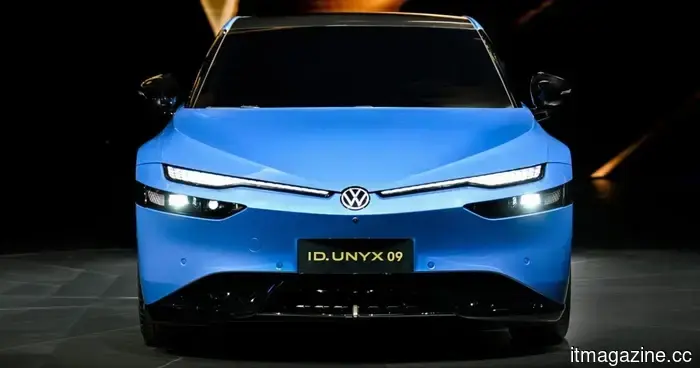 The ID. Unyx 09 from Volkswagen has just been leaked, and it's the type of electric vehicle I'm eager to see in the US.
It may be available for purchase in China in the second half of 2026, and the rest of the world is likely to be frustrated that it won't be released here.
The ID. Unyx 09 from Volkswagen has just been leaked, and it's the type of electric vehicle I'm eager to see in the US.
It may be available for purchase in China in the second half of 2026, and the rest of the world is likely to be frustrated that it won't be released here.
 The competition in AI is no longer centered around having the largest model.
Companies are selecting AI models based on specific tasks, costs, and control rather than their rankings in benchmarks. 'Satisfactory' is outperforming 'top-notch', and the expenses shed light on the reasoning behind this choice.
The competition in AI is no longer centered around having the largest model.
Companies are selecting AI models based on specific tasks, costs, and control rather than their rankings in benchmarks. 'Satisfactory' is outperforming 'top-notch', and the expenses shed light on the reasoning behind this choice.
69% of Americans support the public ownership of large AI companies.
A survey reveals that 69% of people favor requiring AI firms to transfer 50% of their shares to a public wealth fund, amid rising tech layoffs and increasing AI capital expenditures.