
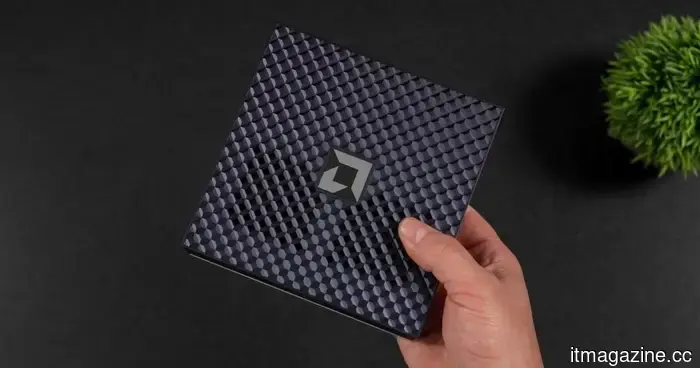
This AMD mini PC outperforms Valve's Steam Machine, but it's significantly more expensive.
Valve's choice to officially support SteamOS 3.8 on standard gaming PCs has paved the way for a new category of Steam Machines, eliminating the need for gamers to purchase Valve's own hardware. However, a recent benchmark conducted by YouTuber ETA Prime indicates that a high-end mini PC powered by AMD can outperform Valve's forthcoming Steam Machine by a significant margin, though at a much higher price.
The testing underscores the versatility of SteamOS and the increasing appeal of AMD's latest integrated graphics, but it raises a critical question: how much additional performance is truly worth the extra cost?
SteamOS showcases its compatibility beyond Valve's hardware
With the launch of SteamOS 3.8, Valve has made its Linux-based gaming operating system accessible to compatible desktop PCs, particularly those with AMD components. Although Nvidia support is still in development, SteamOS now enables users to create their own gaming PCs that mimic console performance without relying on Valve's official hardware.
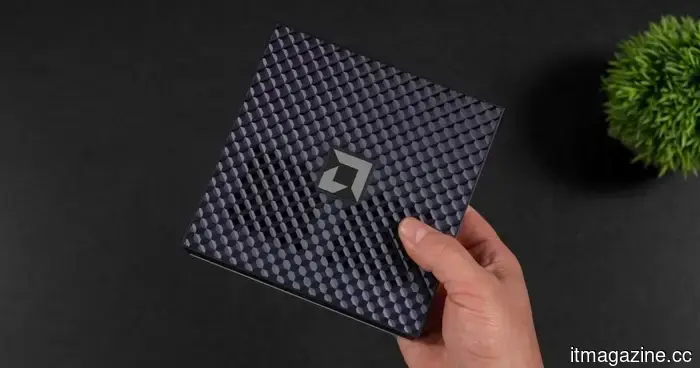
ETA Prime recently showcased this potential by installing SteamOS 3.8.14 on a mini PC equipped with AMD's Ryzen AI Max+ 395 processor. This processor features 16 Zen 5 CPU cores and 32 threads, along with an integrated Radeon 8060S GPU that boasts 40 RDNA 3.5 compute units, considerably surpassing the semi-custom AMD processor found in Valve’s Steam Machine, which reportedly includes a 6-core Zen 4 CPU and an RDNA 3 GPU with 28 compute units.
To enhance graphics performance, ETA Prime allocated 96GB of the system’s shared memory for VRAM, leaving 31GB for system memory. The performance improvements were noticeable across various tested titles using native rendering without upscaling. In Shadow of the Tomb Raider, the Ryzen-based system averaged 138 FPS at 1080p, compared to 118 FPS on the Steam Machine. At 1440p, it reached 103 FPS versus 86 FPS, while at 4K, it achieved 62 FPS, outpacing Valve’s hardware by 41 percent.
The trend was consistent in Cyberpunk 2077, with the mini PC averaging 84 FPS at 1080p, 52 FPS at 1440p, and 27 FPS at 4K, in contrast to the Steam Machine's 74 FPS, 45 FPS, and 18 FPS, respectively. Similar performance increases were observed in Horizon Zero Dawn Remastered, with the AMD system achieving 72 FPS at 1080p, 56 FPS at 1440p, and 32 FPS at 4K, consistently outperforming Valve’s device.
However, these performance enhancements come at a hefty price
The setup used in the demonstration amounts to roughly $3,999, while the Steam Machine starts at $1,049. Justifying nearly $3,000 more for frame-rate improvements of 15 to 50 percent may be challenging for most consumers.
AMD Mini PC ETA Prime
A more budget-friendly option exists. Systems like the GMKtec EVO-X2 AI Mini PC, also using the Ryzen AI Max+ 395, are priced around $1,999. Although this model comes with 64GB of LPDDR5X memory, restricting users from assigning the same 96GB of VRAM utilized in ETA Prime’s test, this limitation is unlikely to significantly affect gaming performance. Even the most powerful consumer graphics cards typically do not require more than 32GB of VRAM.
Ultimately, the benchmark emphasizes the broader importance of SteamOS 3.8. Valve is no longer requiring gamers to purchase a Steam Machine; they just need compatible hardware. As SteamOS evolves and hardware support widens, especially for Nvidia GPUs, gamers may find themselves with greater options to construct their own console-like gaming PCs without being bound to a single manufacturer.
Other articles
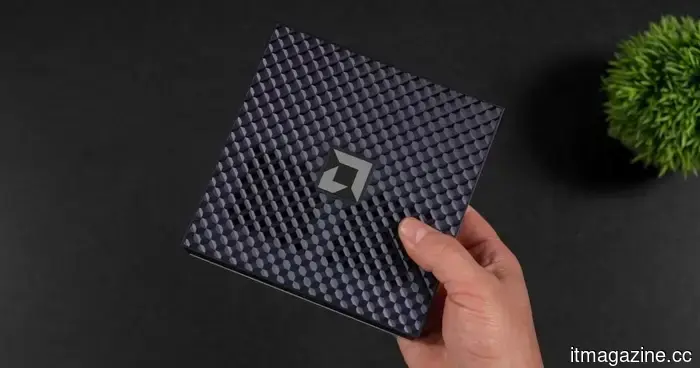 This AMD mini PC outperforms Valve’s Steam Machine, although it is significantly pricier.
A mini PC equipped with an AMD Ryzen AI Max+ 395 running SteamOS 3.8 surpassed Valve's Steam Machine in various games, but its considerably higher cost restricts its attractiveness.
This AMD mini PC outperforms Valve’s Steam Machine, although it is significantly pricier.
A mini PC equipped with an AMD Ryzen AI Max+ 395 running SteamOS 3.8 surpassed Valve's Steam Machine in various games, but its considerably higher cost restricts its attractiveness.
 If you're feeling exhausted from supervising ChatGPT, the new GPT-5.6 models could be the solution you need.
OpenAI has introduced GPT-5.6 Sol, Terra, and Luna, a new series of AI models designed to enhance workflow speed, reduce costs, and minimize the need for subsequent prompts.
If you're feeling exhausted from supervising ChatGPT, the new GPT-5.6 models could be the solution you need.
OpenAI has introduced GPT-5.6 Sol, Terra, and Luna, a new series of AI models designed to enhance workflow speed, reduce costs, and minimize the need for subsequent prompts.
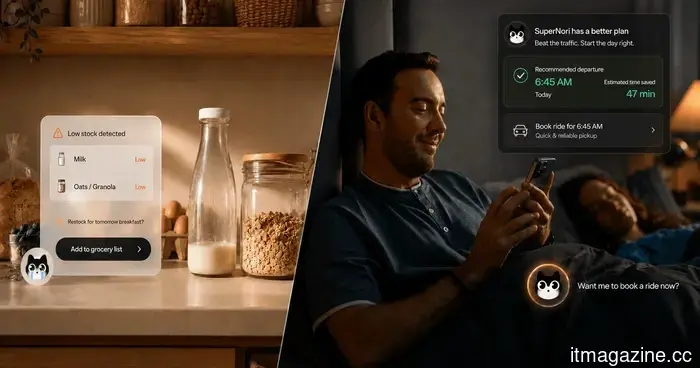 The Household Economy of Family AI: The Growing Consumer Potential of AI
Instead of concentrating exclusively on enhancing workplace productivity, a new wave of AI companies is investigating how smart home systems might affect family decision-making, spending habits, budgeting, and daily expenditures. Over the last ten years, artificial intelligence has largely been positioned as a technology for the workplace, with businesses aiming to assist professionals in writing more quickly, analyzing data, and automating tasks.
The Household Economy of Family AI: The Growing Consumer Potential of AI
Instead of concentrating exclusively on enhancing workplace productivity, a new wave of AI companies is investigating how smart home systems might affect family decision-making, spending habits, budgeting, and daily expenditures. Over the last ten years, artificial intelligence has largely been positioned as a technology for the workplace, with businesses aiming to assist professionals in writing more quickly, analyzing data, and automating tasks.
 Sony reenters the professional in-ear monitor market with the IER-M500.
Sony has introduced the IER-M500 professional in-ear monitors, which come equipped with a new dynamic driver, excellent passive noise isolation, a detachable cable, and a design suitable for musicians and performers on stage.
Sony reenters the professional in-ear monitor market with the IER-M500.
Sony has introduced the IER-M500 professional in-ear monitors, which come equipped with a new dynamic driver, excellent passive noise isolation, a detachable cable, and a design suitable for musicians and performers on stage.
 This AMD mini PC surpasses Valve’s Steam Machine, but it comes with a significantly higher price tag.
A mini PC featuring an AMD Ryzen AI Max+ 395 running SteamOS 3.8 outperformed Valve's Steam Machine in several games, although its considerably higher price restricts its attractiveness.
This AMD mini PC surpasses Valve’s Steam Machine, but it comes with a significantly higher price tag.
A mini PC featuring an AMD Ryzen AI Max+ 395 running SteamOS 3.8 outperformed Valve's Steam Machine in several games, although its considerably higher price restricts its attractiveness.
 INIU SnapGo Air review: A convenient power bank that I'm comfortable taking with me every day.
I became fed up with bulky chargers, but INIU came to my rescue. The SnapGo Air is a sleek, lightweight 10,000mAh magnetic power bank featuring fast Qi2.2 charging and an integrated cable that you'll genuinely want to take with you every day.
INIU SnapGo Air review: A convenient power bank that I'm comfortable taking with me every day.
I became fed up with bulky chargers, but INIU came to my rescue. The SnapGo Air is a sleek, lightweight 10,000mAh magnetic power bank featuring fast Qi2.2 charging and an integrated cable that you'll genuinely want to take with you every day.
This AMD mini PC outperforms Valve's Steam Machine, but it's significantly more expensive.
An AMD Ryzen AI Max+ 395 mini PC utilizing SteamOS 3.8 surpassed Valve's Steam Machine in various games; however, its much higher cost reduces its attractiveness.