

Special delivery: Italy's postal service enters the AI infrastructure competition.
Italy's postal service has dedicated a century and a half to distributing letters, parcels, and pension payments within the nation. It now aims to focus on data transfer. Poste Italiane, which still distributes state pensions via approximately 12,600 branches, has positioned itself as an unexpected player in Europe’s race to establish the infrastructure necessary for AI.
This endeavor leverages Telecom Italia. Poste has been gradually increasing its influence over the former state monopoly and is now the largest shareholder in a group it presents as the foundation of a larger, state-supported digital champion. The company contends that a unified Poste-TIM could localize Italian computing capacity rather than relying on American hyperscalers.
The rationale is both geographic and financial. Poste claims the expanded group could enhance TIM’s existing data centers and telecom exchanges, while also extending processing power by converting former mail-sorting hubs into local edge-computing sites.
The proposal highlights that a network designed for postal delivery is conveniently already distributed throughout the entire country. This geographic advantage is central to the argument. Edge computing, which keeps data close to its source instead of sending it to remote megacentres, is ideally suited for a dense and divided infrastructure that a postal service has taken decades to develop.
A sorting center located just outside a mid-sized town may lack glamour, but it possesses power, space, and a prime location that new data center developers would fiercely compete for.
Poste is entering a competitive market. Italy has emerged as one of Europe’s more active data-center hubs, with several significant investments made in quick succession, and analysts anticipate the sector could roughly double by the 2025-2026 timeframe.
Microsoft alone has invested billions to expand its cloud region in Italy, driven by the soaring hardware demand that is reshaping the industry from chips to memory prices.
What distinguishes Poste from the hyperscalers is its ownership structure. Being majority state-controlled makes the TIM consolidation as much a matter of industrial policy as it is a commercial strategy. Rome has spent years trying to keep key telecom and computing assets domestically owned, and a Poste-led group aligns perfectly with that goal.
Poste's operations extend beyond traditional mail delivery. It handles payments, mobile services, insurance, and is home to one of Italy’s larger savings platforms, providing it with a nationwide customer base and the impetus to require its own computing capacity. Incorporating infrastructure into its operations is a more straightforward transition than it may seem.
This initiative also aligns with a broader European sentiment. Governments across the continent are increasingly cautious about relying on a handful of US cloud giants for the computing power that increasingly supports public services—a concern reflected in Brussels’ expanding technology agenda. A national operator providing sovereign infrastructure is a narrative that resonates well with policymakers.
The true test of success remains uncertain. Establishing and maintaining competitive AI infrastructure requires capital, cooling, power contracts, and technical expertise—all areas a postal operator has traditionally not needed on a large scale. Transforming a sorting center into an operational edge node is a significant engineering challenge, not merely a rebranding effort, and Poste will be competing against companies that have been engaged in this field for years.
Additionally, there is the critical issue of whether Poste can effectively manage the acquisition of TIM, a company whose financial challenges and restructuring have demanded the attention of various previous owners. The ambition for infrastructure assumes that the integration proceeds smoothly enough to allow focus on such a large project.
At present, the plan serves more as an expression of intent than a detailed strategy. Italy’s postal service has determined that the future of its business involves both data and parcels, believing that the network it currently controls has greater value than it appears. The forthcoming years will reveal if the country’s postal carrier can realistically reinvent itself as a cloud service provider.
Other articles
 The Fold 8 Ultra might finally feature Samsung's top cameras.
For a long time, purchasers of the Fold have compromised on camera quality for the sake of design. However, a recent leak indicates that the Galaxy Z Fold 8 Ultra could be the first model that allows you to avoid that trade-off.
The Fold 8 Ultra might finally feature Samsung's top cameras.
For a long time, purchasers of the Fold have compromised on camera quality for the sake of design. However, a recent leak indicates that the Galaxy Z Fold 8 Ultra could be the first model that allows you to avoid that trade-off.
 OpenAI is discontinuing its ChatGPT Atlas browser.
OpenAI will discontinue ChatGPT Atlas on August 9, integrating its agentic browsing feature into a new "super app" for ChatGPT for desktop while scaling back on side projects.
OpenAI is discontinuing its ChatGPT Atlas browser.
OpenAI will discontinue ChatGPT Atlas on August 9, integrating its agentic browsing feature into a new "super app" for ChatGPT for desktop while scaling back on side projects.
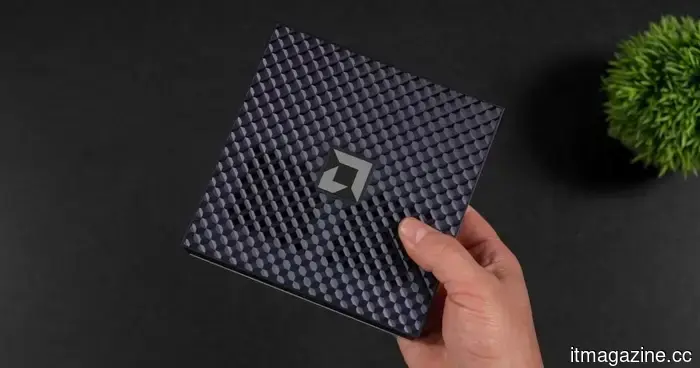 This AMD mini PC outperforms Valve's Steam Machine, but it comes at a significantly higher price.
A mini PC featuring an AMD Ryzen AI Max+ 395 that operates on SteamOS 3.8 has surpassed Valve's Steam Machine in various games, although its much higher price restricts its attractiveness.
This AMD mini PC outperforms Valve's Steam Machine, but it comes at a significantly higher price.
A mini PC featuring an AMD Ryzen AI Max+ 395 that operates on SteamOS 3.8 has surpassed Valve's Steam Machine in various games, although its much higher price restricts its attractiveness.
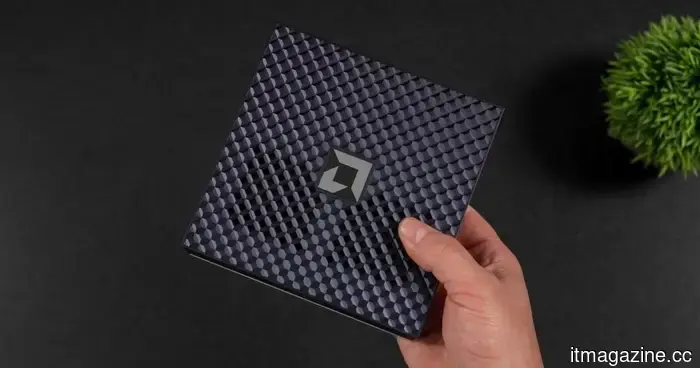 This AMD mini PC outperforms Valve's Steam Machine, but it's significantly more expensive.
An AMD Ryzen AI Max+ 395 mini PC utilizing SteamOS 3.8 surpassed Valve's Steam Machine in various games; however, its much higher cost reduces its attractiveness.
This AMD mini PC outperforms Valve's Steam Machine, but it's significantly more expensive.
An AMD Ryzen AI Max+ 395 mini PC utilizing SteamOS 3.8 surpassed Valve's Steam Machine in various games; however, its much higher cost reduces its attractiveness.
 Sony reenters the professional in-ear monitor market with the IER-M500.
Sony has introduced the IER-M500 professional in-ear monitors, which come equipped with a new dynamic driver, excellent passive noise isolation, a detachable cable, and a design suitable for musicians and performers on stage.
Sony reenters the professional in-ear monitor market with the IER-M500.
Sony has introduced the IER-M500 professional in-ear monitors, which come equipped with a new dynamic driver, excellent passive noise isolation, a detachable cable, and a design suitable for musicians and performers on stage.
 DJI introduces its inaugural VTOL fixed-wing cargo drone, the EV50, claiming it has established an altitude record on Everest.
On Thursday, DJI introduced the DJI EV50, its inaugural fixed-wing cargo drone featuring vertical takeoff and landing (VTOL) capabilities, intended for long-range regional transportation.
DJI introduces its inaugural VTOL fixed-wing cargo drone, the EV50, claiming it has established an altitude record on Everest.
On Thursday, DJI introduced the DJI EV50, its inaugural fixed-wing cargo drone featuring vertical takeoff and landing (VTOL) capabilities, intended for long-range regional transportation.
Special delivery: Italy's postal service enters the AI infrastructure competition.
Poste Italiane is banking on its partnership with Telecom Italia to transform post offices and sorting centers into the foundation of Italy's AI infrastructure.