

A new study indicates that your child isn't the only one with a phone addiction.
Digital Trends may receive a commission if you make a purchase through links on our site. Why should you trust us?
Researchers indicate that the screen habits of parents could have lasting impacts on their children’s emotional growth.
For an extended period, discussions regarding screen time have predominantly centered on children. What is too much YouTube? Should teens be permitted on social media? When is it appropriate for a child to receive their first smartphone? A fresh study proposes that we might have been focusing on the wrong aspects.
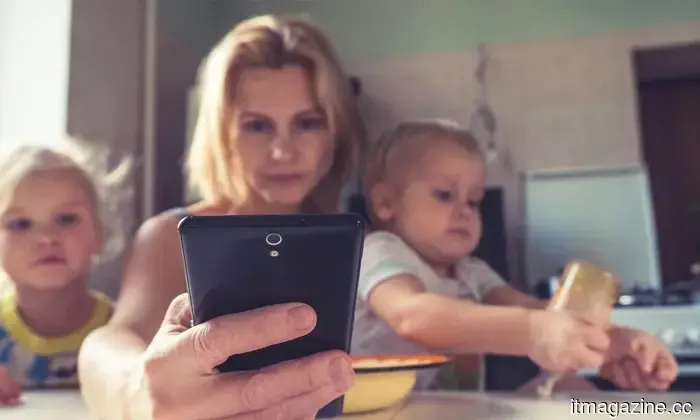
Based on research published last month in the peer-reviewed journal Frontiers in Psychology (via Bloomberg), it turns out that it's not solely children’s screen usage that is important. Parents who frequently engage with their phones may unknowingly jeopardize their emotional connection with their children, which could result in enduring developmental and psychological consequences. The study surveyed 600 U.S. adolescents aged 12 to 17, many of whom expressed feelings of neglect or sidelining when their parents were preoccupied with their devices.
The issue lies not with the phone itself, but with the sense of being overlooked.
The researchers discovered that excessive phone usage by caregivers can lead to what is termed “insecure attachment,” a pattern which can cause children to become more anxious, avoidant, and less secure in relationships as they grow older. Don Grant, a media psychologist, addiction expert, and fellow of the American Psychological Association, notes that these effects can last into adulthood if not addressed.
“It could severely impact their attachment security, which they may carry for life,” Grant stated.
He explained that the concern is not merely about spending excessive time on devices. It involves being physically present yet emotionally distant. One example from the study illustrates parents attending every recital or sporting event, while their children remember them as always looking down at a screen instead of engaging in the moment.
What sets this study apart?
While we have previously reported on the impact of excessive screen time and social media on children, this study shifts focus to parents instead. This research represents one of the most thorough investigations into how children perceive their caregivers' device habits and the influence of those habits on the parent-child dynamic.
The findings also contribute to the growing body of research surrounding “technoference”—the notion that digital devices subtly interfere with face-to-face interactions. Earlier studies mainly addressed the impact on romantic couples, but this research suggests similar dynamics may be evident between parents and their kids. It aligns with broader trends; for example, Bloomberg highlights that nearly half of American teens surveyed by the Pew Research Center in 2024 reported that their parents were sometimes distracted by a phone during conversations, despite many parents not recognizing this behavior.
Interestingly, we have spent years worrying about children becoming overly attached to their screens. This study shifts that narrative, proposing that the more pressing concern may be what children witness when they look up. Ultimately, the memories that kids tend to cherish are not those spent fixated on a screen, but rather those moments when the adults they wished to connect with were engrossed in their devices.





Other articles
 The French antitrust investigation into Nvidia is approaching its conclusion, according to the regulatory authority.
France's competition authority has announced that its extended antitrust investigation into Nvidia is nearing completion, bringing the AI chip leader closer to an official decision.
The French antitrust investigation into Nvidia is approaching its conclusion, according to the regulatory authority.
France's competition authority has announced that its extended antitrust investigation into Nvidia is nearing completion, bringing the AI chip leader closer to an official decision.
 The head of Taiwan's central bank is advising caution regarding leverage as the stock surge driven by AI continues to gain momentum.
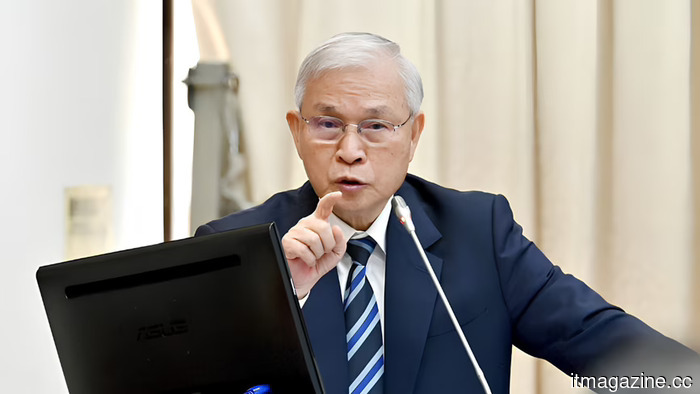
Governor Yang Chin-long cautioned Taiwanese investors about over-leveraging to pursue AI-driven stocks, while downplaying concerns regarding systemic risk.
The head of Taiwan's central bank is advising caution regarding leverage as the stock surge driven by AI continues to gain momentum.
Governor Yang Chin-long cautioned Taiwanese investors about over-leveraging to pursue AI-driven stocks, while downplaying concerns regarding systemic risk.
 Apple supplier Luxshare sees a decline in its record debut on the Hong Kong stock exchange.
Luxshare dropped by as much as 9.6% on its debut after securing $3.1 billion in Hong Kong's largest listing of 2026, marking a lackluster start for the Apple supplier.
Apple supplier Luxshare sees a decline in its record debut on the Hong Kong stock exchange.
Luxshare dropped by as much as 9.6% on its debut after securing $3.1 billion in Hong Kong's largest listing of 2026, marking a lackluster start for the Apple supplier.
 New research warns that Europe's aspirations for sovereign AI may be hindered by restrictions on data centers.
The Onnec survey reveals that 74% of operators view sovereign cloud as a significant opportunity; however, constraints related to power, planning, and retrofitting may hinder its implementation.
New research warns that Europe's aspirations for sovereign AI may be hindered by restrictions on data centers.
The Onnec survey reveals that 74% of operators view sovereign cloud as a significant opportunity; however, constraints related to power, planning, and retrofitting may hinder its implementation.
 Is the Galaxy Z Flip 8 set to be Samsung's final compact foldable? A recent leak suggests that it might be the case.
The Galaxy Z Flip 8 isn't available yet, but a new rumor has fans speculating whether Samsung's popular compact foldable may be reaching its conclusion.
Is the Galaxy Z Flip 8 set to be Samsung's final compact foldable? A recent leak suggests that it might be the case.
The Galaxy Z Flip 8 isn't available yet, but a new rumor has fans speculating whether Samsung's popular compact foldable may be reaching its conclusion.
 Your dog has the ability to run, but Fi’s new tracker, supported by Starlink satellites, ensures you can always locate them.
Fi Ultra employs Starlink satellite connectivity to ensure that lost dogs remain traceable outside of cellular coverage, reducing the likelihood of adventurous pups disappearing without a trace.
Your dog has the ability to run, but Fi’s new tracker, supported by Starlink satellites, ensures you can always locate them.
Fi Ultra employs Starlink satellite connectivity to ensure that lost dogs remain traceable outside of cellular coverage, reducing the likelihood of adventurous pups disappearing without a trace.
A new study indicates that your child isn't the only one with a phone addiction.
A recent study published in Frontiers in Psychology indicates that excessive smartphone usage by parents may diminish emotional connections with their children, potentially resulting in lasting developmental and psychological impacts.