

Merely 6% of managers in the UK believe that Gen Z is prepared for the workforce.
Young employees and their employers have differing perceptions. Almost half (45 percent) of individuals aged 18 to 24 believe they possess the necessary skills to succeed at work. In contrast, only 6 percent of UK managers share this belief, according to the Chartered Management Institute.
The organization surveyed over 1,000 managers and 514 young individuals for the report, which was released during Youth Employment Week. This comes at a time when AI is transforming the early stages of working life and discussions about employment continue to intensify.
What managers perceive
Sixty-one percent of managers feel that younger employees are more likely than older workers to lack resilience, professionalism, and communication skills, as well as to struggle with feedback. Over 90 percent (91 percent) believe that this skills gap adversely affects their team's performance. Only 12 percent think that young hires advance as anticipated.
When new employees do not succeed or fail to meet probation requirements, managers attribute this to a lack of motivation (40 percent), a lack of resilience (38 percent), poor workplace etiquette (34 percent), and poor time management (32 percent).
The other side of the issue
The report does not solely criticize Generation Z; it also highlights the role of their managers. Earlier CMI research indicated that 82 percent of UK managers are "accidental managers," having been promoted without formal training. Consequently, those tasked with mentoring young employees often lack coaching experience themselves.
Addressing the issue requires mutual effort. Almost 86 percent of young workers desire training for line managers to better assist them in their early careers. Furthermore, 89 percent of managers who received training reported improvements in how they nurture junior staff. Investing in training generally yields positive returns.
Ambitions are not lacking
The data counters the stereotype that young people are indifferent. Nearly two-thirds (64 percent) aim for management or leadership roles. More than 80 percent (83 percent) believe having a mentor or professional organization would significantly boost their confidence. Additionally, 78 percent feel that their education has focused too much on theory rather than practical skills. However, they are entering a diminishing pool of entry-level positions, as AI-driven companies are already hiring fewer junior staff.
The significance of the findings
The timing of these findings heightens their importance. AI is already reducing the number of entry-level job listings, and some experts caution against eliminating the junior tier. “It’s time we start questioning whether workplaces are prepared for young individuals,” stated CMI chief Ann Francke. If companies continue to reduce entry-level opportunities without adequately training managers, the skills gap will only increase. Young talent is ready to engage; based on this evidence, the workplace has not yet adapted.
Other articles
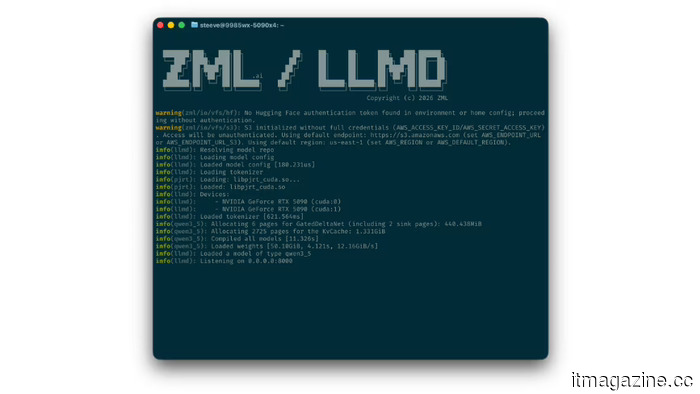 ZML's complimentary AI server operates on all major chipsets.
France's ZML has launched ZML/LLMD, a free inference server that operates open-source AI at high speed on Nvidia, AMD, Google, Intel, and Apple processors.
ZML's complimentary AI server operates on all major chipsets.
France's ZML has launched ZML/LLMD, a free inference server that operates open-source AI at high speed on Nvidia, AMD, Google, Intel, and Apple processors.
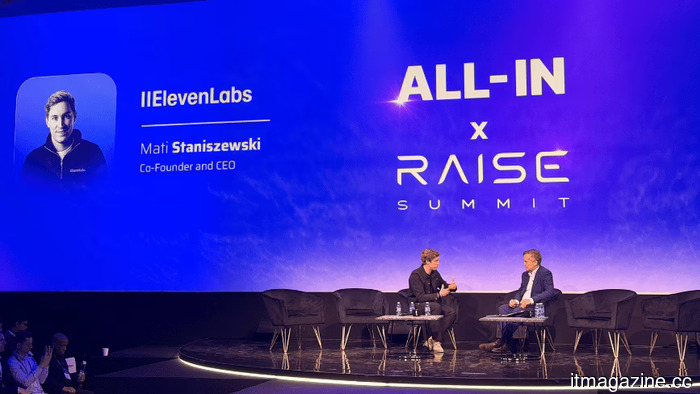 CEO of ElevenLabs discusses $600 million in revenue and the AI laboratories.
At the RAISE Summit in Paris, Mati Staniszewski, the CEO of ElevenLabs, elaborated on the company's journey towards achieving a reported $600 million in revenue and discussed the startup's strategy for surpassing the AI laboratories.
OpenAI's GPT-Live: A voice feature for ChatGPT that can listen and engage in conversation.
OpenAI has introduced GPT-Live, a full-duplex voice feature for ChatGPT that can listen and speak simultaneously, complete with live translation. This feature is being made available to all users, including those with free accounts.
CEO of ElevenLabs discusses $600 million in revenue and the AI laboratories.
At the RAISE Summit in Paris, Mati Staniszewski, the CEO of ElevenLabs, elaborated on the company's journey towards achieving a reported $600 million in revenue and discussed the startup's strategy for surpassing the AI laboratories.
OpenAI's GPT-Live: A voice feature for ChatGPT that can listen and engage in conversation.
OpenAI has introduced GPT-Live, a full-duplex voice feature for ChatGPT that can listen and speak simultaneously, complete with live translation. This feature is being made available to all users, including those with free accounts.
 The GhostApproval flaw disrupts six leading AI coding agents.
Wiz's 'GhostApproval' employs an old symlink method to enable six AI coding agents, including Amazon Q and Cursor, to write beyond the sandbox and transfer control of the box.
The GhostApproval flaw disrupts six leading AI coding agents.
Wiz's 'GhostApproval' employs an old symlink method to enable six AI coding agents, including Amazon Q and Cursor, to write beyond the sandbox and transfer control of the box.
 Just 6% of managers in the UK believe that Gen Z is prepared for the workforce.
A CMI report reveals that 45% of UK Gen Z believe they are prepared for work, yet only 6% of managers concur, and among those managers, 82% were elevated to their positions without any training.
Just 6% of managers in the UK believe that Gen Z is prepared for the workforce.
A CMI report reveals that 45% of UK Gen Z believe they are prepared for work, yet only 6% of managers concur, and among those managers, 82% were elevated to their positions without any training.
 NATO engages Accenture and Leonardo for a secure cloud project valued at €200 million.
NATO has finalized a seven-year agreement worth approximately €200 million with Accenture and Leonardo to create a secure cloud infrastructure, known as the Protected Business Network, for the Alliance.
NATO engages Accenture and Leonardo for a secure cloud project valued at €200 million.
NATO has finalized a seven-year agreement worth approximately €200 million with Accenture and Leonardo to create a secure cloud infrastructure, known as the Protected Business Network, for the Alliance.
Merely 6% of managers in the UK believe that Gen Z is prepared for the workforce.
A CMI report reveals that 45% of Gen Z in the UK believe they are prepared for the workplace, yet only 6% of managers concur with this assessment. Additionally, 82% of these managers were promoted without receiving any training.