
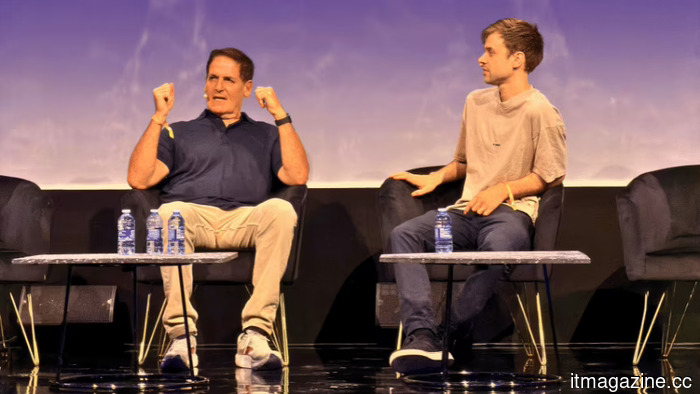
Mark Cuban: Lovable and Replit have the potential to outlast AI labs.
At the RAISE Summit in Paris on Wednesday, Mark Cuban, investor from “Shark Tank,” advocated for AI coding tools such as Lovable and Replit, as reported by Business Insider. He claimed that these tools can compete effectively with major AI labs because they now offer bundled services that a standard language model lacks. Since Cuban is an investor in Lovable, he has a vested interest in this perspective. However, his argument directly addresses the main concern surrounding “vibe-coding” startups: if companies like Anthropic or OpenAI can easily introduce new features, what protection do these startups have? Cuban expressed this concern during a discussion with Lovable CEO Anton Osika, stating, “When we evaluate many front-end tools like Lovable and Replit, we wonder if foundational models from the big players will simply replace them. But what you're indicating is that you have a localized base of data.”
Transitioning from a coding tool to an “AI cofounder,” Osika suggests that Lovable has evolved beyond being merely an AI software engineer. Now, founders can set up their companies and manage payments within the platform, rather than just generate apps. “People previously viewed us as a product that acts like an AI software engineer,” Osika noted. “Now, we’re increasingly recognized as a partner—essentially their AI cofounder.”
This distinction is significant from a commercial standpoint. A code generator competes solely on the quality of the model, while a comprehensive business platform is not as easily replaceable. Lovable has capitalized on this broad scope, reportedly achieving $500 million in annual revenue with a small team.
The recent months have intensified concerns. Following the release of Anthropic’s Opus 4.6 model earlier this year, many founders and developers announced on X that they had canceled their subscriptions to Cursor and Lovable in favor of Claude Code. This trend raises alarms for investors, who continue to compare vibe-coding applications against base models. They fear that a single update to Claude Code could potentially eliminate a startup's competitive advantage overnight. In response, some tools are developing their own models to reduce reliance on the major labs.
The implications are clear. Lovable explicitly acknowledges this threat. In a podcast from March, the company's head of growth, Elena Verna, stated that competing startups do not concern her the most. “I always worry about the big players in the industry,” she remarked, mentioning OpenAI, Anthropic, Google, and Apple. Her reasoning centers on distribution; these giants can reach billions of users and easily integrate coding assistants into everyday applications. Cuban’s rebuttal is straightforward: by owning the entire workflow surrounding code, including incorporation, payments, and data, Lovable creates a barrier that the labs cannot easily breach.
The critical question remains whether this barrier will hold as models advance. A significant portion of European startup value currently hinges on this answer.
Altri articoli
 Il CEO di ElevenLabs sui 600 milioni di dollari di fatturato e i laboratori di intelligenza artificiale
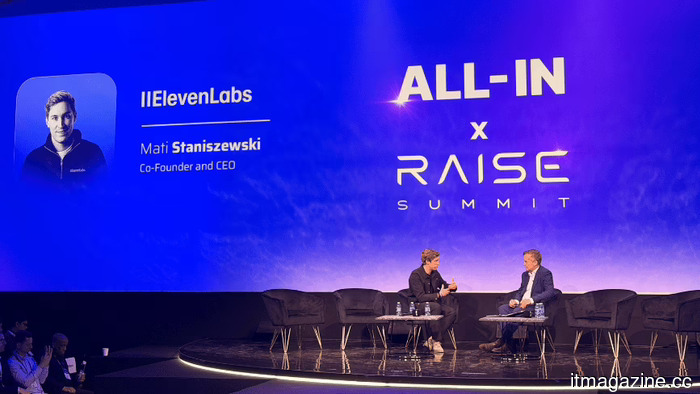
Al RAISE Summit di Parigi, il CEO di ElevenLabs Mati Staniszewski ha dettagliato un percorso verso un fatturato riportato di 600 milioni di dollari e come la startup vocale prevede di superare i laboratori di intelligenza artificiale.
Il CEO di ElevenLabs sui 600 milioni di dollari di fatturato e i laboratori di intelligenza artificiale
Al RAISE Summit di Parigi, il CEO di ElevenLabs Mati Staniszewski ha dettagliato un percorso verso un fatturato riportato di 600 milioni di dollari e come la startup vocale prevede di superare i laboratori di intelligenza artificiale.
 Cloudflare e OpenAI avviano un progetto per rendere la ricerca AI più aggiornata
Cloudflare sta sperimentando con OpenAI per alimentare segnali di rete in tempo reale nella ricerca di ChatGPT, un cambiamento per un'azienda costruita per bloccare i crawler AI.
Cloudflare e OpenAI avviano un progetto per rendere la ricerca AI più aggiornata
Cloudflare sta sperimentando con OpenAI per alimentare segnali di rete in tempo reale nella ricerca di ChatGPT, un cambiamento per un'azienda costruita per bloccare i crawler AI.
 Il CEO di ElevenLabs sui 600 milioni di dollari di fatturato e i laboratori di intelligenza artificiale
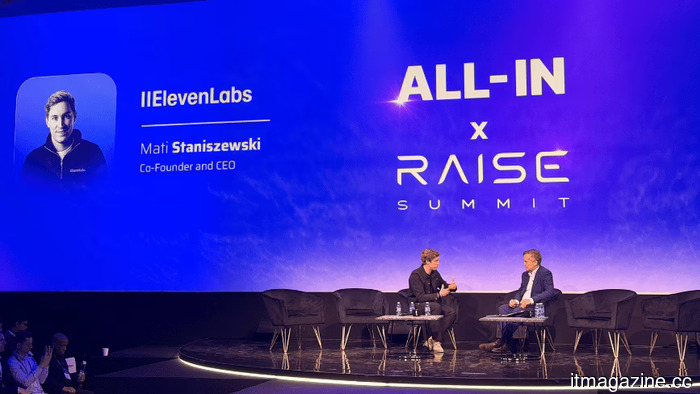
Al RAISE Summit di Parigi, il CEO di ElevenLabs Mati Staniszewski ha dettagliato un percorso verso un fatturato riportato di 600 milioni di dollari e come la startup vocale intende superare i laboratori di intelligenza artificiale.
Mark Cuban: Amabile e Replit possono superare i laboratori di intelligenza artificiale
Al RAISE Summit, Mark Cuban ha sostenuto che strumenti di vibe-coding come Lovable e Replit possono sopravvivere ad Anthropic e OpenAI possedendo il flusso di lavoro, non solo il codice.
Il CEO di ElevenLabs sui 600 milioni di dollari di fatturato e i laboratori di intelligenza artificiale
Al RAISE Summit di Parigi, il CEO di ElevenLabs Mati Staniszewski ha dettagliato un percorso verso un fatturato riportato di 600 milioni di dollari e come la startup vocale intende superare i laboratori di intelligenza artificiale.
Mark Cuban: Amabile e Replit possono superare i laboratori di intelligenza artificiale
Al RAISE Summit, Mark Cuban ha sostenuto che strumenti di vibe-coding come Lovable e Replit possono sopravvivere ad Anthropic e OpenAI possedendo il flusso di lavoro, non solo il codice.
 I clienti preferiscono ChatGPT ai chatbot aziendali, rileva Gartner
I clienti sono 3 volte più propensi a utilizzare GenAI di terze parti come ChatGPT piuttosto che chatbot aziendali per il supporto, secondo Gartner, poiché i ritorni sull'AI ritardano la spesa.
I clienti preferiscono ChatGPT ai chatbot aziendali, rileva Gartner
I clienti sono 3 volte più propensi a utilizzare GenAI di terze parti come ChatGPT piuttosto che chatbot aziendali per il supporto, secondo Gartner, poiché i ritorni sull'AI ritardano la spesa.
 La NATO sceglie Accenture e Leonardo per un cloud sicuro da 200 milioni di euro
La NATO firma un contratto di ~200 milioni di euro, della durata di sette anni, con Accenture e Leonardo per costruire un'infrastruttura cloud sicura, il Protected Business Network, per l'Alleanza.
La NATO sceglie Accenture e Leonardo per un cloud sicuro da 200 milioni di euro
La NATO firma un contratto di ~200 milioni di euro, della durata di sette anni, con Accenture e Leonardo per costruire un'infrastruttura cloud sicura, il Protected Business Network, per l'Alleanza.
Mark Cuban: Lovable and Replit have the potential to outlast AI labs.
During the RAISE Summit, Mark Cuban expressed that vibe-coding tools such as Lovable and Replit can endure in the market against Anthropic and OpenAI by focusing on controlling the workflow rather than merely the code.