
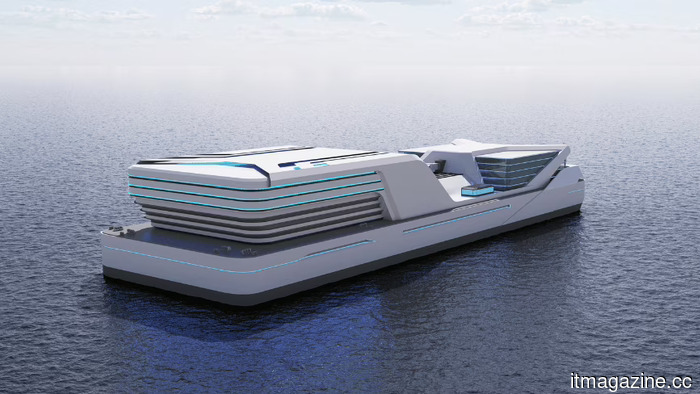
Samsung intends to establish a floating AI data center by the year 2028.
As data centres face opposition from nearby residents and land-based water restrictions, Samsung aims to position them offshore. According to the Seoul Economic Daily, Samsung Heavy Industries intends to introduce its first floating data centre by 2028. This facility will be a specially designed barge located near the coastline.
The design is intentional. Instead of repurposing an old vessel, Samsung is constructing a new 50MW barge that will include a server hall, on-site power generation, and liquefied natural gas fuel tanks. The initial model will be "nearshore," situated close to land and drawing some power from the electrical grid, serving as a cautious preliminary step before moving further out to sea.
The rationale for placing a data centre in the water addresses a growing challenge on land. Data centres require large areas, affordable power, and significant amounts of water for cooling; however, communities are increasingly reluctant to provide all three. By floating offshore, these centres can avoid land scarcity and lengthy planning disputes, while the ocean provides natural cooling.
The financial feasibility is still untested. Saltwater can cause corrosion, storms present risks, and connecting fibre and electricity to a barge can increase costs and uncertainties. Samsung is wagering that the potential trade-off is worthwhile as demand for AI technology exceeds what many electrical grids and localities can support.
This shift also indicates the future direction of shipbuilding. Samsung's shipyards are looking for new projects. The concept of "data centres at sea" transforms excess hull-building capability into AI infrastructure. Samsung Heavy Industries' chief executive, Sung-an Choi, stated that "floating data centres represent a significant new opportunity for the shipbuilding and offshore industries."
Competitors are pursuing similar concepts. A Japanese partnership between Mitsui OSK Lines and Hitachi is adapting existing ships to incorporate data-centre equipment, with plans to launch in 2027. China has advanced even further by establishing a data centre beneath the sea.
Samsung is not proceeding alone, either. During the Posidonia maritime exhibition, it secured partnerships with Greece's Capital Clean Energy Carriers and the classification society Lloyd’s Register. Additionally, it reached an agreement with Supermicro to test AI servers at sea, as reported by The Register. Both the American Bureau of Shipping and Lloyd’s Register have awarded preliminary approvals.
The significance of this development is notable. Floating data centres represent a speculative venture rather than an established reality. However, a shipbuilder developing plans underscores the lengths the industry may go to avoid opposition on land. If communities are unwilling to accommodate the energy-intensive demands of AI, the alternative might be just offshore.
Published July 8, 2026 - 8:16 pm UTC
Other articles
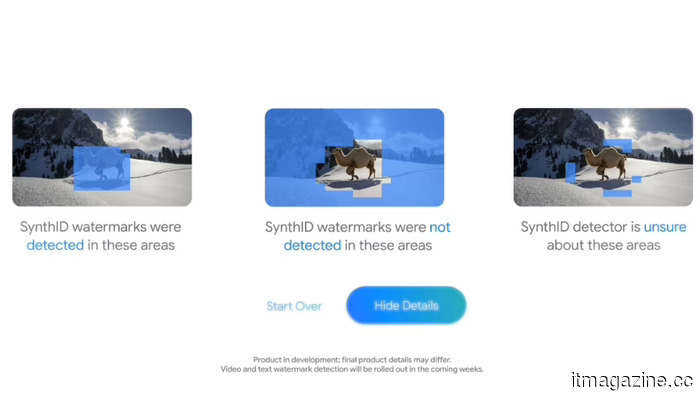 Google's SynthID watermark has successfully exposed its first notable deepfake: a fabricated image of Mitch McConnell.
Snopes employed Google's invisible SynthID watermark to verify the authenticity of a viral AI-generated image depicting Senator McConnell in a hospital bed. The watermark remained intact even in screenshots.
Google's SynthID watermark has successfully exposed its first notable deepfake: a fabricated image of Mitch McConnell.
Snopes employed Google's invisible SynthID watermark to verify the authenticity of a viral AI-generated image depicting Senator McConnell in a hospital bed. The watermark remained intact even in screenshots.
 NATO's AI 'Kill Web' along its eastern border
NATO is developing an AI 'Kill Web' comprising sensors, drones, and satellites along its eastern border to identify and counter a Russian assault before it occurs.
NATO's AI 'Kill Web' along its eastern border
NATO is developing an AI 'Kill Web' comprising sensors, drones, and satellites along its eastern border to identify and counter a Russian assault before it occurs.
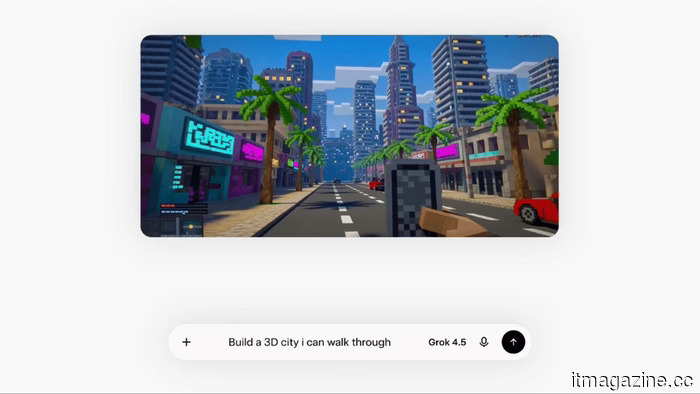 SpaceXAI introduces Grok 4.5, marking its inaugural model featuring Cursor.
SpaceXAI has introduced Grok 4.5, the inaugural model developed with Cursor. Musk refers to it as "Opus-class" yet more affordable, designed for tasks in coding, legal, and finance sectors.
SpaceXAI introduces Grok 4.5, marking its inaugural model featuring Cursor.
SpaceXAI has introduced Grok 4.5, the inaugural model developed with Cursor. Musk refers to it as "Opus-class" yet more affordable, designed for tasks in coding, legal, and finance sectors.
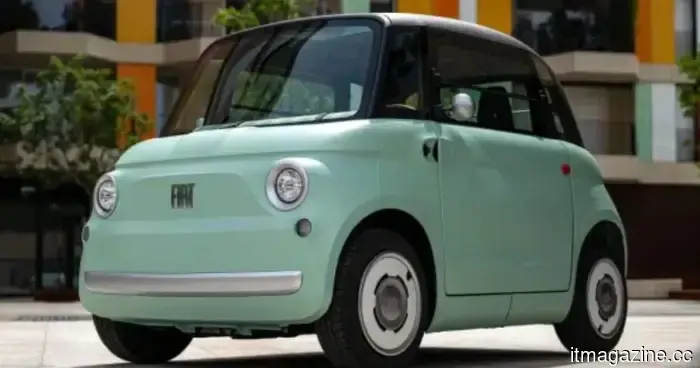 The Fiat Topolino is the most adorable $14,000 item that you cannot legally operate on the majority of roads.
Priced at $13,995, the Fiat Topolino stands out as the most fashionable low-speed vehicle available in America at the moment.
Irish drone delivery startup Manna is establishing a factory in Tulsa that will employ 1,000 people in order to compete with Zipline and Wing.
Manna secured $50 million in funding and is establishing a manufacturing facility in Tulsa, which will create 1,000 jobs. The company departed from Ireland due to regulatory shortcomings. Six cities in the US were evaluated.
The Fiat Topolino is the most adorable $14,000 item that you cannot legally operate on the majority of roads.
Priced at $13,995, the Fiat Topolino stands out as the most fashionable low-speed vehicle available in America at the moment.
Irish drone delivery startup Manna is establishing a factory in Tulsa that will employ 1,000 people in order to compete with Zipline and Wing.
Manna secured $50 million in funding and is establishing a manufacturing facility in Tulsa, which will create 1,000 jobs. The company departed from Ireland due to regulatory shortcomings. Six cities in the US were evaluated.
 Palmer Luckey: American universities are lagging behind those in China.
Palmer Luckey of Anduril claims that American universities are producing 'architecture astronauts,' while China is cultivating actual engineers, a sentiment that Pfizer's CEO has also echoed.
Palmer Luckey: American universities are lagging behind those in China.
Palmer Luckey of Anduril claims that American universities are producing 'architecture astronauts,' while China is cultivating actual engineers, a sentiment that Pfizer's CEO has also echoed.
Samsung intends to establish a floating AI data center by the year 2028.
Samsung Heavy Industries aims to create a dedicated, 50MW floating data center by 2028, as challenges such as limited land, water availability, and local resistance hinder AI initiatives on land.