

Quaise secures $134 million for superhot geothermal drilling.
Geothermal has traditionally referred to shallow wells and moderate heat. However, Quaise aims to drill kilometers deep and use microwaves to blast the rock, recently raising $134 million to pursue this goal. According to Bloomberg, Quaise Energy has secured this funding to search for extremely hot rock situated deep underground. Prelude Ventures spearheaded the first close of the Series B, with the involvement of major Japanese energy firms JERA and Idemitsu. This funding round has resulted in a total of $230 million raised by Quaise.
The firm proposes a unique approach. To access rocks heated to between 300°C and 500°C, Quaise will have to drill significantly deeper than existing geothermal wells. After reaching a certain depth, they will replace traditional drill bits with an energy beam that utilizes microwaves to vaporize the rock. This technology stems from over a decade of research conducted at MIT, aiming to generate greater heat from fewer wells. Deeper, hotter rocks provide more energy per hole, and bypassing worn-out drill bits helps to reduce downtime and costs. Established in 2018, Quaise believes this innovation can finally make geothermal energy affordable.
The timing is also crucial. There is a burgeoning demand for reliable, continuous clean energy, largely driven by the rising number of AI data centers. The funds raised will support Project Obsidian in Oregon, which Quaise describes as the world’s first commercial superhot geothermal plant, with plans to deliver its initial power to the grid by 2030. Quaise has already contracted with a hyperscaler for the first 50 megawatts of the project, though CEO Carlos Araque declined to disclose the client's identity.
This renewed interest has revitalized a previously overlooked sector. In May, geothermal developer Fervo Energy raised nearly $1.9 billion through a U.S. listing that exceeded expectations. Moreover, investors are increasingly directing funds towards fusion, next-generation reactors, and a broader influx of capital into energy technologies linked to AI.
The significance of this venture is evident, as the engineering remains untested at a commercial scale. At its Texas testing site, Quaise is approaching a depth of one kilometer—the deepest yet for its drilling technique. However, it must reach depths exceeding five kilometers to access the hottest rock. While this funding affords them some time, it does not guarantee success. Quaise is planning a Series C round next, and subsequently, a stock market listing, following in the footsteps of Fervo. Competitors like Mazama Energy are also drilling near the same Oregon volcano. Ultimately, whether microwaves can fracture rock and reduce costs more efficiently than existing methods will be the critical challenge, with the reward being affordable, continuous power.
Other articles
 More than 100 autonomous ATVs manufactured in the US have been engaged in combat in Ukraine for the past nine months.
Forterra's Lancer vehicles accomplished 1,100 missions and 52 casualty evacuations in Ukraine. Soldiers continue to teleoperate these vehicles since their autonomous capabilities are unable to respond to threats.
More than 100 autonomous ATVs manufactured in the US have been engaged in combat in Ukraine for the past nine months.
Forterra's Lancer vehicles accomplished 1,100 missions and 52 casualty evacuations in Ukraine. Soldiers continue to teleoperate these vehicles since their autonomous capabilities are unable to respond to threats.
 Norm Ai secures $120 million at a valuation of $1.2 billion.
AI legal startup Norm Ai has successfully secured $120 million in a Series C funding round at a $1.2 billion valuation, with Khosla Ventures leading the investment. The company also operates its own AI-driven law firm, Norm Law.
Norm Ai secures $120 million at a valuation of $1.2 billion.
AI legal startup Norm Ai has successfully secured $120 million in a Series C funding round at a $1.2 billion valuation, with Khosla Ventures leading the investment. The company also operates its own AI-driven law firm, Norm Law.
 Chinese lidar manufacturer Hesai, which is on the blacklist, is fueling self-driving initiatives in the US.
The Pentagon imposed sanctions on Hesai, identifying it as a Chinese military firm. Despite this, its lidar technology continues to enable US robotaxis, trucks, and an Nvidia autonomous driving platform.
Chinese lidar manufacturer Hesai, which is on the blacklist, is fueling self-driving initiatives in the US.
The Pentagon imposed sanctions on Hesai, identifying it as a Chinese military firm. Despite this, its lidar technology continues to enable US robotaxis, trucks, and an Nvidia autonomous driving platform.
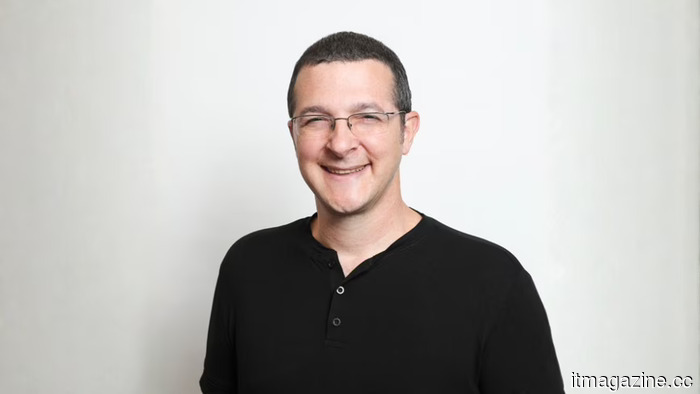 Hud CEO Roee Adler states that runtime intelligence will shape the future of software operations.
Roee Adler, the CEO of the Israeli startup Hud, contends that conventional observability is inadequate for AI coding agents. He believes that runtime intelligence, which captures production context at the function level, will be the architectural foundation that ensures reliable autonomous software delivery.
Hud CEO Roee Adler states that runtime intelligence will shape the future of software operations.
Roee Adler, the CEO of the Israeli startup Hud, contends that conventional observability is inadequate for AI coding agents. He believes that runtime intelligence, which captures production context at the function level, will be the architectural foundation that ensures reliable autonomous software delivery.
 According to data from Estonia's Odience, niche creator communities are outperforming those with a broader audience.
Performance statistics from Odience, based in Estonia, indicate that nano and micro creators with closely connected niche audiences consistently surpass mass-reach influencer campaigns in terms of clicks, leads, and conversion rates.
According to data from Estonia's Odience, niche creator communities are outperforming those with a broader audience.
Performance statistics from Odience, based in Estonia, indicate that nano and micro creators with closely connected niche audiences consistently surpass mass-reach influencer campaigns in terms of clicks, leads, and conversion rates.
 Quaise secures $134 million to explore ultra-high-temperature geothermal drilling.
The geothermal startup Quaise Energy has secured a $134 million first close of its Series B funding round, with Prelude Ventures at the helm, to drill superhot rock using millimetre-wave beams.
Quaise secures $134 million to explore ultra-high-temperature geothermal drilling.
The geothermal startup Quaise Energy has secured a $134 million first close of its Series B funding round, with Prelude Ventures at the helm, to drill superhot rock using millimetre-wave beams.
Quaise secures $134 million for superhot geothermal drilling.
Geothermal startup Quaise Energy has secured a $134 million initial close of its Series B funding round, with Prelude Ventures leading the investment, to drill into superhot rock using millimeter-wave beams.