
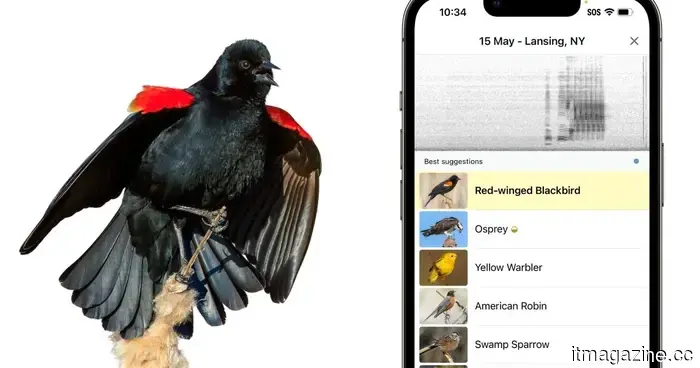
The Merlin Bird ID app is now aiming to create a worldwide database of our disappearing avian companions.
The Merlin Bird ID app, one of the most widely used bird identification tools worldwide, is poised to become an even more essential resource for conservationists. According to a report from The Guardian, a forthcoming update will enable bird identifications made through the app to be directly integrated into eBird, one of the largest citizen-science biodiversity databases globally.
This development means that millions of users observing birds in their backyards, parks, or while hiking could soon provide invaluable scientific data that will assist researchers in monitoring bird populations and tracking changes in biodiversity.
Millions of bird watchers may soon transition into citizen scientists.
Developed by the Cornell Lab of Ornithology, Merlin has experienced rapid growth since it introduced its AI-driven Sound ID feature in 2021. The app employs machine learning to identify birds by their songs in real-time, quickly displaying the most likely species. Currently, it can identify 2,066 bird species across North America, Europe, and various regions of Asia and Latin America, with new species added regularly.
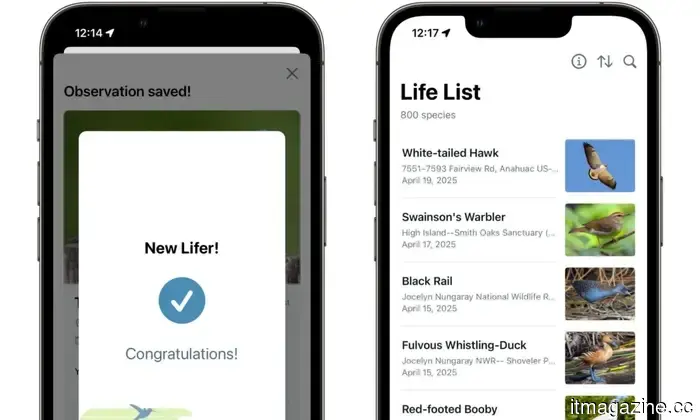
As reported by The Guardian, Cornell is enhancing Merlin’s connection with eBird, its international bird observation platform that has amassed over 2 billion bird records since its inception in 2002. Future versions of the app will facilitate easier uploading of recordings made in Merlin to eBird, providing researchers with access to a significantly larger stream of real-world observations.
Jessie Barry, a leading figure in the Merlin project, informed The Guardian that the additional data will assist scientists in monitoring bird populations, bolstering conservation efforts, and enhancing ecological management strategies.
This update arrives at a crucial moment.
The British Trust for Ornithology estimates that the UK’s bird population has decreased by over 70 million birds in the past 50 years. Simultaneously, Merlin's popularity keeps rising. The app has now been downloaded over 40 million times across 240 countries, with nearly 2 million users in the UK alone during May.
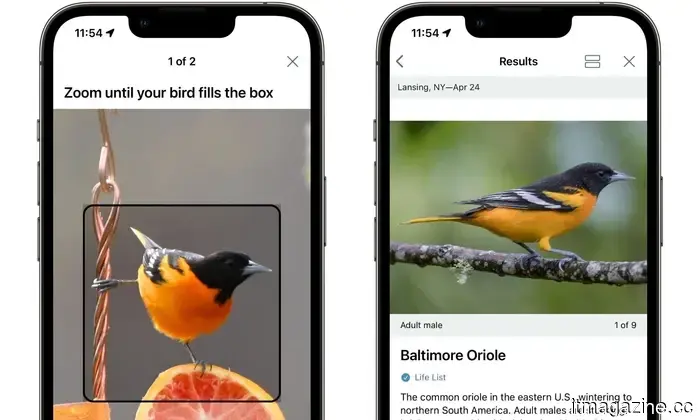
The app has also made birdwatching more accessible. As stated by Digital Trends, Merlin is often viewed as one of the premier bird identification apps available due to its combination of AI-powered sound recognition, photo identification, location-based suggestions, and offline downloadable bird packs. This functionality caters to both beginners and seasoned birdwatchers in areas lacking reliable internet access.
While conservationists have embraced the app’s growing popularity, experts advise caution. The European Bird Census Council cautions against relying solely on Merlin for official breeding bird surveys, as AI-based identification may occasionally err. The Guardian highlights that even RSPB conservation scientist Richard Gregory experienced the app mistakenly identifying his dachshund as a mallard, showcasing that the technology is still imperfect.
Nevertheless, researchers believe that the advantages outweigh the drawbacks. Citizen-science observations are routinely reviewed and validated before being used in research, and larger datasets enhance both scientific insight and AI accuracy over time.
As artificial intelligence continues to advance in recognizing the natural world, Merlin is transitioning from a personal birdwatching aide to a global conservation asset. For users, the act of identifying a bird may soon serve more than just a momentary curiosity. It could aid scientists in better understanding changes in wildlife and pinpointing where conservation efforts are most urgently required.
Other articles
 Researchers caution that Elon Musk's orbital data centers may interfere with the visibility of Earth’s largest telescopes.
The European Southern Observatory cautions that fast-expanding satellite constellations could interfere with the most advanced telescopes on Earth and is suggesting new restrictions to safeguard astronomy.
Researchers caution that Elon Musk's orbital data centers may interfere with the visibility of Earth’s largest telescopes.
The European Southern Observatory cautions that fast-expanding satellite constellations could interfere with the most advanced telescopes on Earth and is suggesting new restrictions to safeguard astronomy.
 Alibaba receives a stay on the US lobbying prohibition.
A US judge reinstated Alibaba's access to lobbyists in Washington as they consider the constitutionality of the ban associated with the Pentagon.
Alibaba receives a stay on the US lobbying prohibition.
A US judge reinstated Alibaba's access to lobbyists in Washington as they consider the constitutionality of the ban associated with the Pentagon.
 This small mechanical keyboard resembles a love letter to the Game Boy Advance.
The Keyboy Advance is a 50% mechanical keyboard kit that draws inspiration from the cherished Game Boy Advance, incorporating design elements reminiscent of retro handheld consoles and practical shoulder buttons.
This small mechanical keyboard resembles a love letter to the Game Boy Advance.
The Keyboy Advance is a 50% mechanical keyboard kit that draws inspiration from the cherished Game Boy Advance, incorporating design elements reminiscent of retro handheld consoles and practical shoulder buttons.
 The standard iPhone 18 might not include two significant Siri AI functionalities.
The iPhone 18 and iPhone 18e might not meet Apple’s AFM Core Advanced hardware specifications, which could result in the absence of two significant Siri AI features on these models.
The standard iPhone 18 might not include two significant Siri AI functionalities.
The iPhone 18 and iPhone 18e might not meet Apple’s AFM Core Advanced hardware specifications, which could result in the absence of two significant Siri AI features on these models.
 The Australian government cautions physicians regarding the use of AI scribing tools due to increasing concerns about privacy and safety.
Australia is assessing the use of AI medical scribes as regulators express worries regarding patient privacy, consent, data security, and insufficient supervision in clinical environments.
The Australian government cautions physicians regarding the use of AI scribing tools due to increasing concerns about privacy and safety.
Australia is assessing the use of AI medical scribes as regulators express worries regarding patient privacy, consent, data security, and insufficient supervision in clinical environments.
 Three Siri AI features that have truly enhanced my daily routine.
From an improved Spotlight search to reminders in natural language and a camera that truly comprehends its surroundings, here are three Siri AI features that are significantly enhancing everyday iPhone usage.
Three Siri AI features that have truly enhanced my daily routine.
From an improved Spotlight search to reminders in natural language and a camera that truly comprehends its surroundings, here are three Siri AI features that are significantly enhancing everyday iPhone usage.
The Merlin Bird ID app is now aiming to create a worldwide database of our disappearing avian companions.
Merlin Bird ID will soon integrate AI-driven bird identifications into Cornell's eBird platform, assisting researchers in tracking bird populations through millions of actual observations.