
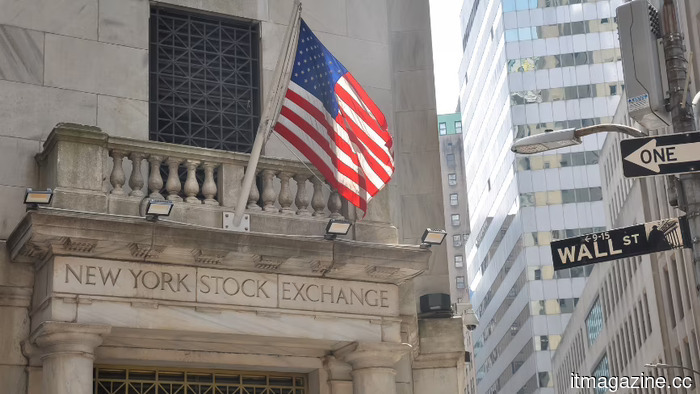
Hedge funds have offloaded chip stocks for the fourth consecutive week, but they have not reduced their positions in AI investments.
Hedge funds have reduced their positions in semiconductor stocks for the fourth consecutive week, as per data from Goldman Sachs' prime brokerage. This trend of selling has positioned chipmakers and their equipment vendors as the most significantly net-sold segment of the US market. This shift coincides with instability in parts of the AI sector and might be interpreted by some as the initial sign of a downturn in a rally that has driven valuations for companies like SK Hynix close to one trillion dollars. However, the specifics suggest a more measured perspective rather than an outright peak.
The statistics indicate a withdrawal instead of a collapse. Goldman’s data reveals net selling in this sector over eight straight trading days, making semiconductors the single most net-sold industry subsector tracked by its prime desk in the last four weeks. This reflects a clear and ongoing change in behavior rather than a fleeting reaction.
Upon further analysis, this is not an exit strategy. The selling mainly involves managers reducing their current long positions rather than initiating new bearish stances, which is a typical sign of profit-taking after a sustained uptick. When funds realize profits instead of wagering on declines, it highlights a focus on risk management instead of a lack of confidence.
The positioning data reinforces this view. Despite four weeks of selling, hedge funds’ net exposure to semiconductors remains at the 98th percentile of the past five years, indicating that it is still near the top of the historical range. One cannot rapidly exit a crowded trade within a month, and according to this metric, the trade remains notably crowded.
According to Goldman’s analysis, no fundamental changes have occurred. Their analysts do not perceive the selling as a shift away from the AI trend, as hedge fund positioning in US AI stocks continues to be at historically high levels. The chips are being trimmed, but the rationale for owning them persists.
The broader economic context provides insight into this cautious behavior. Increasing inflation and rising bond yields have prompted managers to incorporate downside protection across their portfolios, and the most logical way to reduce exposure is in the sector that has experienced the greatest growth. Offloading some of the most valued positions allows funds to hedge against a pricey market without signaling an outright peak.
Price movements reflected this sentiment. In the shortened holiday week, the primary index for semiconductor stocks dipped 6.3% in one session and 5.4% the next, resulting in a sharp two-day decline, yet the overall market remained up for the week as funds diverted money towards other AI beneficiaries instead of abandoning the theme altogether. This rotation, rather than an exit, was the focal point.
This rotation is notable in its own right. As the leading chip stocks have become more costly, some managers are beginning to seek out the next tier of companies likely to benefit from AI expenditures, including power and cooling suppliers and the software layered atop the hardware. Movement of funds from semiconductors does not equate to departing from the trade; it is often a transition further along the value chain.
However, the concentration presents an ongoing concern. When a single theme constitutes a significant portion of a portfolio and a small number of companies dominate the index, even orderly profit-taking can become chaotic if multiple funds decide to reduce positions simultaneously. Although Goldman’s data indicates that this hasn’t occurred yet, the same figures that demonstrate discipline also reveal the reliance on the trade's continuity.
Whether this moment represents a pause or the beginning of something more significant is an unanswered question within the data. The memory and accelerator companies central to the AI expansion, such as Micron and those aligned with Nvidia’s memory strategy, still face high expectations, and crowded trades can quickly unwind when they shift. For the time being, funds are merely trimming a successful investment rather than abandoning it.
Other articles
 A Google executive has transferred Command & Conquer Generals: Zero Hour to iPhone and Mac utilizing Claude.
A Google executive utilized Claude Fable 5 to convert Command & Conquer Generals Zero Hour for iPhone, iPad, and Mac without the need for an emulator.
A Google executive has transferred Command & Conquer Generals: Zero Hour to iPhone and Mac utilizing Claude.
A Google executive utilized Claude Fable 5 to convert Command & Conquer Generals Zero Hour for iPhone, iPad, and Mac without the need for an emulator.
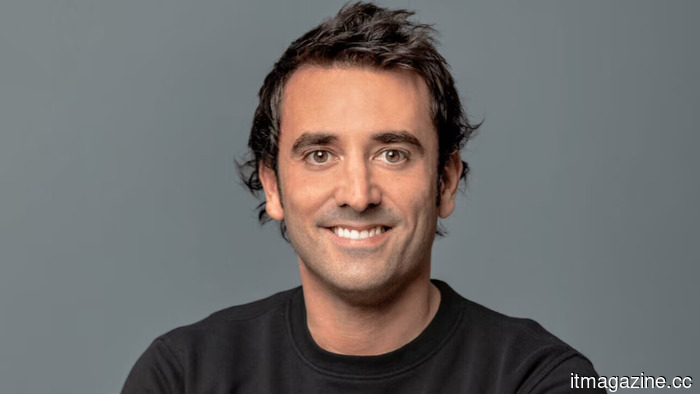 Spain's Sherpa.ai secures $18 million for data-sovereign artificial intelligence.
The Basque startup Sherpa.ai has secured $18 million in funding from the US investor Forgepoint for its federated-learning AI, which develops models without the need to share sensitive information.
Spain's Sherpa.ai secures $18 million for data-sovereign artificial intelligence.
The Basque startup Sherpa.ai has secured $18 million in funding from the US investor Forgepoint for its federated-learning AI, which develops models without the need to share sensitive information.
 A high-ranking official from the FCA suggests that the UK ought to consider directly regulating AI models.
Sheldon Mills from the FCA suggests that the UK should consider reviewing the need for regulation of general-purpose models such as ChatGPT, Claude, and Gemini, as they influence financial decisions.
A high-ranking official from the FCA suggests that the UK ought to consider directly regulating AI models.
Sheldon Mills from the FCA suggests that the UK should consider reviewing the need for regulation of general-purpose models such as ChatGPT, Claude, and Gemini, as they influence financial decisions.
 Even Realities reaches $1 billion with smart glasses that don't require a camera.
Even Realities, based in Shenzhen, has secured $150 million from Meituan and Tencent, achieving a valuation of $1 billion for its smart glasses that do not use a camera, setting its sights on Meta.
Even Realities reaches $1 billion with smart glasses that don't require a camera.
Even Realities, based in Shenzhen, has secured $150 million from Meituan and Tencent, achieving a valuation of $1 billion for its smart glasses that do not use a camera, setting its sights on Meta.
 Even Realities reaches $1 billion in sales with their camera-free smart glasses.
Shenzhen's Even Realities has secured $150 million from Meituan and Tencent, reaching a valuation of $1 billion for its camera-free smart glasses, positioning itself as a competitor to Meta.
Even Realities reaches $1 billion in sales with their camera-free smart glasses.
Shenzhen's Even Realities has secured $150 million from Meituan and Tencent, reaching a valuation of $1 billion for its camera-free smart glasses, positioning itself as a competitor to Meta.
 The time capsule for America’s 250th anniversary contains an iPhone 17 Pro Max.
The time capsule for America's 250th anniversary contains an iPhone 17 Pro Max, a prediction generated by AI, and numerous historical artifacts intended to symbolize life in 2026.
The time capsule for America’s 250th anniversary contains an iPhone 17 Pro Max.
The time capsule for America's 250th anniversary contains an iPhone 17 Pro Max, a prediction generated by AI, and numerous historical artifacts intended to symbolize life in 2026.
Hedge funds have offloaded chip stocks for the fourth consecutive week, but they have not reduced their positions in AI investments.
According to data from Goldman Sachs, semiconductors remained the US sector with the highest net sales for the fourth consecutive week, although hedge funds' positions in AI continue to be near all-time highs.