

Even Realities reaches $1 billion with smart glasses that don't require a camera.
Meta has sold millions of smart glasses equipped with cameras, but has found itself in a privacy controversy as a result. Meanwhile, a startup from Shenzhen is betting $1 billion that not including a camera is the smarter approach.
Even Realities has secured $150 million at a valuation of $1 billion, as reported by TechCrunch, with Chinese giants Meituan and Tencent leading this funding round. This three-year-old company has achieved unicorn status and is taking a definitive stance against the camera-centric designs popularized by Meta and Snap.
By design, Even's glasses do not record video. Instead, a small display embedded in the lens presents notifications, live translations, and directions, all managed by a companion ring that the user taps and swipes. Founder Will Wang, a former Apple engineer, emphasizes that the goal is to remain present, with information only appearing when necessary.
Excluding the camera also demonstrates a commitment to privacy. The voice features convert speech to text without storing recordings, and the app encrypts user data, while Wang asserts that the system complies with Europe’s stringent privacy regulations. This position directly challenges the current market leader.
Despite this, Meta remains dominant, controlling most smart-glasses shipments, while its Ray-Ban line continues to expand. However, a privacy crisis looms over it, with allegations that overseas contractors reviewed user footage and lawmakers working on regulations to limit covert recording. Even’s message is clear: a camera that can be disabled is less powerful than one that simply doesn’t exist.
Even presents an unusual mix. Based in Shenzhen and operating with Chinese funding, it does not sell its products in China. Over half of its users are in the United States, its fastest-growing market, followed by Japan, South Korea, the Middle East, and Europe. The founding team includes former employees from Apple and Oppo, alongside experts from European eyewear brands such as Lindberg. The company is part of a trend of Chinese hardware makers targeting global consumers.
The business appears viable, not merely aspirational. Even claims to have been the first in its category to sell over 10,000 pairs of glasses, expanding its workforce from around 40 to several hundred. The starting price for its glasses is $599, and when including prescription lenses and the companion ring, a typical order totals nearly $1,000.
The landscape is rapidly becoming competitive. Companies like XREAL and Viture have also raised significant funding, and shipments of display-only glasses are increasing sharply, according to Tech Funding News. The familiar risk for any gadget is that novelty can wear off.
Even is banking on the idea that “quiet” glasses, which are worn throughout the day without recording capabilities, will outlast the more ostentatious camera-equipped versions once the initial excitement subsides. Ambient computing has made similar promises in the past, but this time, the emphasis is on what the device deliberately cannot do.
Other articles
 Pool cleaning is becoming more intelligent, and the Beatbot AquaSense 2 Ultra, WYBOT B1, and iGarden KN Series demonstrate this evolution.
Robotic pool cleaners have advanced significantly, yet many still need excessive manual involvement. The Beatbot AquaSense 2 Ultra stands out with its 5-in-1 AI-driven precision cleaning, while the WYBOT B1 and iGarden Pool Cleaner KN Series provide smart and effective solutions to maintain your water's clarity and ensure it's ready for swimming throughout the entire season.
Pool cleaning is becoming more intelligent, and the Beatbot AquaSense 2 Ultra, WYBOT B1, and iGarden KN Series demonstrate this evolution.
Robotic pool cleaners have advanced significantly, yet many still need excessive manual involvement. The Beatbot AquaSense 2 Ultra stands out with its 5-in-1 AI-driven precision cleaning, while the WYBOT B1 and iGarden Pool Cleaner KN Series provide smart and effective solutions to maintain your water's clarity and ensure it's ready for swimming throughout the entire season.
 Hedge funds offloaded chip stocks for the fourth consecutive week, but continued to invest in AI stocks.
Data from Goldman Sachs indicates that semiconductors have been the US sector with the highest net sales for the fourth consecutive week, while hedge funds maintain their AI positions at nearly record levels.
Hedge funds offloaded chip stocks for the fourth consecutive week, but continued to invest in AI stocks.
Data from Goldman Sachs indicates that semiconductors have been the US sector with the highest net sales for the fourth consecutive week, while hedge funds maintain their AI positions at nearly record levels.
 A high-ranking official from the FCA states that the UK should consider the direct regulation of AI models.
Sheldon Mills from the FCA suggests that the UK should consider whether regulation is necessary for general-purpose models such as ChatGPT, Claude, and Gemini, given their influence on financial decisions.
A high-ranking official from the FCA states that the UK should consider the direct regulation of AI models.
Sheldon Mills from the FCA suggests that the UK should consider whether regulation is necessary for general-purpose models such as ChatGPT, Claude, and Gemini, given their influence on financial decisions.
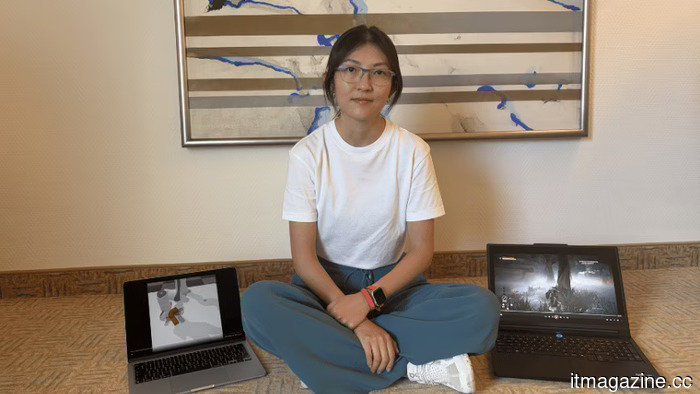 Worldmodeldata secures £7M to develop AI training using video games.
The Cambridge-based startup Worldmodeldata has secured £7 million in seed funding, led by Iona Star Capital, to convert licensed video game data into training datasets for AI world models.
Worldmodeldata secures £7M to develop AI training using video games.
The Cambridge-based startup Worldmodeldata has secured £7 million in seed funding, led by Iona Star Capital, to convert licensed video game data into training datasets for AI world models.
 A Google executive has transferred Command & Conquer Generals: Zero Hour to iPhone and Mac utilizing Claude.
A Google executive utilized Claude Fable 5 to convert Command & Conquer Generals Zero Hour for iPhone, iPad, and Mac without the need for an emulator.
A Google executive has transferred Command & Conquer Generals: Zero Hour to iPhone and Mac utilizing Claude.
A Google executive utilized Claude Fable 5 to convert Command & Conquer Generals Zero Hour for iPhone, iPad, and Mac without the need for an emulator.
 A high-ranking official from the FCA suggests that the UK ought to consider directly regulating AI models.
Sheldon Mills from the FCA suggests that the UK should consider reviewing the need for regulation of general-purpose models such as ChatGPT, Claude, and Gemini, as they influence financial decisions.
A high-ranking official from the FCA suggests that the UK ought to consider directly regulating AI models.
Sheldon Mills from the FCA suggests that the UK should consider reviewing the need for regulation of general-purpose models such as ChatGPT, Claude, and Gemini, as they influence financial decisions.
Even Realities reaches $1 billion with smart glasses that don't require a camera.
Even Realities, based in Shenzhen, has secured $150 million from Meituan and Tencent, achieving a valuation of $1 billion for its smart glasses that do not use a camera, setting its sights on Meta.