

Even Realities reaches $1 billion in sales with their camera-free smart glasses.
Meta has sold millions of smart glasses equipped with cameras, but has faced significant privacy controversies as a result. Meanwhile, a startup from Shenzhen is investing $1 billion on the premise that omitting the camera is the smarter choice.
Even Realities has successfully raised $150 million at a valuation of $1 billion, as reported by TechCrunch. The funding round was led by major Chinese companies Meituan and Tencent, making the three-year-old company a unicorn and a clear alternative to the camera-centric designs that Meta and Snap have popularized.
By design, Even's glasses do not include a camera. Instead, they feature a small display integrated into the lens that shows notifications, live translations, and directions, all managed through a companion ring that the user can tap and swipe. Founder Will Wang, a former Apple engineer, emphasizes that the goal is to remain present, with information appearing only when necessary.
Omitting the camera also serves as a statement on privacy. Its voice features convert speech to text without storing recordings, the app ensures user data is encrypted, and Wang asserts that the system complies with Europe’s stringent privacy regulations. This stance directly challenges the dominant player in the market.
Despite this, Meta continues to lead in the smart glasses market, with the majority of shipments and a continually growing Ray-Ban line. However, it is grappling with a privacy crisis; there is a lawsuit alleging that contractors abroad reviewed user footage, and lawmakers are creating regulations to limit covert recordings. Even’s proposition is straightforward: a switchable camera is less secure than one that is entirely absent.
Even represents a unique blend of influences. Based in Shenzhen and financed by Chinese capital, it does not sell its products in China. Instead, it counts over half of its users from the United States, which is its fastest-growing market. Other regions, including Japan, South Korea, the Middle East, and Europe, follow closely behind. The founding team features alumni from Apple and Oppo, alongside leaders from European eyewear brands like Lindberg, placing it within a trend of Chinese hardware makers seeking global customers.
The business appears robust rather than merely aspirational. Even claims to be the first in its category to sell over 10,000 pairs, expanding its workforce from approximately 40 to several hundred employees. Its glasses are priced starting at $599, with prescription lenses and the companion ring bringing the average order close to $1,000.
The landscape is becoming increasingly competitive. Companies like XREAL and Viture have secured substantial funding, and shipments of display-only glasses are rapidly increasing, as noted by Tech Funding News. However, the familiar risk with any gadget is that novelty can diminish.
Even’s belief is that "quiet" glasses, which can be worn throughout the day without recording anything, will prevail over more visually striking models once the initial excitement fades. The concept of ambient computing has been endorsed in the past, but this time, the key selling feature is what the device intentionally does not offer.
Other articles
 Even Realities reaches $1 billion with smart glasses that don't require a camera.
Even Realities, based in Shenzhen, has secured $150 million from Meituan and Tencent, achieving a valuation of $1 billion for its smart glasses that do not use a camera, setting its sights on Meta.
Even Realities reaches $1 billion with smart glasses that don't require a camera.
Even Realities, based in Shenzhen, has secured $150 million from Meituan and Tencent, achieving a valuation of $1 billion for its smart glasses that do not use a camera, setting its sights on Meta.
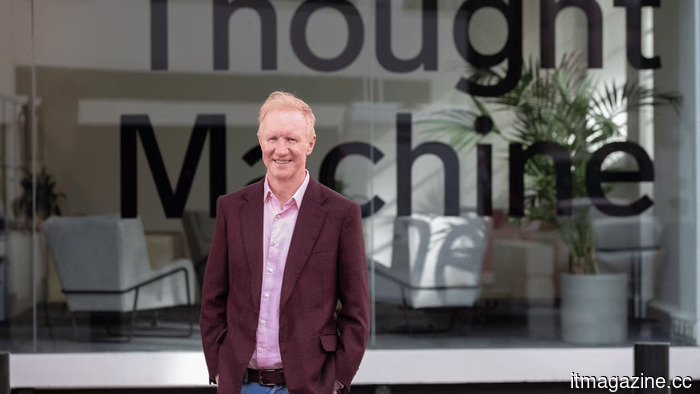 Thought Machine reaches $100 million in revenue, postpones IPO to 2028.
The UK core-banking company Thought Machine has surpassed $100 million in revenue and annual recurring revenue (ARR), secured £30 million from a banking client, and delayed its stock market listing until 2028.
Thought Machine reaches $100 million in revenue, postpones IPO to 2028.
The UK core-banking company Thought Machine has surpassed $100 million in revenue and annual recurring revenue (ARR), secured £30 million from a banking client, and delayed its stock market listing until 2028.
 Hedge funds offloaded chip stocks for the fourth consecutive week, but continued to invest in AI stocks.
Data from Goldman Sachs indicates that semiconductors have been the US sector with the highest net sales for the fourth consecutive week, while hedge funds maintain their AI positions at nearly record levels.
Hedge funds offloaded chip stocks for the fourth consecutive week, but continued to invest in AI stocks.
Data from Goldman Sachs indicates that semiconductors have been the US sector with the highest net sales for the fourth consecutive week, while hedge funds maintain their AI positions at nearly record levels.
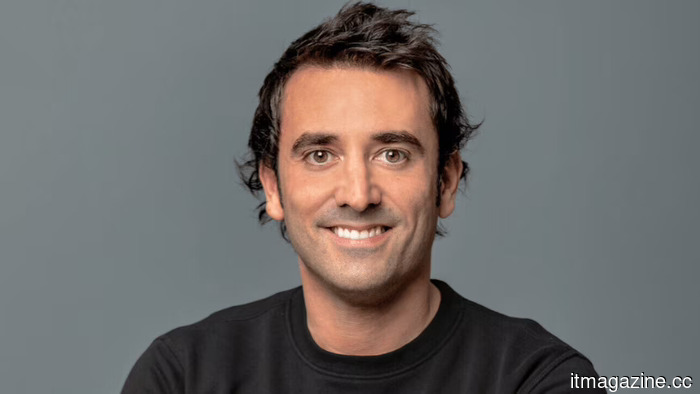 Sherpa.ai from Spain secures $18 million for data-sovereign artificial intelligence.
The Basque startup Sherpa.ai has secured $18 million from the US investor Forgepoint for its federated-learning AI, which develops models without the need to share sensitive information.
Sherpa.ai from Spain secures $18 million for data-sovereign artificial intelligence.
The Basque startup Sherpa.ai has secured $18 million from the US investor Forgepoint for its federated-learning AI, which develops models without the need to share sensitive information.
 Even Realities reaches $1 billion with smart glasses that do not require a camera.
Shenzhen's Even Realities has secured $150 million from Meituan and Tencent, achieving a valuation of $1 billion for its camera-free smart glasses, which are positioned to compete with Meta.
Even Realities reaches $1 billion with smart glasses that do not require a camera.
Shenzhen's Even Realities has secured $150 million from Meituan and Tencent, achieving a valuation of $1 billion for its camera-free smart glasses, which are positioned to compete with Meta.
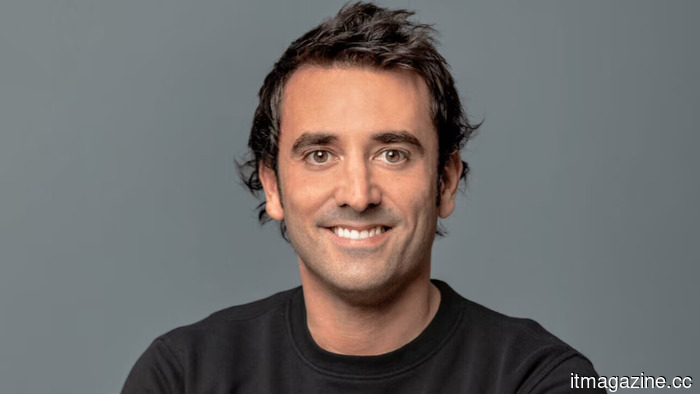 Spain's Sherpa.ai secures $18 million for data-sovereign artificial intelligence.
The Basque startup Sherpa.ai has secured $18 million in funding from the US investor Forgepoint for its federated-learning AI, which develops models without the need to share sensitive information.
Spain's Sherpa.ai secures $18 million for data-sovereign artificial intelligence.
The Basque startup Sherpa.ai has secured $18 million in funding from the US investor Forgepoint for its federated-learning AI, which develops models without the need to share sensitive information.
Even Realities reaches $1 billion in sales with their camera-free smart glasses.
Shenzhen's Even Realities has secured $150 million from Meituan and Tencent, reaching a valuation of $1 billion for its camera-free smart glasses, positioning itself as a competitor to Meta.