
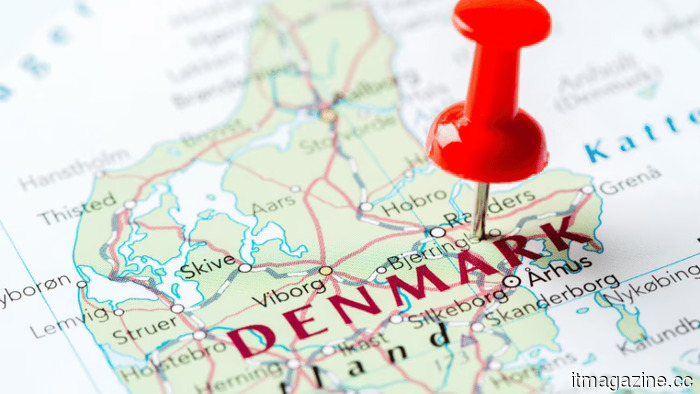
Denmark enters a legal battle in an EU court regarding the obligations of platforms to publishers.
Denmark has chosen to support a significant but less publicized legal struggle regarding internet payment for journalism. The Danish government has submitted a written intervention to the Court of Justice of the European Union, endorsing Belgium in a case initiated by a coalition of technology firms that question how Belgium manages the rights of press publishers, as reported by Reuters.
This issue revolves around the same rights highlighted in several recent European rulings, including a notable case where Meta lost to an Italian publisher at the EU’s highest court.
The conflict focuses on Article 15 of the 2019 Copyright in the Digital Single Market Directive, which grants press publishers the right to be compensated when platforms utilize their content. The manner in which Belgium is executing that right has come under scrutiny from the platforms, which argue that the national regulations exceed EU law's limits. Denmark, on the other hand, is contending the opposite.
The companies involved in this legal challenge are major players. According to Reuters, the action was initiated in 2023 against the Belgian government by entities including Streamz, Google, Meta, Spotify, and Sony, which argue that Belgium’s enforcement of the directive undermines rather than enforces EU copyright law. The oral hearings are scheduled for July 6 and 7, and Denmark plans to participate actively rather than merely submitting a written statement.
Copenhagen’s motivation is clearly protective. The Danish government stated its choice to support Belgium stems from concerns about the impact this case could have on Danish media organizations and to ensure that Meta and other significant platforms pay for newspaper articles and other content hosted on their services. This reflects a national industrial interest being asserted within a legal context, and Denmark is openly demonstrating it.
This interest has a local context. Danish publishers have been notably proactive in demanding payments from platforms, establishing a collective management organization to negotiate on their behalf and, after negotiations faltered, pursuing legal action against OpenAI earlier this year regarding the use of their materials. The government’s intervention in Luxembourg represents a diplomatic layer over this domestic advocacy.
The implications extend well beyond Belgium. Since the CJEU interprets EU law applicable to all member states, a decision regarding Belgium's enforcement will effectively delineate how far any country can compel platforms into negotiations. A ruling in favor of the companies would restrict that leeway; conversely, a victory for Belgium and Denmark would broaden it.
Recent judicial outcomes have been advantageous for publishers. The CJEU has previously ruled that member states may mandate fair compensation and data-sharing between platforms and press publishers, a rationale that provides national regulators substantial power.
The platforms’ legal challenge to Belgium is partly a bid to curb this momentum before it solidifies, following years of tension over Google's use of news content in Europe.
The timing also indicates heightened concern. The dispute over snippets and search results is now intertwined with AI, as the same news archives displayed in search results are also utilized to train large language models.
Publishers, having argued for years about compensation for links, are now increasingly advocating for payment related to training data, and the principles evaluated in Luxembourg will influence both issues.
Denmark's decision to participate in person, rather than simply submitting a document, emphasizes the seriousness with which it regards this outcome. While government interventions in EU cases are relatively common, making arguments during oral hearings positions Copenhagen visibly alongside Brussels against some of the largest tech companies globally.
None of these matters will be resolved during the hearing. Oral arguments are just one step in a lengthy process, with an opinion from an advocate general and a final ruling anticipated months later, and the court may frame the issue more narrowly than either party desires. The significance of Denmark's intervention is that it marks the moment a second government deemed the struggle over news payment crucial enough to join in, rather than merely observe.
Other articles
 Hedge funds have offloaded chip stocks for the fourth consecutive week, but they have not reduced their positions in AI investments.
According to data from Goldman Sachs, semiconductors remained the US sector with the highest net sales for the fourth consecutive week, although hedge funds' positions in AI continue to be near all-time highs.
Hedge funds have offloaded chip stocks for the fourth consecutive week, but they have not reduced their positions in AI investments.
According to data from Goldman Sachs, semiconductors remained the US sector with the highest net sales for the fourth consecutive week, although hedge funds' positions in AI continue to be near all-time highs.
 Spain's Sherpa.ai secures $18 million for data-sovereign artificial intelligence.
The Basque startup Sherpa.ai has secured $18 million in funding from the US investor Forgepoint for its federated-learning AI, which develops models without the need to share sensitive information.
Spain's Sherpa.ai secures $18 million for data-sovereign artificial intelligence.
The Basque startup Sherpa.ai has secured $18 million in funding from the US investor Forgepoint for its federated-learning AI, which develops models without the need to share sensitive information.
 EV batteries are enduring significantly longer than anticipated by the industry.
Real-world data indicates that contemporary EV batteries maintain a significant portion of their range even after hundreds of thousands of miles, alleviating one of the major concerns associated with electric vehicle ownership.
EV batteries are enduring significantly longer than anticipated by the industry.
Real-world data indicates that contemporary EV batteries maintain a significant portion of their range even after hundreds of thousands of miles, alleviating one of the major concerns associated with electric vehicle ownership.
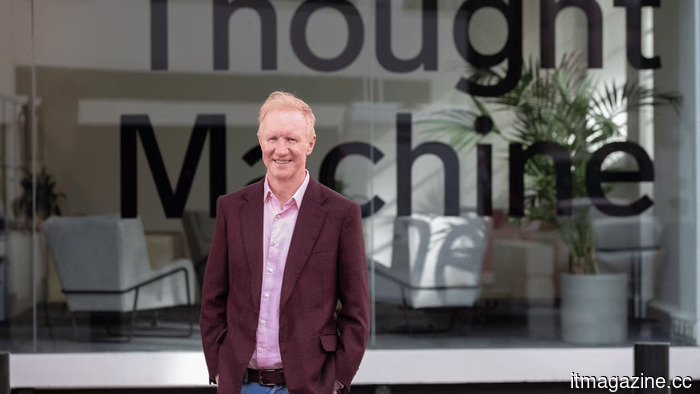 Thought Machine reaches $100 million in revenue, postpones IPO to 2028.
The UK core-banking company Thought Machine has surpassed $100 million in revenue and annual recurring revenue (ARR), secured £30 million from a banking client, and delayed its stock market listing until 2028.
Thought Machine reaches $100 million in revenue, postpones IPO to 2028.
The UK core-banking company Thought Machine has surpassed $100 million in revenue and annual recurring revenue (ARR), secured £30 million from a banking client, and delayed its stock market listing until 2028.
 CurifyLabs secures $14 million to produce personalised medicine through 3D printing.
Finland's CurifyLabs has secured $14 million in Series A funding to grow in the US, where pharmacies across 21 states utilize its 3D printers to create personalized medication doses.
CurifyLabs secures $14 million to produce personalised medicine through 3D printing.
Finland's CurifyLabs has secured $14 million in Series A funding to grow in the US, where pharmacies across 21 states utilize its 3D printers to create personalized medication doses.
 Even Realities reaches $1 billion with smart glasses that do not require a camera.
Shenzhen's Even Realities has secured $150 million from Meituan and Tencent, achieving a valuation of $1 billion for its camera-free smart glasses, which are positioned to compete with Meta.
Even Realities reaches $1 billion with smart glasses that do not require a camera.
Shenzhen's Even Realities has secured $150 million from Meituan and Tencent, achieving a valuation of $1 billion for its camera-free smart glasses, which are positioned to compete with Meta.
Denmark enters a legal battle in an EU court regarding the obligations of platforms to publishers.
Denmark has submitted a written intervention in support of Belgium in a case before the CJEU, where platforms are contesting the country's enforcement of rights for press publishers.