

Even Realities reaches $1 billion with smart glasses that do not require a camera.
Meta has sold millions of smart glasses equipped with cameras, which has led to privacy controversies. In contrast, a startup from Shenzhen, Even Realities, is wagering $1 billion that omitting the camera is a wiser choice. According to TechCrunch, Even has secured $150 million in funding at a $1 billion valuation, primarily led by Chinese giants Meituan and Tencent. This three-year-old company has become a unicorn, deliberately challenging the camera-centric approach that Meta and Snap have established as standard.
By design, Even's glasses do not capture video. Instead, they feature a small display integrated into the lens that provides notifications, live translations, and directions, all operated through a companion ring that users tap and swipe. Founder Will Wang, a former Apple engineer, emphasizes that the aim is to remain present, with information appearing only as needed.
The absence of a camera also positions the product as a privacy-conscious choice. Its voice capabilities transform spoken words into text without saving recordings, the application encrypts user data, and Wang asserts that the system complies with Europe’s stringent privacy regulations. This serves as a direct challenge to the market leader.
Despite Meta's overwhelming dominance in smart-glass shipments and its expanding Ray-Ban line, it is currently facing privacy issues. A lawsuit alleges that overseas contractors reviewed users' footage, and lawmakers are working on regulations to limit covert recording. Even makes a straightforward claim: a camera that can be turned off is less effective than one that is simply absent.
Even represents a unique blend of influences. Based in Shenzhen and funded by Chinese investors, it does not market its products in China. Over half of its user base resides in the United States, which is its fastest-growing market. Other markets include Japan, South Korea, the Middle East, and Europe. The founding team consists of former employees from Apple and Oppo, as well as members from European eyewear companies like Lindberg. The company is part of a growing trend of Chinese hardware manufacturers targeting global consumers.
The business appears substantial, not just aspirational. Even claims to be the first in its niche to sell over 10,000 pairs of glasses and has expanded its workforce from about 40 employees to several hundred. Prices for its glasses start at $599, with prescription lenses and the companion ring bringing an average order close to $1,000.
However, the market is becoming increasingly competitive. Companies like XREAL and Viture have also secured significant funding, and the shipments of display-only glasses are surging, as noted by Tech Funding News. Familiar risks accompany any gadget: the novelty may wear off.
Even believes that "quiet" glasses, which can be worn all day without recording capabilities, will prevail over the more attention-grabbing camera models once initial excitement diminishes. The concept of ambient computing has been touted before, but this time, the key selling point is what the device consciously will not do.
Other articles
 How Claude assisted my 65-year-old father in finally moving on from his handwritten ledgers.
My father has managed his small business using handwritten ledgers for many years. Here’s how I utilized Claude to help him transition from paper to Excel, without needing any coding or technical expertise.
How Claude assisted my 65-year-old father in finally moving on from his handwritten ledgers.
My father has managed his small business using handwritten ledgers for many years. Here’s how I utilized Claude to help him transition from paper to Excel, without needing any coding or technical expertise.
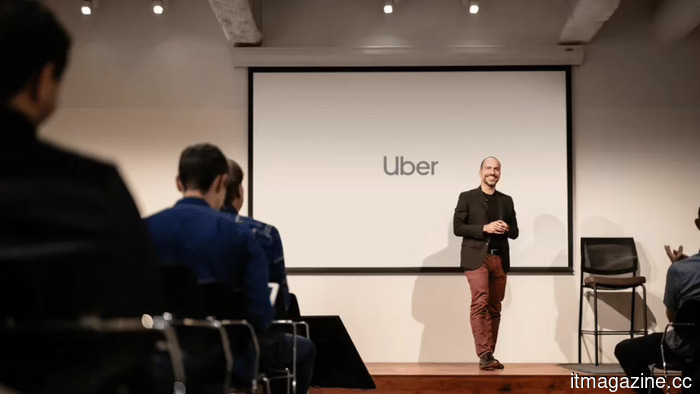 Uber halts its expansion into the European food-delivery market for Delivery Hero.
Uber has paused 5 out of the 7 planned food-delivery launches in Europe for 2026, a decision that appears to be linked to its attempt to acquire Delivery Hero.
Uber halts its expansion into the European food-delivery market for Delivery Hero.
Uber has paused 5 out of the 7 planned food-delivery launches in Europe for 2026, a decision that appears to be linked to its attempt to acquire Delivery Hero.
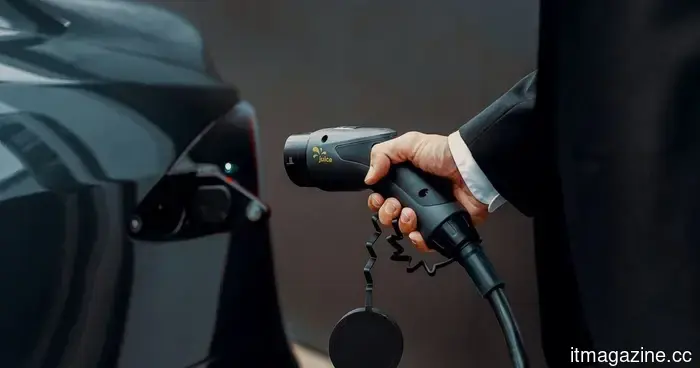 EV batteries are enduring significantly longer than anticipated by the industry.
Real-world data indicates that contemporary EV batteries maintain a significant portion of their range even after hundreds of thousands of miles, alleviating one of the major concerns associated with electric vehicle ownership.
EV batteries are enduring significantly longer than anticipated by the industry.
Real-world data indicates that contemporary EV batteries maintain a significant portion of their range even after hundreds of thousands of miles, alleviating one of the major concerns associated with electric vehicle ownership.
 ITV has sold its broadcasting division to Comcast's Sky for as much as £1.6 billion.
ITV will transfer its media and entertainment division to Comcast's Sky for a maximum of £1.6 billion, retaining the Bake Off producer and establishing itself as an independent studio.
ITV has sold its broadcasting division to Comcast's Sky for as much as £1.6 billion.
ITV will transfer its media and entertainment division to Comcast's Sky for a maximum of £1.6 billion, retaining the Bake Off producer and establishing itself as an independent studio.
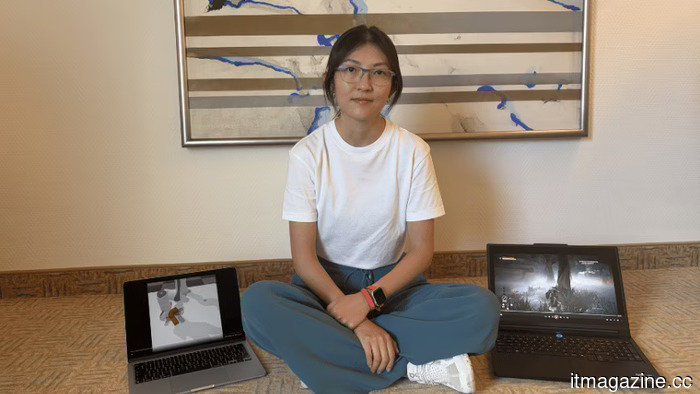 Worldmodeldata secures £7M to develop AI training using video games.
The Cambridge-based startup Worldmodeldata has secured £7 million in seed funding, led by Iona Star Capital, to convert licensed video game data into training datasets for AI world models.
Worldmodeldata secures £7M to develop AI training using video games.
The Cambridge-based startup Worldmodeldata has secured £7 million in seed funding, led by Iona Star Capital, to convert licensed video game data into training datasets for AI world models.
 Hedge funds offloaded chip stocks for the fourth consecutive week, but continued to invest in AI stocks.
Data from Goldman Sachs indicates that semiconductors have been the US sector with the highest net sales for the fourth consecutive week, while hedge funds maintain their AI positions at nearly record levels.
Hedge funds offloaded chip stocks for the fourth consecutive week, but continued to invest in AI stocks.
Data from Goldman Sachs indicates that semiconductors have been the US sector with the highest net sales for the fourth consecutive week, while hedge funds maintain their AI positions at nearly record levels.
Even Realities reaches $1 billion with smart glasses that do not require a camera.
Shenzhen's Even Realities has secured $150 million from Meituan and Tencent, achieving a valuation of $1 billion for its camera-free smart glasses, which are positioned to compete with Meta.