

EV batteries are enduring significantly longer than anticipated by the industry.
One of the main criticisms regarding the purchase of electric vehicles has been the longevity of their batteries. Detractors have wondered if these expensive battery packs would last beyond a few years or if they would need costly replacements before the rest of the vehicle wore out.
A report from The Wall Street Journal indicates that real-world data is starting to present a different perspective. Contemporary EV batteries are demonstrating far greater durability than anticipated, with many vehicles retaining most of their original range even after traveling hundreds of thousands of miles. These findings could bolster consumer confidence as the industry strives to make electric vehicles mainstream.
Real-world evidence indicates that modern EV batteries are designed for longevity
The report highlights Richard Symons, a UK-based used EV dealer, whose five-year-old Tesla Model 3 has already amassed 247,000 miles while still proving capable of long-distance travel. His experience aligns with what researchers and industry analysts are increasingly observing across newer electric vehicle generations: battery degradation is occurring much more slowly than many consumers initially feared.
According to battery analytics firm Recurrent, the average electric vehicle retains up to 95 percent of its original driving range after five years of ownership, which surpasses many initial predictions. This improvement is largely attributed to advancements in battery chemistry, thermal management systems, and advanced battery-management software that more effectively safeguards cells from long-term deterioration.
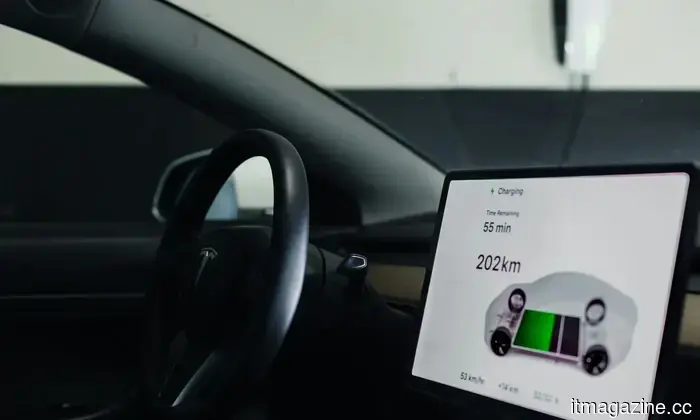
Tesla Unsplash
These enhancements are also evident in repair statistics. Recurrent states that around one in 12 electric vehicles manufactured between 2011 and 2016 ultimately required battery replacements. For EVs produced from 2022 onward, that number has significantly decreased to just 0.3 percent. Early models like the original Nissan Leaf lacked contemporary battery cooling systems, making them much more vulnerable to degradation compared to today’s vehicles.
However, consumer perception has yet to align fully with these findings. A 2025 survey conducted by AutoPacific revealed that concerns about costly battery replacements continue to be the primary reason many potential buyers steer clear of electric vehicles. Jessica Caldwell, insights head at Edmunds, shared with the Journal that many consumers still regard EV batteries with considerable apprehension, despite the improved reliability data.
This does not imply that batteries are wholly resistant to wear
The report notes that frequent high-power DC fast charging can accelerate battery degradation relative to slower charging methods. Data from Geotab indicates that batteries frequently charged at high power retain approximately 89.7 percent of their original capacity after several years, in contrast to 94.9 percent for vehicles primarily utilizing lower-frequency fast charging. Consistently charging to 100 percent, allowing batteries to sit fully discharged for long periods, and exposing them to extreme temperatures can also compromise long-term battery health. A comparison chart in the report displays the growing disparity in battery capacity between these two charging practices over time.
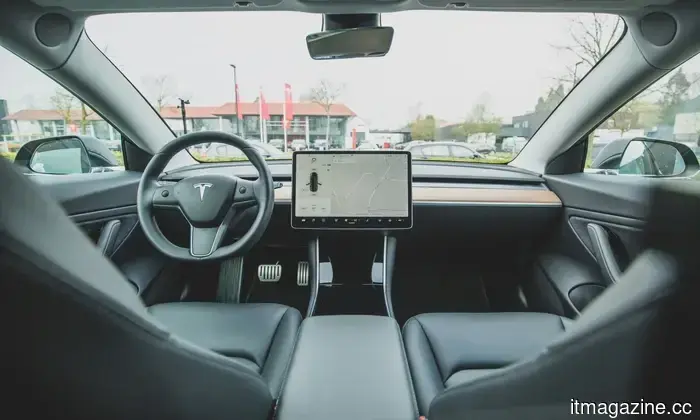
Tesla Unsplash
Battery replacement costs remain substantial, typically ranging from around $5,000 to $16,000 outside of warranty, depending on the manufacturer. Nonetheless, many automakers are now designing battery packs in a way that enables the repair of individual modules rather than necessitating complete pack replacements, thereby lowering long-term ownership costs.
These findings emerge during a challenging period for the EV industry. Sales of electric vehicles in the U.S. have slowed in 2026 due to shifts in government incentives; however, analysts cited by the Journal anticipate that adoption will resume its long-term upward trajectory. Consulting firm AlixPartners predicts that EVs will represent 11 percent of new U.S. vehicle sales by 2030, while globally, they are expected to approach 25 percent of all new car sales by the decade's end. As more high-mileage electric vehicles continue to demonstrate their durability, one of the industry’s most pressing consumer concerns may gradually fade away.
Other articles
 Pool cleaning is becoming more intelligent, and the Beatbot AquaSense 2 Ultra, WYBOT B1, and iGarden KN Series demonstrate this evolution.
Robotic pool cleaners have advanced significantly, yet many still need excessive manual involvement. The Beatbot AquaSense 2 Ultra stands out with its 5-in-1 AI-driven precision cleaning, while the WYBOT B1 and iGarden Pool Cleaner KN Series provide smart and effective solutions to maintain your water's clarity and ensure it's ready for swimming throughout the entire season.
Pool cleaning is becoming more intelligent, and the Beatbot AquaSense 2 Ultra, WYBOT B1, and iGarden KN Series demonstrate this evolution.
Robotic pool cleaners have advanced significantly, yet many still need excessive manual involvement. The Beatbot AquaSense 2 Ultra stands out with its 5-in-1 AI-driven precision cleaning, while the WYBOT B1 and iGarden Pool Cleaner KN Series provide smart and effective solutions to maintain your water's clarity and ensure it's ready for swimming throughout the entire season.
 ITV has sold its broadcasting division to Comcast's Sky for as much as £1.6 billion.
ITV will transfer its media and entertainment division to Comcast's Sky for a maximum of £1.6 billion, retaining the Bake Off producer and establishing itself as an independent studio.
ITV has sold its broadcasting division to Comcast's Sky for as much as £1.6 billion.
ITV will transfer its media and entertainment division to Comcast's Sky for a maximum of £1.6 billion, retaining the Bake Off producer and establishing itself as an independent studio.
 A high-ranking official from the FCA suggests that the UK ought to consider directly regulating AI models.
Sheldon Mills from the FCA suggests that the UK should consider reviewing the need for regulation of general-purpose models such as ChatGPT, Claude, and Gemini, as they influence financial decisions.
A high-ranking official from the FCA suggests that the UK ought to consider directly regulating AI models.
Sheldon Mills from the FCA suggests that the UK should consider reviewing the need for regulation of general-purpose models such as ChatGPT, Claude, and Gemini, as they influence financial decisions.
 Uber halts its expansion into food delivery in Europe for Delivery Hero.
Uber has paused 5 out of 7 intended European food-delivery launches for 2026, a decision seemingly linked to its efforts to acquire Delivery Hero.
Uber halts its expansion into food delivery in Europe for Delivery Hero.
Uber has paused 5 out of 7 intended European food-delivery launches for 2026, a decision seemingly linked to its efforts to acquire Delivery Hero.
 Pool cleaning is becoming more intelligent, as demonstrated by the Beatbot AquaSense 2 Ultra, WYBOT B1, and iGarden KN Series.
Robotic pool cleaners have advanced significantly, yet many still demand excessive manual involvement. Leading the way is the Beatbot AquaSense 2 Ultra, featuring 5-in-1 AI-powered precision cleaning. The WYBOT B1 and iGarden Pool Cleaner KN Series also provide smart and effective solutions to maintain your water in perfect condition for swimming throughout the entire season.
Pool cleaning is becoming more intelligent, as demonstrated by the Beatbot AquaSense 2 Ultra, WYBOT B1, and iGarden KN Series.
Robotic pool cleaners have advanced significantly, yet many still demand excessive manual involvement. Leading the way is the Beatbot AquaSense 2 Ultra, featuring 5-in-1 AI-powered precision cleaning. The WYBOT B1 and iGarden Pool Cleaner KN Series also provide smart and effective solutions to maintain your water in perfect condition for swimming throughout the entire season.
 CurifyLabs secures $14 million to 3D-print customized medicine.
Finland's CurifyLabs has secured $14 million in Series A funding to grow its presence in the US, where pharmacies across 21 states utilize its 3D printers to produce personalized medicine doses.
CurifyLabs secures $14 million to 3D-print customized medicine.
Finland's CurifyLabs has secured $14 million in Series A funding to grow its presence in the US, where pharmacies across 21 states utilize its 3D printers to produce personalized medicine doses.
EV batteries are enduring significantly longer than anticipated by the industry.
Real-world data indicates that contemporary EV batteries maintain a significant portion of their range even after hundreds of thousands of miles, alleviating one of the major concerns associated with electric vehicle ownership.