
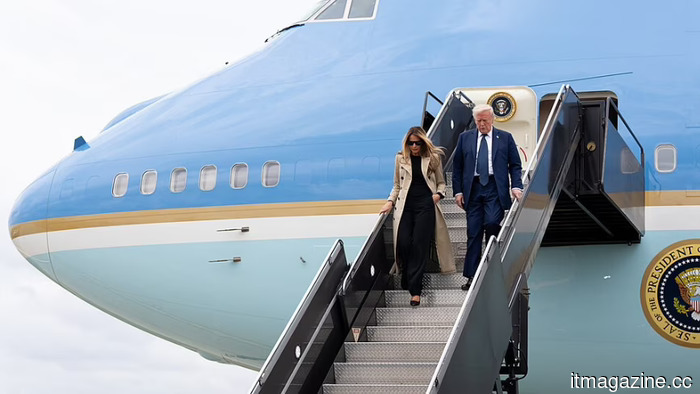
Trump's memecoin resulted in a loss of $3.8 billion for investors while he made $636 million during his presidency.
A summary from blockchain analytics firm Nansen indicates that nearly a million purchasers of President Donald Trump’s $TRUMP memecoin have suffered total losses of $3.81 billion as of the end of June. According to the analysis, 988,905 investors in the token are currently in the red. Trump has reportedly earned $636 million from the same coin, with his extensive financial disclosure, released by the Office of Government Ethics on June 30, revealing this income as royalties from CIC Digital LLC, a Trump Organization affiliate, in connection with a licensing agreement involving a company named Celebration Coins, which has no publicly available information.
The cash flow mechanics
Trump introduced the $TRUMP token on the Solana blockchain on January 17, 2025, just three days prior to his second inauguration. The cryptocurrency quickly skyrocketed to $75.26 within hours, temporarily elevating its fully diluted market capitalization to over $75 billion.
First Lady Melania Trump also launched her own token, $MELANIA, on January 19, adding another Trump-themed coin to the market before the inauguration. However, both tokens have since significantly dropped in value. Currently, $TRUMP trades at around $1.78, marking a fall of over 97% from its initial peak. An investment of $10,000 made on inauguration day would now only be valued at approximately $364. Trump benefits from royalties and transaction fees every time the token is bought or sold, ensuring profits irrespective of the token's market performance.
Out of the total one billion tokens created, 80% are owned by two entities affiliated with Trump: CIC Digital and Fight Fight Fight LLC. These tokens are being gradually released over a three-year schedule, with about 900,000 tokens becoming available each day.
The regulatory landscape
The $TRUMP coin entered a regulatory space that Trump was concurrently influencing. Since he assumed office, the SEC has discontinued or put on hold almost 60% of its enforcement actions in the crypto sector, including ongoing cases against firms like Binance, Coinbase, and Kraken. In July 2025, Trump enacted the GENIUS Act, establishing the first federal framework for stablecoins, which provided regulatory clarity for institutional entities to introduce tokenized products; however, it failed to address memecoins or tokens from elected officials.
Conversely, Europe’s MiCA regulation mandates that any crypto assets sold publicly must comply with disclosure and consumer protection standards, regardless of nomenclature. The American framework does not have similar protections for the retail investors who constitute the majority of memecoin buyers.
The gala event
On May 22, 2025, Trump hosted an exclusive gala at his Virginia golf club for the top 220 holders of the $TRUMP token, who had invested a total of $148 million. The guest list featured Justin Sun, a crypto entrepreneur from China and the coin's largest holder, who was at that time facing fraud charges from the SEC, which have since been put on hold. A Bloomberg analysis indicated that 19 of the top 25 wallets were likely controlled by individuals outside the U.S., suggesting that the event provided personal access to the sitting president in exchange for investing in a product from which he profits.
The broader crypto enterprise
The $TRUMP memecoin is part of a larger financial framework. Trump’s financial disclosures indicate he expects to earn a minimum of $1.4 billion from crypto-related activities in 2025, including around $800 million from World Liberty Financial token sales and $197 million linked to an equity sale associated with a stablecoin holding company.
World Liberty Financial, a decentralized finance protocol where a Trump business entity controls 60% and receives 75% of all sales revenue from coin offerings, has faced its own share of controversies. The venture had pledged 5 billion tokens as collateral to secure a $75 million loan from a lending platform co-founded by one of its advisors, affecting existing depositors negatively.
The Trump Media & Technology Group reported a significant loss of $405.9 million in the first quarter of 2026, primarily due to unrealized declines on its cryptocurrency assets. The company reportedly invested approximately $2 billion in Bitcoin during previous market peaks.
Future implications
Senator Kirsten Gillibrand has introduced a proposal to prohibit elected officials and their spouses from issuing or promoting crypto tokens. She had previously advocated for similar regulations during the formulation of the GENIUS Act, but such measures were ultimately removed from the final legislation. The proposal may face challenges in a Congress that has generally supported the crypto industry. Recently, Visa, Mastercard, and 140 other companies launched a competing stablecoin based on the GENIUS Act framework, highlighting the rapid maturation of institutional crypto under the new regulations.
However, the retail perspective presents a different narrative. Over $600 million was taken from decentralized finance platforms in the first half of 2026, and Nansen's data suggests that losses from the president’s token have amounted
Other articles
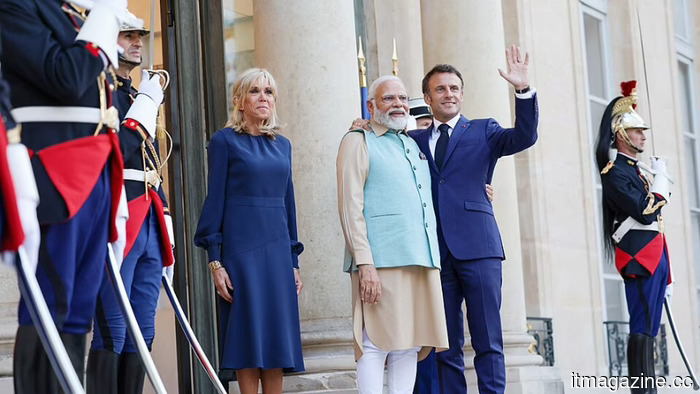 Macron and Modi engage with tech CEOs in the competition for AI infrastructure.
Macron persuaded SoftBank to invest €75 billion in French data centers. Modi obtained $48 billion from Amazon. The competition for AI infrastructure is being dominated by personal diplomacy.
Macron and Modi engage with tech CEOs in the competition for AI infrastructure.
Macron persuaded SoftBank to invest €75 billion in French data centers. Modi obtained $48 billion from Amazon. The competition for AI infrastructure is being dominated by personal diplomacy.
 India has called upon Meta regarding Instagram advertisements that promote child sexual abuse content.
India's IT ministry has called upon Meta executives following a BBC investigation that revealed Instagram was running paid advertisements promoting CSAM, directing users to Telegram.
India has called upon Meta regarding Instagram advertisements that promote child sexual abuse content.
India's IT ministry has called upon Meta executives following a BBC investigation that revealed Instagram was running paid advertisements promoting CSAM, directing users to Telegram.
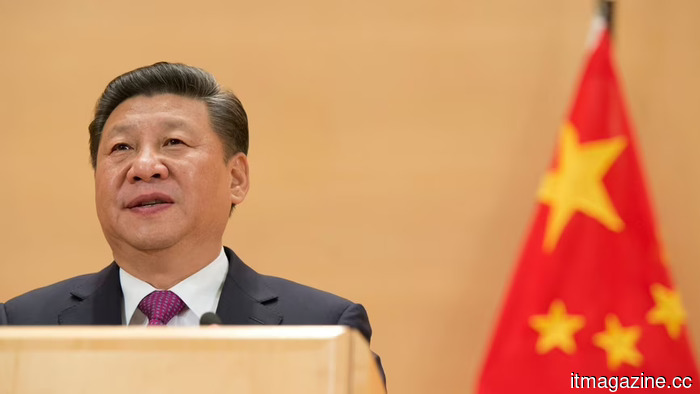 China amends e-commerce legislation to oversee and protect platforms.
China's proposed amendments to its e-commerce law introduce oversight for domestic platforms and international countermeasures, as Temu and Shein encounter tariffs and penalties in the US and EU.
China amends e-commerce legislation to oversee and protect platforms.
China's proposed amendments to its e-commerce law introduce oversight for domestic platforms and international countermeasures, as Temu and Shein encounter tariffs and penalties in the US and EU.
 Amazon has discreetly enhanced its Fire HD 10 tablet by adding an impressive 1GB of RAM.
Amazon has updated the Fire HD 10 by adding an additional gigabyte of RAM, prolonging the lifespan of its flagship tablet rather than introducing a completely new version.
Amazon has discreetly enhanced its Fire HD 10 tablet by adding an impressive 1GB of RAM.
Amazon has updated the Fire HD 10 by adding an additional gigabyte of RAM, prolonging the lifespan of its flagship tablet rather than introducing a completely new version.
 Chrome is improving its ability to interpret the pauses and punctuation that are never vocalized.
Chrome 151 Beta brings automatic punctuation for voice recognition, enabling the browser to deduce commas and periods from natural speech without needing specific spoken commands.
Chrome is improving its ability to interpret the pauses and punctuation that are never vocalized.
Chrome 151 Beta brings automatic punctuation for voice recognition, enabling the browser to deduce commas and periods from natural speech without needing specific spoken commands.
 India calls on Meta regarding Instagram advertisements that endorse child sexual abuse content.
India's IT ministry has called in Meta executives following a BBC investigation which revealed that Instagram had been running paid advertisements promoting CSAM and directing users to Telegram.
India calls on Meta regarding Instagram advertisements that endorse child sexual abuse content.
India's IT ministry has called in Meta executives following a BBC investigation which revealed that Instagram had been running paid advertisements promoting CSAM and directing users to Telegram.
Trump's memecoin resulted in a loss of $3.8 billion for investors while he made $636 million during his presidency.
Nansen data indicates that 988,905 buyers of the $TRUMP token suffered losses amounting to $3.81 billion, while Trump himself earned $636 million in royalties. In his 2025 financial disclosure, he reports $1.4 billion in cryptocurrency income.