
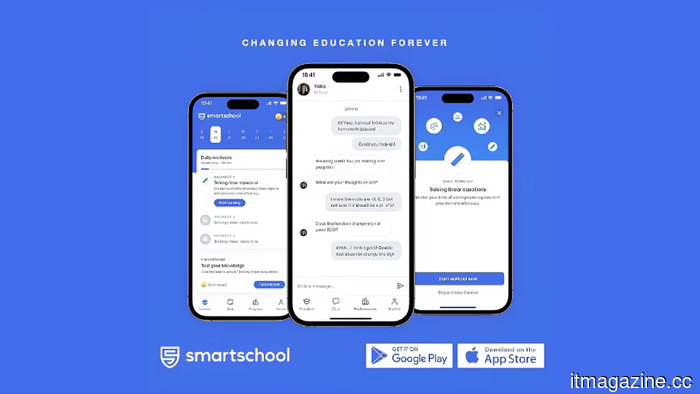
Why developing AI for educational institutions is more challenging than creating a chatbot: an overview of Smartschool's strategy for exam preparation.
Artificial intelligence has demonstrated its capability to sift through online information swiftly to answer queries. However, utilizing AI for teaching students presents a more challenging endeavor. This complexity increases when the objective is not merely academic learning but also excelling in high-stakes assessments like the SAT and ACT.
At first glance, integrating AI into education might seem like a logical progression for large language models. If AI can take over customer support roles, it stands to reason it could also provide answers similarly to a teacher.
Nonetheless, acquiring an education in a school setting differs significantly from a consumer experience. Teachers and school administrators are not seeking chatbots; these automated systems can generate inaccuracies and errors. Relying on a chatbot for instruction can hinder a student's progress significantly. Educators require the tools they utilize to be reliable, secure, accountable, and consistent.
This understanding led the founders of Smartschool, an educational technology company based in Palo Alto, to develop their platform by addressing the specific challenges faced by students and educators. Instead of merely adapting existing AI technologies, they prioritized creating an AI tutor aimed at genuinely supporting students in their learning and performance under pressure. Smartschool focused on bridging the gap between a sophisticated chatbot and a trustworthy tool for educators, specifically targeting critical exams like the SAT and ACT.
The team was well-equipped for this challenge. Founded by three Polish entrepreneurs—Matt Masłowski, Paul Burzyński, and Kajetan Lewandowski—the trio brought experience from various tech companies alongside a robust educational background. Their upbringing in Poland, which was navigating a tough economic transformation, provided them with insights into the scarcity of opportunities and the lack of access to quality education.
“Having come from relatively disadvantaged backgrounds, we wanted to help people achieve excellent education and ensure they could have similar opportunities if they choose to act,” states Masłowski, the CEO of Smartschool. “If we maintain the current education system amidst such rapid global changes, we risk creating an extremely unfair and unequal society,” he adds.
The obstacles of AI-driven education
A key observation from the Smartschool team is that generic AI systems often fail to meet the realities of classroom environments. This is especially true in math education, where large language models can produce hallucinations. They may skip necessary steps or mistakenly validate incorrect answers. Such technical issues can create genuine challenges for both teachers and students, contributing to the existing skepticism around AI.
AI is also not a one-size-fits-all solution in education. A successful platform needs to be adaptable, ensuring alignment with curriculum and state standards as well as compliance with data privacy regulations.
“Most edtech solutions merely wrap around ChatGPT,” notes Paul Burzyński, Smartschool’s chief product officer. “They lack insight into what a student is actually learning in class.”
Smartschool aims to close the divide between impressive AI capabilities and practical classroom needs. Burzyński facilitated the translation of advanced AI features into user-friendly workflows suitable for classrooms, collaborating with teachers and school districts to make sure the technology enhances rather than distracts from learning.
Mathematical reasoning
Central to its platform is a proprietary mathematical reasoning engine, conceptualized by Chief Product Officer Paul Burzyński and implemented by the engineering team led by CTO Kajetan Lewandowski. Unlike general-purpose AI, Smartschool’s platform is tailored for real classroom scenarios, integrating instructional workflows with advanced mathematical reasoning functions.
“It can evaluate handwritten student work, interpret diagrams and geometric constructions, and assess open-ended solutions,” explains Burzyński. “This capability is crucial as student learning often involves more than just choosing multiple-choice answers; it includes demonstrating reasoning steps and acknowledging mistakes that reflect thought processes.”
Instead of simply providing answers like a GPT-powered chatbot or search engine, Smartschool’s system offers structured feedback designed to enhance student reasoning. The company reports a 99.6 percent accuracy rate in evaluating and giving feedback on high-school-level math problems. The emphasis is on not just accuracy but also educational value.
Under Burzyński's leadership, the Smartschool team built the system for scalability and integration into classrooms. It can connect with existing learning management systems, curricula, and single sign-on platforms. Teachers can easily assign tasks, while student submissions are automatically graded and synchronized with gradebooks. Educators also receive valuable insights into student progress and misunderstandings.
“This design ensures the technology seamlessly integrates into existing teaching workflows rather than requiring schools to adapt to novel systems,” says Burzyński.
AI that educators and students can rely on
As CEO, Masłowski has steered Smartschool's growth into U.S. school districts while closely engaging with educators and administrators to guarantee the platform achieves measurable educational outcomes. Alongside Burzyński and Lewandowski, he has demonstrated the dependability of the system to schools implementing AI-powered learning tools for the first time. Educators have recognized the value, encouraged by early success stories. Smartschool now operates in 30 U.S. school districts, including New York City Department of Education and Boston Public Schools. Noteworthy results have emerged
Other articles
 Tesla introduces the six-seat Model Y Long Wheelbase in the US with a price tag of $61,990.
Tesla's elongated Model Y features a third row, captain's chairs, and includes bundled Full Self-Driving (FSD) for $61,990, with deliveries from Giga Texas set to begin in September.
Tesla introduces the six-seat Model Y Long Wheelbase in the US with a price tag of $61,990.
Tesla's elongated Model Y features a third row, captain's chairs, and includes bundled Full Self-Driving (FSD) for $61,990, with deliveries from Giga Texas set to begin in September.
 Alibaba prohibits Claude Code due to concealed tracking of Chinese users.
Alibaba categorized Anthropic's Claude Code as high-risk software after researchers discovered steganographic markers that identified Chinese users based on their timezone and proxy.
Alibaba prohibits Claude Code due to concealed tracking of Chinese users.
Alibaba categorized Anthropic's Claude Code as high-risk software after researchers discovered steganographic markers that identified Chinese users based on their timezone and proxy.
 npm packages associated with North Korea are masquerading as Rollup polyfill tools in an attempt to steal developers' sensitive information.
Malicious npm packages that impersonate Rollup polyfill tools are designed to steal browser data, cryptocurrency wallets, and credentials for AI tools in a campaign associated with Lazarus.
npm packages associated with North Korea are masquerading as Rollup polyfill tools in an attempt to steal developers' sensitive information.
Malicious npm packages that impersonate Rollup polyfill tools are designed to steal browser data, cryptocurrency wallets, and credentials for AI tools in a campaign associated with Lazarus.
 AI chip stocks fell by 12% over two days as investors searched for new profitable opportunities.
The PHLX Semiconductor Index dropped 12% over two trading days, while the Dow reached an all-time high. As Q2 earnings come closer, investors are shifting their focus from AI chips to software.
AI chip stocks fell by 12% over two days as investors searched for new profitable opportunities.
The PHLX Semiconductor Index dropped 12% over two trading days, while the Dow reached an all-time high. As Q2 earnings come closer, investors are shifting their focus from AI chips to software.
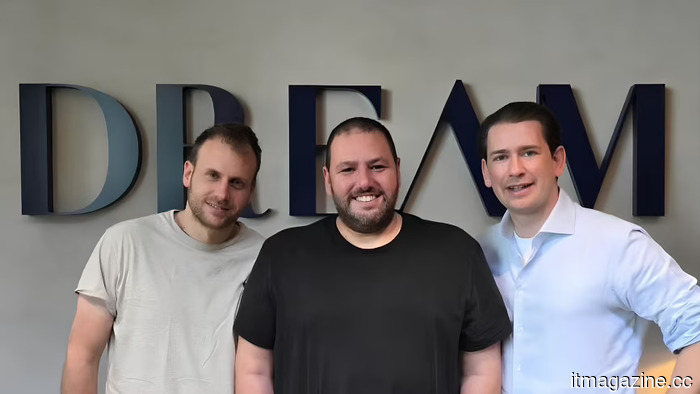 Dream, the creator of Pegasus, aims at the emerging right-wing movements in Latin America.
Dream, established by Shalev Hulio, the creator of Pegasus, focuses on Latin American governments that align with Trump as cyber attacks in the area increase by 25% each year.
Dream, the creator of Pegasus, aims at the emerging right-wing movements in Latin America.
Dream, established by Shalev Hulio, the creator of Pegasus, focuses on Latin American governments that align with Trump as cyber attacks in the area increase by 25% each year.
 A new survey indicates that a majority of Americans prefer children to be off social media until they are 16 years old.
A recent survey conducted by the Pew Research Center revealed that 56 percent of Americans are in favor of prohibiting social media usage for individuals under the age of 16, with backing that spans across different political parties and age demographics.
A new survey indicates that a majority of Americans prefer children to be off social media until they are 16 years old.
A recent survey conducted by the Pew Research Center revealed that 56 percent of Americans are in favor of prohibiting social media usage for individuals under the age of 16, with backing that spans across different political parties and age demographics.
Why developing AI for educational institutions is more challenging than creating a chatbot: an overview of Smartschool's strategy for exam preparation.
Smartschool, an edtech startup from Palo Alto established by three Polish entrepreneurs, developed a proprietary mathematical reasoning engine that boasts a 99.6 percent accuracy rate for high school mathematics. This technology has been embraced by 30 school districts in the United States, including New York City and Boston.