

Meta faces criticism after Instagram allowed advertisements related to child abuse in India.
Warning: This article contains real-world examples of abuse.
A BBC investigation has revealed that Instagram approved and showcased paid advertisements promoting child sexual abuse material (CSAM) to users in India, prompting renewed concerns regarding the effectiveness of Meta’s moderation systems and the mounting difficulties in regulating illegal content on social media.
The investigation by BBC Eye discovered numerous advertisements using phrases like “rape video” and “child video,” which directed users to Telegram channels where illegal content was reportedly sold for as low as 99 Indian rupees (approximately $1).
Paid ads bypassed Meta’s moderation systems
The BBC reported that these advertisements appeared on a newly created Instagram account established to examine how the platform recommends sexualized content. Following a limited number of accounts sharing suggestive but otherwise typical content, the account began to receive increasingly explicit advertisements.
Within a few days, Instagram started showcasing ads featuring adult pornography, eventually leading to promotions depicting children in sexually suggestive contexts that connected directly to Telegram channels selling CSAM. The BBC documented around 30 distinct advertisements promoting child sexual abuse material, alongside roughly 20 ads featuring adult pornography.
Meta acknowledged challenges in moderation
In one instance, the BBC cited an advertisement showing a distressed young girl with accompanying text implying she had been sexually assaulted. Twenty-four hours later, Instagram stated that the ad did not breach its community guidelines and would remain active. It was only after the BBC reached out to Meta for a statement that the company deactivated several advertisements, suspended related accounts, removed additional violating content, and blocked associated URLs.
Meta recognized that “no system is perfect” and mentioned that it continuously enhances its automated detection technologies while reporting apparent child exploitation cases to the National Center for Missing and Exploited Children (NCMEC) as mandated by law. The company denied claims that it intentionally targeted such ads at users and described child exploitation as “a horrific crime” that it strives to combat.
Critics question moderation as Telegram also faces scrutiny
The investigation also underscored Telegram’s involvement in distributing this material. The BBC identified two Telegram channels selling child abuse videos; one was removed after being reported, while the other continued to upload new content. Telegram informed the BBC that it employs both automated systems and human moderators to eliminate CSAM and stated it had removed more than 274,000 groups and channels associated with such material in 2026.
The findings elicited strong reactions from legal experts and former Meta executives. Retired Indian Supreme Court Justice Madan Lokur labeled the situation serious enough to warrant intervention from India’s Supreme Court, arguing that social media platforms should not escape responsibility simply because users post illegal content.
Former Facebook executive Brian Boland, who played a key role in developing the company's advertising business before leaving in 2020, expressed to the BBC that he was “horrified and unsurprised” by the findings. Boland contended that Instagram’s recommendation systems prioritize engagement and profit, warning that without stronger safeguards, these systems can inadvertently promote increasingly extreme content.
The investigation also highlights the magnitude of the issue in India. As reported, the country received 1.9 million CyberTipline reports related to child sexual abuse material in 2025, placing it second only to the United States. Indian cybercrime officials and child protection organizations informed the BBC that Meta’s platforms account for a significant portion of these reports, while also emphasizing that improved international collaboration is crucial to dismantle the criminal networks responsible for creating and distributing this material.


Other articles
 Why developing AI for educational institutions is more challenging than creating a chatbot: an overview of Smartschool's strategy for exam preparation.
Smartschool, an edtech startup from Palo Alto established by three Polish entrepreneurs, developed a proprietary mathematical reasoning engine that boasts a 99.6 percent accuracy rate for high school mathematics. This technology has been embraced by 30 school districts in the United States, including New York City and Boston.
Why developing AI for educational institutions is more challenging than creating a chatbot: an overview of Smartschool's strategy for exam preparation.
Smartschool, an edtech startup from Palo Alto established by three Polish entrepreneurs, developed a proprietary mathematical reasoning engine that boasts a 99.6 percent accuracy rate for high school mathematics. This technology has been embraced by 30 school districts in the United States, including New York City and Boston.
 Alibaba prohibits Claude Code due to concealed tracking of Chinese users.
Alibaba categorized Anthropic's Claude Code as high-risk software following researchers' discovery of steganographic markers that identified Chinese users based on their timezone and proxy.
Alibaba prohibits Claude Code due to concealed tracking of Chinese users.
Alibaba categorized Anthropic's Claude Code as high-risk software following researchers' discovery of steganographic markers that identified Chinese users based on their timezone and proxy.
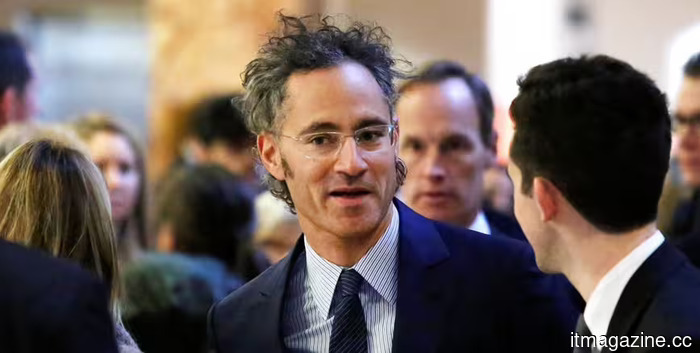 Palantir's CEO invested $200 million in properties that are untraceable.
Alex Karp purchased a $120 million monastery, a $75 million compound in Miami, and a 500-acre estate in New Hampshire. His company provides surveillance technology to government agencies.
Palantir's CEO invested $200 million in properties that are untraceable.
Alex Karp purchased a $120 million monastery, a $75 million compound in Miami, and a 500-acre estate in New Hampshire. His company provides surveillance technology to government agencies.
 A new survey indicates that a majority of Americans prefer children to be off social media until they are 16 years old.
A recent survey conducted by the Pew Research Center revealed that 56 percent of Americans are in favor of prohibiting social media usage for individuals under the age of 16, with backing that spans across different political parties and age demographics.
A new survey indicates that a majority of Americans prefer children to be off social media until they are 16 years old.
A recent survey conducted by the Pew Research Center revealed that 56 percent of Americans are in favor of prohibiting social media usage for individuals under the age of 16, with backing that spans across different political parties and age demographics.
 Dream, the creator of Pegasus, aims at the emerging right-wing movements in Latin America.
Dream, established by Shalev Hulio, the creator of Pegasus, focuses on Latin American governments that align with Trump as cyber attacks in the area increase by 25% each year.
Dream, the creator of Pegasus, aims at the emerging right-wing movements in Latin America.
Dream, established by Shalev Hulio, the creator of Pegasus, focuses on Latin American governments that align with Trump as cyber attacks in the area increase by 25% each year.
 AI chip stocks fell by 12% over two days as investors searched for new profitable opportunities.
The PHLX Semiconductor Index dropped 12% over two trading days, while the Dow reached an all-time high. As Q2 earnings come closer, investors are shifting their focus from AI chips to software.
AI chip stocks fell by 12% over two days as investors searched for new profitable opportunities.
The PHLX Semiconductor Index dropped 12% over two trading days, while the Dow reached an all-time high. As Q2 earnings come closer, investors are shifting their focus from AI chips to software.
Meta faces criticism after Instagram allowed advertisements related to child abuse in India.
Instagram authorized and showcased ads promoting child sexual abuse material in India before taking them down after an investigation.