

Zuckerberg states that the advancement of Meta’s AI agents is lagging behind expectations.
On Thursday, Mark Zuckerberg informed Meta employees that the company’s AI agents have not advanced as quickly as he had anticipated, four months following a restructuring intended to accelerate their development. “The course of agentic development over at least the last four months hasn’t really sped up as we expected,” he stated during an internal town hall, as reported by Reuters.
This admission is particularly striking given the significant resources Meta has already allocated to achieve that acceleration. This year, the company is expected to invest up to $145 billion in AI infrastructure, part of a restructuring that involved laying off approximately 8,000 employees in May while simultaneously reallocating many staff to AI-focused teams.
Zuckerberg noted that when planning the reorganization in January and February, executives were “super optimistic” about coding tools like Anthropic’s Claude Code, believing that this optimism would lead to quicker agentic advancements across Meta’s products. However, according to him, that progress has not materialized. He mentioned to employees that the expectations set during that period “haven’t come to fruition yet,” and recognized that the reorganization process was not as smooth as it could have been, partly driven by concerns that Meta “weren’t going to move fast enough to adapt.”
This fear was not unfounded. Reuters reported that around 7,000 employees were shifted into AI roles during the same week that about 10% of the global workforce was laid off, a reshuffle that Zuckerberg had previously presented as a matter of capital spending priorities rather than AI personnel replacing jobs. This perspective traces back to an earlier town hall in May, where he stated that the company operates on two cost fronts: computing and personnel, indicating that the workforce would increasingly lean towards the former.
Despite the setbacks, Zuckerberg expressed optimism for the future timeline, telling employees he anticipates Meta will experience “more significant benefits” from its AI investments in the next three to six months. He did not specify which products or teams would yield those benefits, and a Meta spokesperson declined to comment when approached by Reuters.
The same town hall addressed another challenging issue. Meta’s chief technology officer, Andrew Bosworth, informed employees that an internal review found that no employee data from a paused mouse-tracking and keystroke monitoring tool had been used to train Meta’s AI models. This tool, part of what the company refers to as its Model Capability Initiative, was launched in April without an opt-out option, leading to internal resistance before it was paused. Bosworth stated that the program might resume but only on an opt-in basis, contrary to its original model.
Meta’s difficulties with agentic AI coincide with broader challenges within its AI organization. Engineers within the Applied AI unit have described the working conditions as demanding since the restructuring brought in staff from various parts of the business. Zuckerberg’s remarks indicate that the strain on culture and the technical setbacks are at least running parallel to each other, regardless of the actual relationship between the two.
Meta is not the only organization viewing agents as the next competitive frontier. Competitors, including OpenAI, Google, and Anthropic, have all introduced agentic products this year, betting that AI systems capable of performing multi-step tasks without constant human supervision will justify the industry's expenditures.
Zuckerberg’s comments represent some of the more transparent acknowledgments from a significant AI lab that the underlying technology has not progressed as rapidly as spending might suggest. Meta is set to announce its second-quarter earnings later this month, which will provide investors with their first opportunity to ask Zuckerberg directly about how the disconnect between capital investment and agentic development aligns with the company’s financial outlook for the remainder of the year.
Other articles
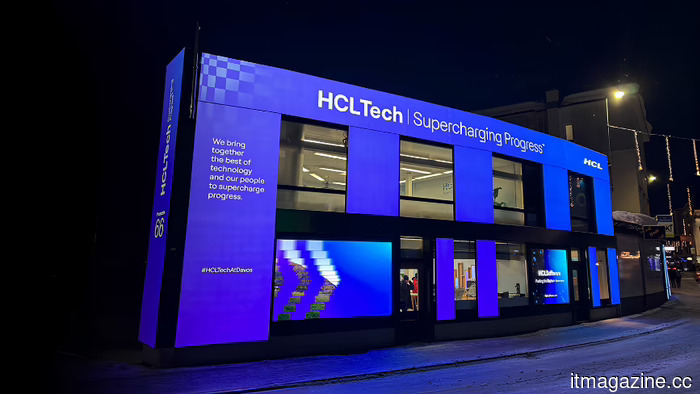 HCLTech secures a $1.14 billion contract with a European company, marking its largest deal since 2023.
India's HCLTech has secured a $1.14 billion digital transformation agreement with a confidential Fortune Global 50 company based in Europe, marking its biggest victory since the Verizon contract in 2023.
HCLTech secures a $1.14 billion contract with a European company, marking its largest deal since 2023.
India's HCLTech has secured a $1.14 billion digital transformation agreement with a confidential Fortune Global 50 company based in Europe, marking its biggest victory since the Verizon contract in 2023.
 Intel might reintroduce older desktop CPUs due to the rising costs of DDR5.
Intel is allegedly resuming the production of older Core CPUs due to the rising prices of DDR5, making it more difficult to justify new gaming PC builds.
Intel might reintroduce older desktop CPUs due to the rising costs of DDR5.
Intel is allegedly resuming the production of older Core CPUs due to the rising prices of DDR5, making it more difficult to justify new gaming PC builds.
 An EU lawmaker who looked into the misuse of spyware was targeted and hacked using Pegasus.
Citizen Lab reports that former MEP Stelios Kouloglou, who participated in the EU's inquiry into spyware, was targeted with NSO Group's Pegasus during the course of the investigation.
An EU lawmaker who looked into the misuse of spyware was targeted and hacked using Pegasus.
Citizen Lab reports that former MEP Stelios Kouloglou, who participated in the EU's inquiry into spyware, was targeted with NSO Group's Pegasus during the course of the investigation.
 Intel might reintroduce older desktop CPUs due to the rising costs of DDR5.
Intel is said to be resuming production of its older Core CPUs, as the rising costs of DDR5 make it more challenging to justify new gaming PC builds.
Intel might reintroduce older desktop CPUs due to the rising costs of DDR5.
Intel is said to be resuming production of its older Core CPUs, as the rising costs of DDR5 make it more challenging to justify new gaming PC builds.
 If these leaks are accurate, the Galaxy Z Fold 8 Wide might resolve the main issue with the Fold.
Recent leaks of the Galaxy Z Fold 8 reveal a graphite-colored dummy model, along with a comparison to the Galaxy S26 Ultra. These unveilings suggest that Samsung's upcoming foldable device may offer a more traditional smartphone experience when closed.
If these leaks are accurate, the Galaxy Z Fold 8 Wide might resolve the main issue with the Fold.
Recent leaks of the Galaxy Z Fold 8 reveal a graphite-colored dummy model, along with a comparison to the Galaxy S26 Ultra. These unveilings suggest that Samsung's upcoming foldable device may offer a more traditional smartphone experience when closed.
 An EU legislator who looked into the misuse of spyware was targeted and hacked using Pegasus.
According to Citizen Lab, Stelios Kouloglou, a former Member of the European Parliament who participated in the EU's spyware investigation, was targeted by NSO Group's Pegasus malware during the course of the inquiry.
An EU legislator who looked into the misuse of spyware was targeted and hacked using Pegasus.
According to Citizen Lab, Stelios Kouloglou, a former Member of the European Parliament who participated in the EU's spyware investigation, was targeted by NSO Group's Pegasus malware during the course of the inquiry.
Zuckerberg states that the advancement of Meta’s AI agents is lagging behind expectations.
Mark Zuckerberg informed Meta employees that the progress of agentic AI has not advanced as anticipated, four months following a significant restructuring of the company's AI department.