

Sony is contributing to the decline of physical games, while the responsibility for preservation is being left to address the fallout.
A projected cutoff of 2028 for PS5 discs presents the industry with a deadline it still seems ill-prepared to confront.
Sony's reported intention to cease the production of PS5 discs by 2028 would lead PlayStation further into a digital-centric future, where access hinges on licenses, storefront policies, and the long-term viability of platform support—which tends to fall short of company promises.
This situation is convenient for Sony but detrimental to the preservation of games. While physical media has never been a flawless archive, eliminating it before a reliable alternative exists places the responsibility of preserving old games on others. This also raises concerns about long-term ownership, rights to resell, and the certainty that players’ purchases will remain accessible over decades.
Discs still hold significance
Discs may be bulky, prone to scratches, and can easily be oversold, yet they provide a crucial element of tangibility outside of digital storefronts, which is precisely why they still matter. A physical copy on a shelf can be borrowed, resold, and remembered even after an online store disappears.
A fully digital future for PlayStation diminishes that security. As hardware becomes sleeker and purchases simplify, platform holders gain increased control over what remains accessible post-launch. Convenience is appealing until it starts resembling a form of permission, especially when access can be revoked or modified without notice.
The missing legal framework
Frank Cifaldi, director of the Video Game History Foundation, has candidly highlighted this inadequacy. If companies eliminate physical media and older storefronts, legal mechanisms must exist to allow archives to preserve digital-only games for research purposes.
That framework is still lacking. While the industry may publicly champion preservation, those sentiments ring hollow when trade associations resist changes that could enable cultural institutions to bypass digital locks for historical access. In the absence of a legal avenue, unofficial preservation efforts seem less like acts of defiance and more like essential damage control, helping to cover gaps left by corporate policies.
Who will address the aftermath of Sony's decision?
Sony doesn’t have to resolve every issue related to preservation on its own, yet it cannot simply extricate discs from the ecosystem and ignore the fact that the responsibility will fall on archivists, museums, libraries, collectors, and especially gamers.
If Sony adheres to the PS5 disc cutoff, 2028 will signify more than just a hardware cutoff; it will test whether platform owners can provide more than just corporate assurances. Until that happens, the least favorable preservation methods will continue to appear as the only viable solutions.
Paulo Vargas is an English major turned reporter turned technical writer, with a career that has consistently revolved around...
PS Plus introduces Modern Warfare III in July, alongside two games worth exploring
The unremarkable Call of Duty campaign comes bundled with remastered multiplayer maps, alongside For the King II and CrossCode.
PlayStation Plus subscribers will have access to a fresh lineup beginning July 7, featuring Sony's most significant addition in the Monthly Games slot recently. Call of Duty: Modern Warfare III headlines this month's offerings, complemented by the co-op fantasy RPG For the King II and the retro-style action RPG CrossCode. All titles will be accessible on both PS5 and PS4 until August 3.
A blockbuster with a troubled past
Cinder City demands 64GB of RAM, with its other PC specifications adding to its eccentricity
Remember when 16GB of RAM was considered sufficient?
For years, PC gamers have humorously remarked that developers treat hardware specifications like a shopping list. Cinder City seems to have taken that joke too far, as its newly posted recommended PC specifications call for an astonishing 64GB of RAM—an eyebrow-raising number given that the rest of the requirements appear relatively standard.
64GB of RAM paired with an RTX 4060?
Xbox may allow users to digitize their game discs, and the timing is quite fitting
Sony offered no assistance to disc owners, but Microsoft’s Disc2Digital might serve as just that.
Earlier today, Sony revealed that it will halt the production of physical game discs for new PlayStation titles starting January 2028. It seems that Microsoft is also moving in a similar direction but with a more consumer-advantageous approach: Xbox users may not need to abandon their disc collections.
According to Tom Warren from The Verge, Microsoft has been discreetly developing a disc-to-digital feature for Xbox, referred to internally as Disc2Digital, which allows players to convert their physical games into permanent digital licenses.





Other articles
 SoftBank reintroduces its $10 billion loan supported by OpenAI, offering new incentives to lenders.
SoftBank has resumed discussions for a $10 billion loan secured by its stake in OpenAI, providing banks with a corporate guarantee following the halt of a previous arrangement.
SoftBank reintroduces its $10 billion loan supported by OpenAI, offering new incentives to lenders.
SoftBank has resumed discussions for a $10 billion loan secured by its stake in OpenAI, providing banks with a corporate guarantee following the halt of a previous arrangement.
 Raja Koduri’s Oxmiq has secured $35 million to lease AI chip design rather than selling the chips outright.
Oxmiq Labs has secured a $35 million Series A funding round to expand OxCore, a licensable GPU architecture designed to reduce the expense of developing custom AI silicon.
Raja Koduri’s Oxmiq has secured $35 million to lease AI chip design rather than selling the chips outright.
Oxmiq Labs has secured a $35 million Series A funding round to expand OxCore, a licensable GPU architecture designed to reduce the expense of developing custom AI silicon.
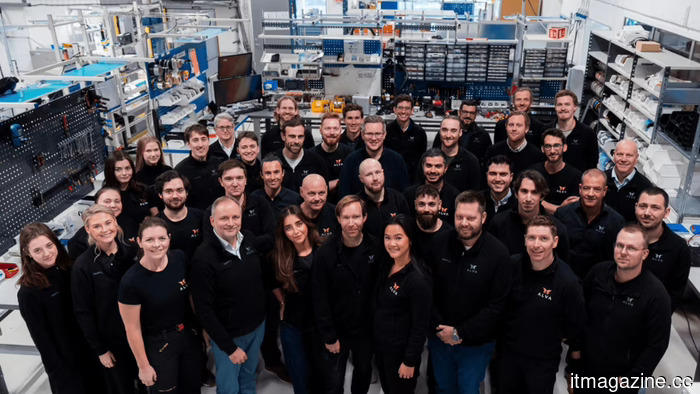 Alva Industries secures €16 million to expand its ultra-compact electric motor production.
Alva Industries in Trondheim has secured €16 million in funding, with Nysnø, Sandwater, and Emerald Technology Ventures leading the investment to enhance its FiberPrinting motor technology.
Alva Industries secures €16 million to expand its ultra-compact electric motor production.
Alva Industries in Trondheim has secured €16 million in funding, with Nysnø, Sandwater, and Emerald Technology Ventures leading the investment to enhance its FiberPrinting motor technology.
 UNICEF reports that children are embracing AI at a rate three times quicker than that of adults.
UNICEF reports that 20 million children in 10 countries have utilized AI, embracing it at more than triple the speed of adults, and cautions that regulations for child safety are lagging behind.
UNICEF reports that children are embracing AI at a rate three times quicker than that of adults.
UNICEF reports that 20 million children in 10 countries have utilized AI, embracing it at more than triple the speed of adults, and cautions that regulations for child safety are lagging behind.
 The "Technopark" presented the QYRON SM601 granita machine for slush and desserts.
A new "summer" device has appeared in the "Technopark" store chain - the QYRON SM601 granita maker for preparing slushies, chilled drinks, soft ice cream, and desserts at home.
The "Technopark" presented the QYRON SM601 granita machine for slush and desserts.
A new "summer" device has appeared in the "Technopark" store chain - the QYRON SM601 granita maker for preparing slushies, chilled drinks, soft ice cream, and desserts at home.
 Novo Nordisk's owner supports an Italian fund to expand drug startups outside of Denmark.
Novo Holdings, the €93 billion investor associated with Novo Nordisk, is supporting a fund focused on Italian pharmaceutical startups, thereby expanding its influence beyond Denmark.
Novo Nordisk's owner supports an Italian fund to expand drug startups outside of Denmark.
Novo Holdings, the €93 billion investor associated with Novo Nordisk, is supporting a fund focused on Italian pharmaceutical startups, thereby expanding its influence beyond Denmark.
Sony is contributing to the decline of physical games, while the responsibility for preservation is being left to address the fallout.
Sony's announced plan to cease production of PS5 disc models by 2028 would further entrench PlayStation in digital licensing, leaving those who advocate for preservation to navigate issues that the industry has yet to adequately address.