

Meta intends to lease its excess AI computing power, and Wall Street is in favor of the concept.
A proposed plan to sell excess computing power could position Meta in competition with AWS, Google Cloud, and Azure, providing investors with a reason to overlook its expenditures. Meta has dedicated the past two years to acquiring every available AI computing resource. It now seems to be exploring avenues to resell some of that capacity.
According to a Bloomberg report on Wednesday, which referenced sources familiar with the situation, the company is developing a cloud business to offload surplus AI capacity, and investors reacted positively to this news after a prolonged period of concern regarding Meta's spending and potential returns.
The plans are still in their early stages and may evolve, as stated in the report. Meta is reportedly considering the specifics of the offering instead of whether or not to proceed. One possibility involves selling access to AI models hosted on its infrastructure, similar to how Amazon’s Bedrock operates.
Another option would be to sell raw computing capacity, a model that emerging cloud providers like CoreWeave have successfully utilized. Either approach would bring Meta into direct competition with Amazon Web Services, Google Cloud, and Microsoft Azure, the dominant players in the market it aims to enter.
This initiative is being organized under a new entity named Meta Compute, led by Santosh Janardhan, the company's head of infrastructure, along with Meta Superintelligence Labs member Daniel Gross and Meta president Dina Powell McCormick. The rationale is clear.
Meta has indicated a capital expenditure of $115 billion to $135 billion by 2026, a significant investment in chips, land, and power. Establishing a cloud business is one of the few methods to convert idle capacity from that investment into revenue rather than incurring a sunk cost.
The market responded positively to this insight. Meta's shares increased by over 10% following the report, a considerable rise for a stock that had performed poorly, decreasing nearly 15% as of the previous day and lagging behind the S&P 500 amid concerns about its AI expenditure.
The prospect of generating revenue from its infrastructure, even if still hypothetical, appears to have shifted investor sentiment. Meta is not the first to recognize this opportunity; SpaceX has been renting excess capacity from xAI’s Memphis data center to Anthropic, a partnership that Bloomberg Intelligence estimates could yield over $50 billion by 2028 and $100 billion by 2030.
A familiar trend is emerging in the industry: companies are building significantly more computing capacity than they can currently utilize, banking on future needs, and renting out the surplus to offset costs in the meantime.
For Meta, the surplus is tangible and expanding. The company boasts a 2,250-acre hyperscale campus in Louisiana, is constructing a gigawatt-scale data center in the Midwest, and has layered additional external agreements, including new capacity from Crusoe worth approximately 1.6 gigawatts across two locations.
This increasing demand has encountered limitations elsewhere, as evidenced by Google recently limiting Meta’s access to its Gemini models due to its inability to allocate sufficient compute resources.
It’s somewhat ironic that a company currently in need of computing power is now considering selling it, highlighting the unevenness in this expansion process. Capacity is delivered in large, indivisible segments, scheduled based on forecasts rather than actual demand, leading even the most voracious buyers to hold more than they can immediately deploy.
Selling the excess is the strategy that emerging cloud providers, and now seemingly their clients, intend to use to make the math work. Deals such as Jane Street’s $6 billion contract with CoreWeave illustrate the substantial funds flowing through this segment.
As it stands, this remains a report rather than a confirmed product. Meta has not validated the plan, and no details regarding pricing or launch timing have emerged, with sources emphasizing that the strategy may still evolve. What remains clear is the motivation.
When over $100 billion a year is committed to infrastructure, finding buyers for unused capacity transitions from being a secondary concern to an essential task.
Other articles
 Sony will cease the production of physical PlayStation game discs in January 2028.
Sony has declared that it will cease physical disc production for new PlayStation games beginning in January 2028, as digital downloads currently make up 85 percent of sales.
Sony will cease the production of physical PlayStation game discs in January 2028.
Sony has declared that it will cease physical disc production for new PlayStation games beginning in January 2028, as digital downloads currently make up 85 percent of sales.
 Pie has secured $19.5 million to enhance the visibility of small businesses in AI search.
Pie has secured $19.5 million in funding, led by Lightspeed, to assist small businesses in being discovered on ChatGPT, Google Maps, and Yelp, as well as to manage their phone calls using AI.
Pie has secured $19.5 million to enhance the visibility of small businesses in AI search.
Pie has secured $19.5 million in funding, led by Lightspeed, to assist small businesses in being discovered on ChatGPT, Google Maps, and Yelp, as well as to manage their phone calls using AI.
 Sony will cease the production of physical PlayStation game discs in January 2028.
Sony has declared that it will cease the production of physical discs for new PlayStation games beginning in January 2028, as digital downloads represent 85 percent of sales.
Sony will cease the production of physical PlayStation game discs in January 2028.
Sony has declared that it will cease the production of physical discs for new PlayStation games beginning in January 2028, as digital downloads represent 85 percent of sales.
 Microsoft seems to have moved on from the appeal of small Windows tablets. Long live the Surface Go!
Microsoft has allegedly ceased the production of Surface Go and Surface Laptop Go devices, with only Surface Pro and Surface Laptop remaining as the company's active Surface PC lines.
Microsoft seems to have moved on from the appeal of small Windows tablets. Long live the Surface Go!
Microsoft has allegedly ceased the production of Surface Go and Surface Laptop Go devices, with only Surface Pro and Surface Laptop remaining as the company's active Surface PC lines.
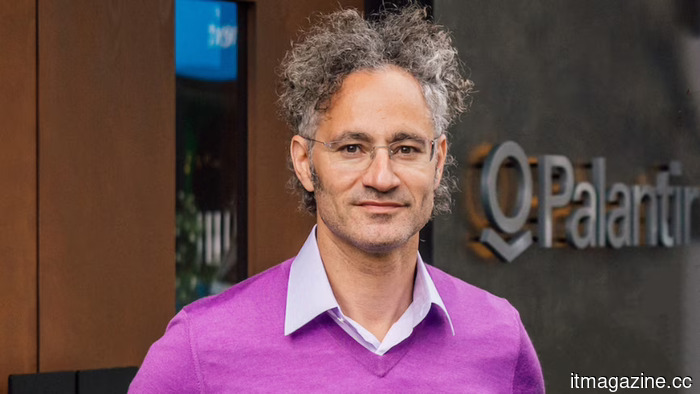 Palantir's manifesto on 'AI sovereignty' targets the laboratories.
Palantir's post on 'AI sovereignty,' which outlines nine key points, advises institutions to take ownership of their data and weights while discouraging 'tokenmaxxing' — a principle that effectively promotes Palantir's offerings.
Palantir's manifesto on 'AI sovereignty' targets the laboratories.
Palantir's post on 'AI sovereignty,' which outlines nine key points, advises institutions to take ownership of their data and weights while discouraging 'tokenmaxxing' — a principle that effectively promotes Palantir's offerings.
 UiPath's stock prices increase as Wall Street shows a positive response to its shift towards AI agents.
UiPath's shares have recovered from a significant decline in 2026 following the automation company's announcement of its first GAAP profit and its shift towards AI agents.
UiPath's stock prices increase as Wall Street shows a positive response to its shift towards AI agents.
UiPath's shares have recovered from a significant decline in 2026 following the automation company's announcement of its first GAAP profit and its shift towards AI agents.
Meta intends to lease its excess AI computing power, and Wall Street is in favor of the concept.
According to Bloomberg, Meta is developing a cloud business to market surplus AI computing resources, a strategy that would put it in competition with AWS, Google, and Azure.