
Honda begins production of batteries for data centers at a factory initially constructed for electric vehicles that was later scrapped.
Honda has started producing energy storage batteries at its facility in Ohio, transitioning from the cancelled EV program that resulted in a $16 billion write-down. The factory, which was initially set up to provide cells for electric vehicles that were scrapped three months ago, will now supply batteries to data centers instead of households.
This change follows Honda's March decision to cancel three electric vehicles for the U.S. market, an action that led to significant financial losses for the company. Honda operates the Ohio plant as part of a joint venture with LG Energy Solution, although it purchased LG’s share of the facility for nearly $3 billion late last year.
This shift comes amid disappointing demand for electric vehicles in the United States. The federal tax credit for new EVs expired last September after being eliminated by Congress, leading to a year-over-year decline in sales as consumers who rushed to make purchases to benefit from the credit left a gap in demand.
Honda is not alone in redirecting battery production towards stationary storage. Ford established a new subsidiary called Ford Energy in May, investing $2 billion to create large-scale storage systems in a repurposed plant in Kentucky. General Motors also announced three partnerships focused on energy storage this month, including a sodium-ion battery development collaboration with Peak Energy. Tesla, which was a pioneer in this sector with its Megapack, reportedly achieves gross margins of about 30% on energy storage, roughly double the profit from its vehicle sales.
The market for stationary battery storage is rapidly expanding. According to SEIA and Benchmark Minerals, U.S. installations reached a record of nearly 10 gigawatt-hours in the first quarter of 2026, reflecting a 32% year-over-year increase. This capacity is equivalent to that required for approximately 120,000 electric vehicles.
Growth is anticipated to accelerate, with SEIA forecasting that annual installations will hit 110 gigawatt-hours by the end of the decade, nearly tripling the current rate. While much of this demand is fueled by data centers, a significant portion also comes from grid operators who utilize batteries to stabilize power supplies and support wind and solar energy production.
For Honda, the strategic reasoning is clear: after investing billions in battery manufacturing for an electric vehicle program it has since abandoned, stationary storage presents an opportunity to keep production lines operational while the U.S. EV market stabilizes. However, whether Honda can remain competitive in a space where Tesla, Ford, and GM have already established themselves is an open question.
Other articles
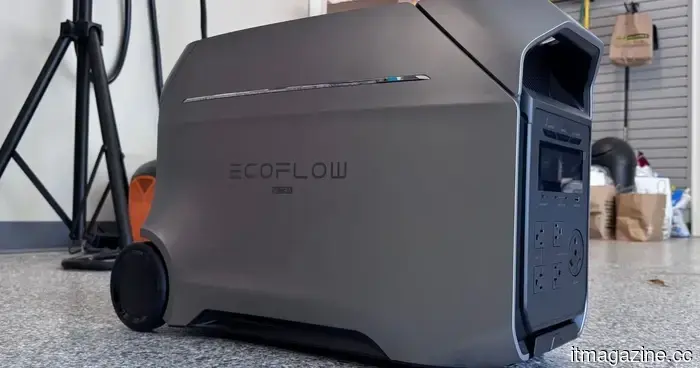 EcoFlow DELTA 3 Ultra Plus Review: Where Portability Combines with Remarkable Power
Brief Overview The EcoFlow DELTA 3 Ultra Plus is a robust portable power station designed for homeowners seeking dependable emergency backup without the need for a fixed whole-home battery system. Featuring a 3,072Wh LFP battery, a continuous inverter output of 3,600W, and the capacity to expand up to 11kWh with extra battery packs, it strikes an ideal balance. [...]
EcoFlow DELTA 3 Ultra Plus Review: Where Portability Combines with Remarkable Power
Brief Overview The EcoFlow DELTA 3 Ultra Plus is a robust portable power station designed for homeowners seeking dependable emergency backup without the need for a fixed whole-home battery system. Featuring a 3,072Wh LFP battery, a continuous inverter output of 3,600W, and the capacity to expand up to 11kWh with extra battery packs, it strikes an ideal balance. [...]
 Cambridge experts have discovered an incredibly straightforward solution for extending the lifespan of EV batteries: simply apply some pressure to them.
Researchers at Cambridge discovered that applying the correct constant pressure to lithium-ion battery cells could extend their lifespan by twofold without altering the chemistry.
Cambridge experts have discovered an incredibly straightforward solution for extending the lifespan of EV batteries: simply apply some pressure to them.
Researchers at Cambridge discovered that applying the correct constant pressure to lithium-ion battery cells could extend their lifespan by twofold without altering the chemistry.
 Honda is now producing batteries for data centers at a factory originally intended for electric vehicles that was later canceled.
Honda has started manufacturing energy storage batteries at an Ohio facility that was initially constructed for electric vehicles, which the company abandoned three months ago following a $16 billion loss.
Honda is now producing batteries for data centers at a factory originally intended for electric vehicles that was later canceled.
Honda has started manufacturing energy storage batteries at an Ohio facility that was initially constructed for electric vehicles, which the company abandoned three months ago following a $16 billion loss.
 Sony ends physical PlayStation games. The disc era is over for Team Blue.
Physical PlayStation discs will face a firm deadline: January 2028. Following that date, all new games will be exclusively digital, available both on the PlayStation Store and in retail.
Sony ends physical PlayStation games. The disc era is over for Team Blue.
Physical PlayStation discs will face a firm deadline: January 2028. Following that date, all new games will be exclusively digital, available both on the PlayStation Store and in retail.
 Acer's 1,000Hz gaming monitor exists, comes with a high price tag, and is currently awaiting a release date.
Acer's 1,000Hz gaming monitor is available on Amazon for $699.99, but it is currently out of stock, and using its fastest mode necessitates a significant reduction in resolution from QHD to 720p.
Acer's 1,000Hz gaming monitor exists, comes with a high price tag, and is currently awaiting a release date.
Acer's 1,000Hz gaming monitor is available on Amazon for $699.99, but it is currently out of stock, and using its fastest mode necessitates a significant reduction in resolution from QHD to 720p.
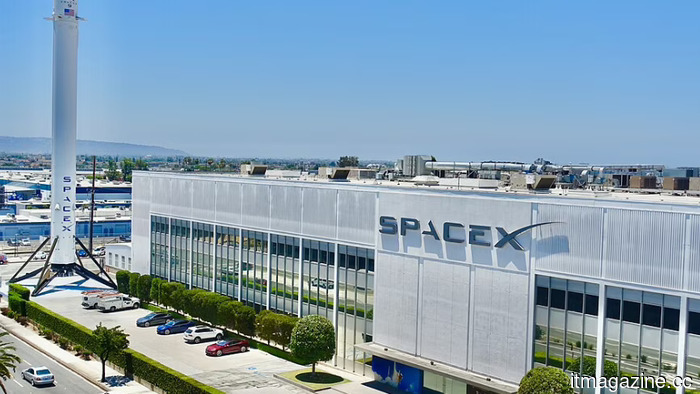 Reports indicate that SpaceX presented an AI device prototype to investors; however, Musk claims that the report is untrue.
The WSJ reports that SpaceX presented investors with a sleek AI prototype resembling a handset, which is thinner than an iPhone. Musk labeled the report as "completely false" on X.
Reports indicate that SpaceX presented an AI device prototype to investors; however, Musk claims that the report is untrue.
The WSJ reports that SpaceX presented investors with a sleek AI prototype resembling a handset, which is thinner than an iPhone. Musk labeled the report as "completely false" on X.
Honda begins production of batteries for data centers at a factory initially constructed for electric vehicles that was later scrapped.
Honda has started manufacturing energy storage batteries at an Ohio facility that was initially constructed for electric vehicles, which the company abandoned three months ago after incurring a $16 billion loss.