

Cross-border payroll: the $200 billion shortfall lacking infrastructure
Each year, over $200 billion in wages from employers crosses international borders. This money is processed through a mix of local banks, regional payroll providers, and manual compliance procedures. Anyone involved in international payments back in 2005 would recognize this system. Although the scale has increased, the underlying mechanisms remain unchanged.
This is not a trivial inefficiency; it represents a structural flaw in the functioning of the global economy. While financial markets have exchanges and trade benefits from clearing houses, cross-border payroll—despite its size and growth—has neither structures in place.
The overlooked issue at fintech conferences
Most discussions about global hiring emphasize the initial stages: sourcing talent, signing contracts, and establishing onboarding processes. These are genuine challenges, leading to the rise of a whole category of employer of record (EOR) platforms designed to tackle them. Business Research Insights forecasts that the global EOR market will grow from $5.97 billion this year to $10.45 billion by 2035.
The latter stages have received much less focus. The complexities of transferring money across borders, which include local tax withholding, mandatory deductions, and regulatory reporting in each country, present significant challenges. Typically, companies rely on three or four different vendors to manage this, with each one covering a portion of the process. No single entity oversees the complete workflow.
The outcome is predictable: delayed payments, compliance issues, difficulties with reconciliation, and a structural advantage for larger multinationals with specialized treasury departments. Smaller firms, which represent the majority of the growth in cross-border hiring—up 25% year-on-year since 2023—must manage this fragmented system independently.
Multiplier’s vision: creating the exchange rather than just the product
Based in Singapore, Multiplier has dedicated six years to developing what they call the Global Exchange for Work. This concept serves as an infrastructure layer that connects companies, talent, and countries through owned legal entities, proprietary compliance systems, and integrated payments.
The use of the term "exchange" is intentional. Just like a stock exchange provides the necessary framework, rules, and settlement methods for financial transactions, Multiplier aspires to be the equivalent for cross-border employment: producing contracts, calculating payroll, withholding taxes, and delivering wages all within one unified system.
The company has established its own legal entities in more than 160 countries instead of relying on local partners. This distinction is crucial for compliance accountability. If issues arise with a tax filing in Germany or a benefits calculation in Brazil, Multiplier is the responsible entity—unlike a distant third-party intermediary disconnected from the hiring company.
Filling the payment gap
In April 2026, Multiplier introduced Global Payroll Payments, in partnership with the London-based fintech Navro. This collaboration addresses the final aspect of their infrastructure: money transfer.
What makes this integration significant extends beyond payroll payments. Navro’s Statutory & Tax service takes care of all mandatory tax deductions, statutory payments, and regulatory reporting in sync with payroll distributions in a single payment flow, reportedly covering 95 countries.
Previously, businesses using EOR platforms for hiring still had to use separate systems for payments, generating payroll in one platform while initiating payments in another and reconciling them manually. Multiplier argues that this separation leads to the very issues the EOR model aimed to solve: payment delays, discrepancy in deductions, and compliance drift.
Sagar Khatri, the CEO of Multiplier, describes this launch as the element that "completes the exchange." Whether this concept will prove effective as it scales remains to be seen, but the ambition is unmistakable: a single platform and a unified workflow from contract to payment.
Growth and scrutiny
The figures indicate that this infrastructure is gaining momentum. Multiplier processes $2 billion in global wages annually, with this amount doubling every year. More than 2,700 companies utilize the platform. The company has achieved IEC Leader status in EOR for 2026, ranking it among the top three platforms globally.
Multiplier has also enhanced its operational capabilities. In January, the company named Kate Walsh, formerly with HubSpot and Klaviyo, as the Chief Customer Officer, and Amanda Frayne as the Chief Legal & Compliance Officer. These appointments highlight a commitment to the operational maturity that enterprise clients expect.
This is vital because the EOR sector is facing its own test of credibility. Adoption has surged, with 41% of distributed teams now using an EOR and another 49% planning to start. Concerns about compliance quality, hidden fees, and vendor accountability are becoming more pronounced. Directly operating the payment and compliance infrastructure, rather than reselling, addresses some of these issues.
The European perspective
The infrastructure gap in cross-border payroll is particularly pronounced for European firms. The EU’s single market simplifies selling across borders but complicates employment. Each member state has distinct employment laws, tax systems, and social contribution requirements. A company in the Netherlands hiring a developer in Portugal and a sales leader in
Other articles
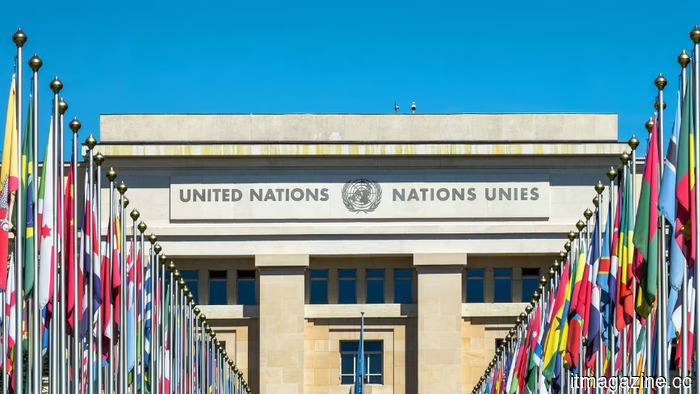 The UN's inaugural global panel on AI science cautions that the opportunity to regulate the technology is diminishing.
The UN’s Independent International Scientific Panel on AI reports that two nations possess 90% of the top computing power, and the opportunity to regulate AI is diminishing.
The UN's inaugural global panel on AI science cautions that the opportunity to regulate the technology is diminishing.
The UN’s Independent International Scientific Panel on AI reports that two nations possess 90% of the top computing power, and the opportunity to regulate AI is diminishing.
 Anthropic has reinstated Claude Fable 5, but users will face a temporary usage restriction.
Anthropic will be re-enabling access to Claude Fable 5 worldwide on July 1, following a directive from the US government that required it to withdraw the model from all users for several weeks.
Anthropic has reinstated Claude Fable 5, but users will face a temporary usage restriction.
Anthropic will be re-enabling access to Claude Fable 5 worldwide on July 1, following a directive from the US government that required it to withdraw the model from all users for several weeks.
 Meta will start charging for the top AI feature available on its smart glasses, and there's a limit even if you opt to pay.
Meta has limited the free usage of Conversation Focus, the feature of Ray-Ban Meta glasses that enhances a speaker's voice in noisy environments, to three hours per month. To access additional time, users must subscribe to the $19.99 monthly Meta One Premium plan.
Meta will start charging for the top AI feature available on its smart glasses, and there's a limit even if you opt to pay.
Meta has limited the free usage of Conversation Focus, the feature of Ray-Ban Meta glasses that enhances a speaker's voice in noisy environments, to three hours per month. To access additional time, users must subscribe to the $19.99 monthly Meta One Premium plan.
 This $249 LED sign aims to improve your work-life balance.
The Busy Bar display is set to hit the market in July. It appears to be incredibly efficient, but the price of $249 is simply too high.
This $249 LED sign aims to improve your work-life balance.
The Busy Bar display is set to hit the market in July. It appears to be incredibly efficient, but the price of $249 is simply too high.
 Huawei's slimmest flagship tablet is now available for purchase in Europe.
Huawei has commenced sales of the MatePad Pro Max in Germany, offering its ultra-slim flagship tablet alongside complimentary accessories, an extended warranty, and software aimed at enhancing productivity.
TikTok is considering an additional 300 job reductions at its Dublin location.
TikTok is considering approximately 300 job cuts at its Dublin location, which represents about 10% of the local workforce, a year following a comparable reduction.
Huawei's slimmest flagship tablet is now available for purchase in Europe.
Huawei has commenced sales of the MatePad Pro Max in Germany, offering its ultra-slim flagship tablet alongside complimentary accessories, an extended warranty, and software aimed at enhancing productivity.
TikTok is considering an additional 300 job reductions at its Dublin location.
TikTok is considering approximately 300 job cuts at its Dublin location, which represents about 10% of the local workforce, a year following a comparable reduction.
Cross-border payroll: the $200 billion shortfall lacking infrastructure
Annually, over $200 billion is involved in cross-border payroll transfers without a unified system. Multiplier is creating the platform to address this issue.