
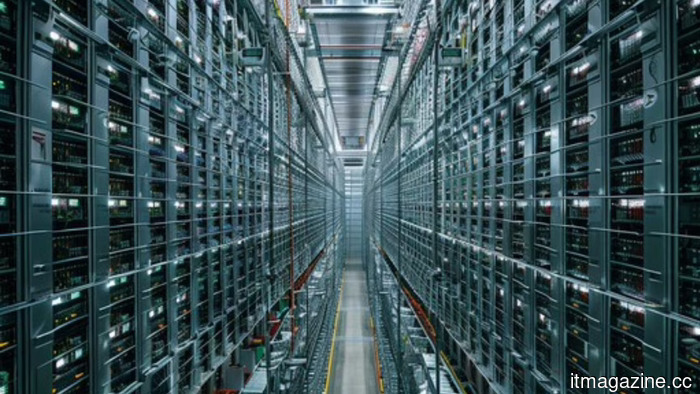
Constructing AI Infrastructure Responsibly: ER Steel on the Changing Needs of Data Center Growth
As demand for AI-driven data centers is projected to double global capacity by 2030, ER Steel argues that responsible infrastructure hinges on coordinated construction, modular fabrication, energy diversification, and environmental stewardship rather than just speed. The swift growth of AI infrastructure has ushered data centers into a new era of global expansion, highlighting the increasing focus on computing power, digital capacity, and deployment speed. In this context, ER Steel emphasizes the importance of constructing and powering these facilities in a responsible and efficient manner while ensuring long-term operational resilience. As a global fabricator of structural steel and building systems, ER Steel sees this moment as a chance to rethink the coordination of large-scale infrastructure from design through to delivery.
The demand for AI-related infrastructure is ramping up as cloud computing, machine learning, and digital services proliferate across various sectors. A global data center market outlook report indicates that almost 100 gigawatts of new capacity could be operational between 2026 and 2030, effectively doubling global capacity during that timeframe. Furthermore, it suggests that AI workloads might account for half of all data center activity by 2030, sustaining the need for new facilities and regional deployments.
Scott Dunlop, President of ER Steel, notes that this rapid growth has heightened discussions about construction capacity, utility access, and infrastructure readiness in planning processes. He believes the challenge extends beyond just building quickly. “The dialogue around AI infrastructure often starts with computing demand, but the real complexity arises from issues of power access, construction coordination, and long-term operational planning. These factors determine whether a project operates responsibly and efficiently long after it is commissioned,” he states.
ER Steel observes that this complexity is evident across various major data center markets, where robust investor interest is often moderated by interconnection delays, shifting permitting timelines, and fragmented supply chains that can affect project delivery. The company reports that these challenges are becoming more prominent, as grid connection waiting periods in key markets now exceed four years, leading developers to consider alternative energy strategies, battery storage solutions, and modular deployment methods to keep projects on track.
These constraints have also contributed to rising construction costs, with average global build costs escalating from $7.7 million to $10.7 million per megawatt from 2020 to 2025. As the scale and complexity of facilities increase, project teams are placing a greater emphasis on predictability in the areas of procurement, fabrication, logistics, and installation.
ER Steel’s operational model emphasizes coordination. By integrating engineering, fabrication, logistics, and project management within a single management structure, the company aims to minimize communication gaps that often arise when multiple contractors operate independently on large infrastructure projects. This integrated approach allows project teams to align fabrication sequences and site deliveries with installation schedules, ensuring continuity throughout the execution phases.
Lloyd Kamlade, COO of ER Steel, asserts that consistency across various disciplines leads to better project outcomes. “Infrastructure projects involve a multitude of components, and each decision impacts another phase of the build,” he explains. “When engineering, fabrication, logistics, and field coordination function within the same framework, teams can achieve a clearer understanding of timelines, sequencing, and site conditions before issues escalate.”
This visibility, ER Steel points out, is crucial in the current climate. An analysis of the global trade impacts of the AI infrastructure surge highlighted that the increase in data center construction has significantly heightened demand for essential materials, industrial equipment, and semiconductor-related inputs. The report also noted that AI-related investments have played a substantial role in merchandise trade growth during early 2025, showcasing the breadth and global scope of the ongoing infrastructure expansion.
As projects advance, ER Steel observes a shift in industry discussions towards how facilities are constructed, rather than simply focusing on how quickly they can be completed. Dunlop emphasizes that effective long-term infrastructure planning involves balancing urgency with disciplined execution. “There’s immense pressure to shorten schedules,” he states. “However, successful projects hinge on establishing efficiencies through planning, coordination, and design integration, enabling teams to progress throughout the construction cycle.”
This philosophy has shaped ER Steel’s approach to modular construction and integrated fabrication systems. By manufacturing critical structural components in controlled environments prior to delivery to the site, modular techniques enhance speed to market, improve quality, and streamline installation timelines while allowing project teams to oversee quality assurance earlier in the process. These systems also provide flexibility for future expansions as computing demands continue to change.
According to ER Steel, the topic of energy sourcing is increasingly relevant. Data centers need significant electricity capacity while many areas are still addressing transmission constraints and utility limitations. Developers are exploring diverse energy strategies that encompass on-site generation, battery storage, renewable integration, and private power agreements to meet future demand.
In addition to technical considerations, ER Steel underscores that environmental stewardship is crucial in infrastructure planning decisions. The company highlights that data centers require large-scale cooling systems and water management approaches, especially in regions facing resource scarcity. ER Steel believes that thoughtful design coordination is vital in ensuring facilities operate harmoniously with surrounding communities and infrastructure
Other articles
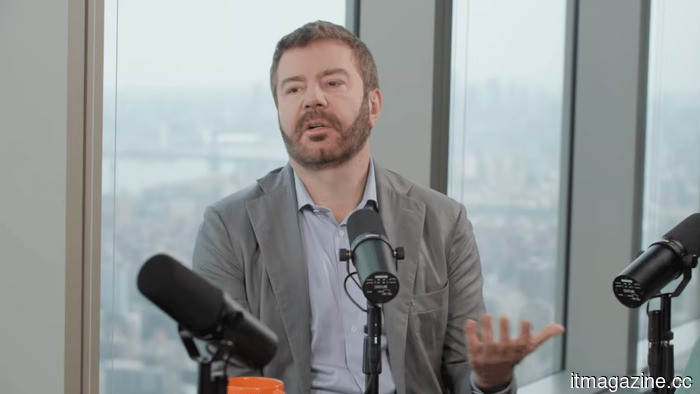 Daniel Dines from UiPath discusses AI, employment, and anxiety.
Daniel Dines from UiPath asserts that AI lacks taste, that agents are unable to quickly rectify disorganized processes, and that leaders who indiscriminately reduce staff are undermining value that they have never assessed.
Base44 introduces Base1, its proprietary AI model for vibe coding.
Base44 has introduced Base1, the inaugural proprietary AI model from a vibe-coding platform, banking on the idea that having its own model will lead to improved margins and a genuine competitive advantage.
Daniel Dines from UiPath discusses AI, employment, and anxiety.
Daniel Dines from UiPath asserts that AI lacks taste, that agents are unable to quickly rectify disorganized processes, and that leaders who indiscriminately reduce staff are undermining value that they have never assessed.
Base44 introduces Base1, its proprietary AI model for vibe coding.
Base44 has introduced Base1, the inaugural proprietary AI model from a vibe-coding platform, banking on the idea that having its own model will lead to improved margins and a genuine competitive advantage.
 Amazon's latest Fire Sticks are making sideloading outdated.
The transition to Amazon's Vega OS restricts typical sideloading on the Fire Stick, resulting in a more secure streaming device for users, but limits the availability of external apps, launchers, and customization options.
Amazon's latest Fire Sticks are making sideloading outdated.
The transition to Amazon's Vega OS restricts typical sideloading on the Fire Stick, resulting in a more secure streaming device for users, but limits the availability of external apps, launchers, and customization options.
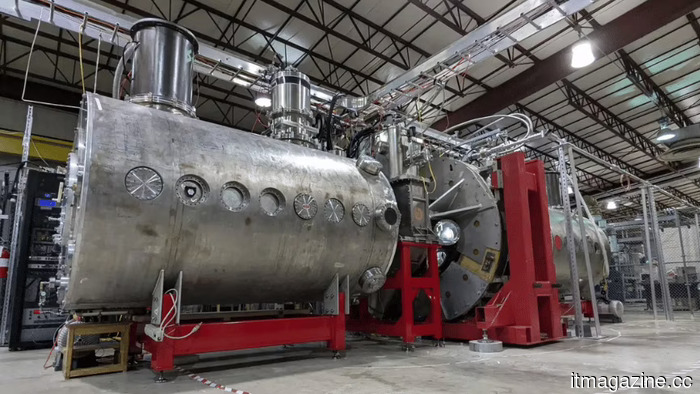 Realta Fusion drives a bulb directly from its reactor.
Realta Fusion claims to be the first commercial fusion company to generate electricity directly from its device. This is a proof of concept but has not yet achieved net power.
Realta Fusion drives a bulb directly from its reactor.
Realta Fusion claims to be the first commercial fusion company to generate electricity directly from its device. This is a proof of concept but has not yet achieved net power.
 Europe's cryptocurrency reformation is in progress as Venga becomes part of the initial group of firms approved under MiCA.
MiCA has reduced the number of registered crypto firms in Europe from 3,000 to only 244 authorized providers. Venga, based in Barcelona, meets the requirements, even as Binance scales back its EU services before the deadline.
Europe's cryptocurrency reformation is in progress as Venga becomes part of the initial group of firms approved under MiCA.
MiCA has reduced the number of registered crypto firms in Europe from 3,000 to only 244 authorized providers. Venga, based in Barcelona, meets the requirements, even as Binance scales back its EU services before the deadline.
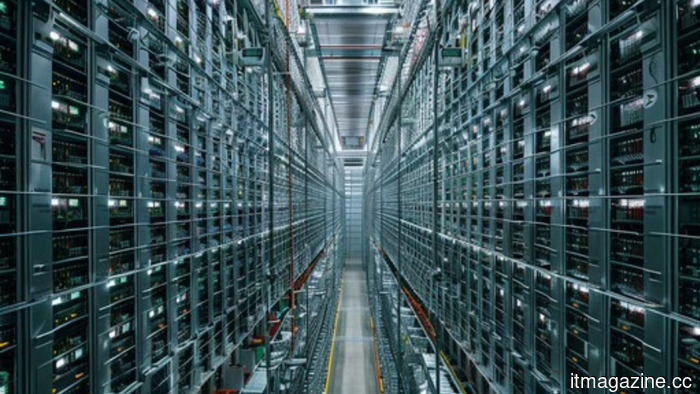 Constructing AI Infrastructure Ethically: ER Steel on the Changing Requirements of Data Center Growth
By 2030, almost 100 gigawatts of additional data center capacity could be available. ER Steel contends that the primary hurdles are not related to computing power but rather to the coordination of construction, access to the grid, and long-term operational strategies.
Constructing AI Infrastructure Ethically: ER Steel on the Changing Requirements of Data Center Growth
By 2030, almost 100 gigawatts of additional data center capacity could be available. ER Steel contends that the primary hurdles are not related to computing power but rather to the coordination of construction, access to the grid, and long-term operational strategies.
Constructing AI Infrastructure Responsibly: ER Steel on the Changing Needs of Data Center Growth
Close to 100 gigawatts of additional data center capacity may be available by 2030. ER Steel contends that the main obstacle lies not in computing power but rather in the coordination of construction, access to the grid, and planning for long-term operations.