
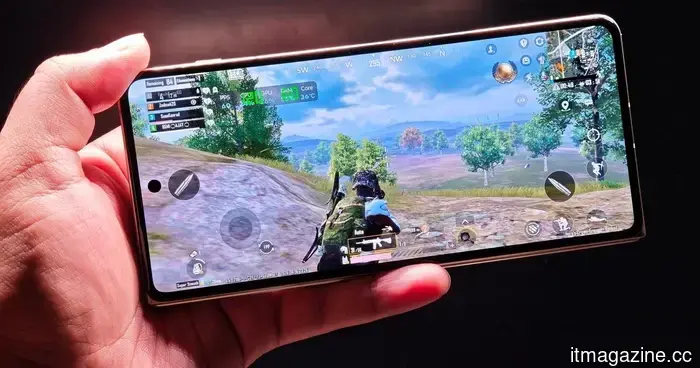
AI and vibe coding have led to an influx of new games, though they aren't necessarily of higher quality.
In a span of six months, 181,000 mobile games were released, yet major publishers continue to hold significant control over the market.
If you’ve noticed an influx of new games in your app store recently, it’s largely due to AI. According to ATTN Economy, 181,000 mobile games were launched in the six months leading up to May 2026, marking a 118% increase on iOS and a 73% increase on Android compared to the previous year.
This surge is attributed to vibe-coding, a rising trend that allows individuals with minimal or no coding skills to utilize AI tools to create and launch games without writing actual code. While the entry barriers have diminished, the benefits are still predominantly enjoyed by established players.
Why isn’t the boom in AI gaming benefiting indie developers?
Despite AI's ability to shorten development time, the productivity improvements are not as significant as anticipated. A former executive from the French mobile gaming company Voodoo mentioned to the Financial Times that AI reduced game development from approximately 14 days to 10 days, which is beneficial but not the transformative change the industry had anticipated.
Meanwhile, the top 1% of game publishers generated $75.6 billion in revenue in 2025, while the remaining 99% shared just $6.1 billion. This leading group also represented nearly 80% of global downloads. Although vibe-coding has simplified game development for newcomers, the larger gaming corporations still possess substantial financial resources, talent, and years of player data, making them difficult to surpass.
Gaming professionals and fans are growing skeptical of generative AI
The production of more games at a faster rate has come with repercussions. According to a GDC Festival of Gaming report, one in four gaming employees has lost their job in the last two years. Additionally, the sentiment in the industry has changed dramatically, with 52% of gaming professionals now perceiving generative AI as detrimental, a rise from just 18% in 2024.
While the gaming boom is tangible, so are the underlying tensions. AI may be generating more games, but it still falls short in replicating the human intuition that contributes to making a game extraordinary. This might provide players with increased options, but not necessarily improved quality.
Manisha Priyadarshini is a writer specializing in technology and entertainment, boasting over nine years of editorial experience.
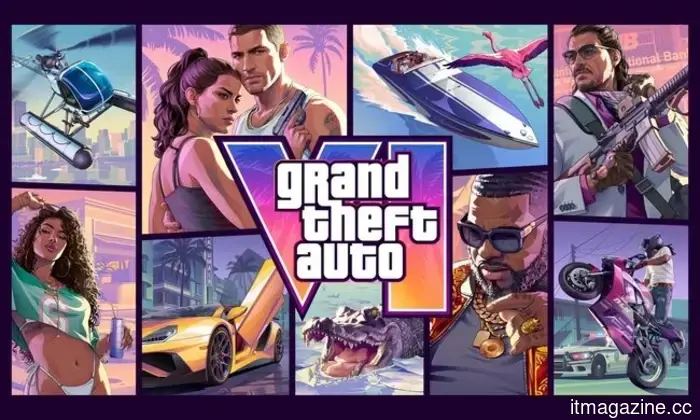
The no-disc launch for GTA 6 may be indicative of deeper issues, which makes me somewhat uneasy.
The much-anticipated GTA 6 might not see a traditional disc release at launch, as Rockstar may still be finalizing the game. As both a gamer and collector, it’s disappointing that GTA 6, potentially the most awaited game ever, will reportedly be offered with just a download code in the boxed copy, undermining the appeal of purchasing physical copies in the first place.
Moreover, Rockstar has already frustrated some fans by restricting access to specific in-game shops, vehicles, storage areas, and additional bonuses behind the pricier Ultimate Edition. Given the scale of GTA 6, these choices feel like the type of decisions players hoped Rockstar would steer clear of.
In another development, Sony’s forthcoming PlayStation could venture beyond the living room, and I believe it’s a worthwhile risk.
Despite rising component costs, Sony has compelling reasons to seriously consider portable gaming. Recently, during a Q&A with investors, CEO of Sony Interactive Entertainment Hideaki Nishino hinted that the next-generation PlayStation strategy will aim to create a seamless gaming experience extending "beyond the living room." While a handheld device wasn't explicitly mentioned, this has reignited speculation that Sony is preparing to make a comeback in the portable gaming domain with the PS6 generation.
Finally, reports suggest that Xbox Game Pass deals are dwindling, which poses challenges for indie developers.
When most players express why they subscribe to Xbox Game Pass, they typically cite day-one Xbox exclusives. However, developers have historically viewed the service differently. For many indie studios, securing a Game Pass deal was not merely about increased visibility — it represented financial stability before their launch.
Landing a Game Pass agreement often guaranteed revenue prior to a game’s release, mitigating the financial risks associated with launching an indie title in an increasingly competitive market. Now, that safety net may be less reliable than it used to be.



Other articles
 WhatsApp clarifies that usernames will not expose you to scammers.
WhatsApp has stated that its soon-to-be-introduced username feature will have several protections in place to safeguard against scams, impersonation, and unsolicited messages, in response to users' privacy worries.
WhatsApp clarifies that usernames will not expose you to scammers.
WhatsApp has stated that its soon-to-be-introduced username feature will have several protections in place to safeguard against scams, impersonation, and unsolicited messages, in response to users' privacy worries.
 WhatsApp clarifies that usernames will not expose you to scammers.
WhatsApp has announced that its forthcoming username feature will incorporate several protections to guard against scams, impersonation, and unsolicited messages, in response to user privacy concerns.
WhatsApp clarifies that usernames will not expose you to scammers.
WhatsApp has announced that its forthcoming username feature will incorporate several protections to guard against scams, impersonation, and unsolicited messages, in response to user privacy concerns.
AI and vibe coding have led to an influx of new games, though they aren't necessarily of higher quality.
The rise of AI and vibe-coding has led to a significant increase in mobile game launches, yet the top 1% of publishers continue to dominate the majority of both revenue and downloads.