
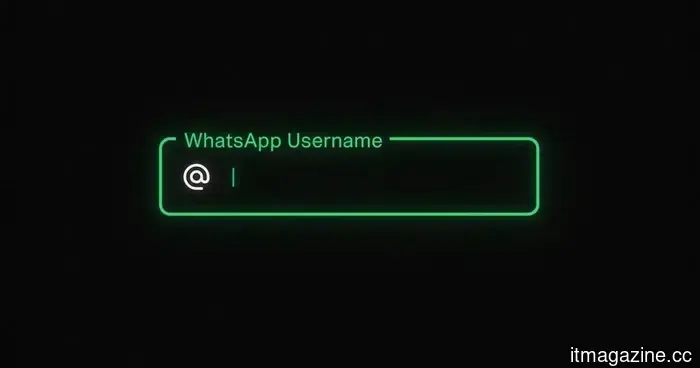
WhatsApp clarifies that usernames will not expose you to scammers.
New protective measures include username keys, rate limits, and anti-impersonation safeguards.
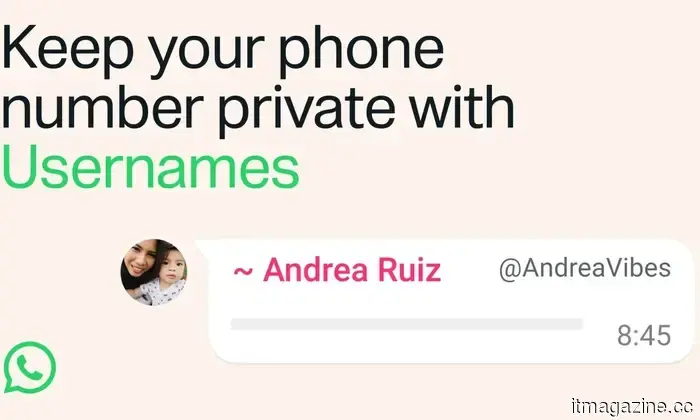
WhatsApp’s long-anticipated username feature is now officially being launched for users. However, shortly after its announcement, many began to ponder a legitimate concern: won't this facilitate scammers in messaging strangers? WhatsApp has now clarified its stance on why it believes this will not be an issue.
WhatsApp asserts that its usernames are not as accessible as those on Telegram.
Much of the apprehension arises from comparisons with Telegram, where anyone can search for a public username and instantly initiate a conversation. Several users on X pointed out that concealing phone numbers enhances privacy but also diminishes a layer of accountability that aids in identifying dubious contacts.
Usernames represent our latest effort to provide our users with more private options regarding their presence in the app. While it’s entirely optional and most will select unique usernames, we recognize that some individuals prefer continuity across apps. There will not be a directory to…— WhatsApp (@WhatsApp) June 30, 2026
As the rollout began, WhatsApp directly addressed users on X, clarifying that its approach differs significantly. For starters, there won't be a public directory or suggestions for usernames to assist in discovering accounts. Instead, an individual must know your exact username before even attempting to reach out.
We've implemented numerous layers of protection against scams through usernames: the optional username key restricts who can contact you with your username, and unlike Telegram, they must know the precise username to send you a message. We will impose rate limits on how many new people any account can interact with,…— WhatsApp (@WhatsApp) June 30, 2026
The company also introduced another privacy feature called the username key. If users opt to enable it, no one can message them via their username without knowing that key, adding an additional barrier against unwanted messages. WhatsApp states it has incorporated several anti-abuse strategies into usernames from the outset. The company will implement rate limits on how many new people an account can message, prevent repeated attempts to guess someone's username key, and utilize existing systems to identify and remove impersonation or other suspicious activities.
Moreover, even if someone does attempt to message you, WhatsApp claims that the app will continue to provide useful context, such as whether the sender has a new account, is already in your contacts, shares a mutual group with you, or is from another country. Users will still have the usual options to block, report, or ignore unwanted conversations.
Privacy comes with increased responsibilities.
Interestingly, WhatsApp’s principal challenge is not the technology itself but rather altering user behavior. On most social media platforms, users tend to claim usernames that correspond with their real names. Although WhatsApp emphasizes the absence of a public directory, using your actual name may still make your username easier to guess. For those prioritizing privacy, selecting a more distinctive username might be the wiser choice.
As usernames are gradually introduced to a wider audience, the effectiveness of these protections in real-world scenarios will become clearer. What is already evident, however, is that WhatsApp anticipated the concerns regarding scams and has designed usernames to focus on privacy rather than discoverability, making them considerably less accessible than many users initially feared.




Other articles
 WhatsApp clarifies that usernames will not expose you to scammers.
WhatsApp has announced that its forthcoming username feature will incorporate several protections to guard against scams, impersonation, and unsolicited messages, in response to user privacy concerns.
WhatsApp clarifies that usernames will not expose you to scammers.
WhatsApp has announced that its forthcoming username feature will incorporate several protections to guard against scams, impersonation, and unsolicited messages, in response to user privacy concerns.
 AI and vibe coding have led to an influx of new games, though they aren't necessarily of higher quality.
The rise of AI and vibe-coding has led to a significant increase in mobile game launches, yet the top 1% of publishers continue to dominate the majority of both revenue and downloads.
AI and vibe coding have led to an influx of new games, though they aren't necessarily of higher quality.
The rise of AI and vibe-coding has led to a significant increase in mobile game launches, yet the top 1% of publishers continue to dominate the majority of both revenue and downloads.
WhatsApp clarifies that usernames will not expose you to scammers.
WhatsApp has stated that its soon-to-be-introduced username feature will have several protections in place to safeguard against scams, impersonation, and unsolicited messages, in response to users' privacy worries.